SDSS‑V DR20 releases 2 million spectra, mapping the Milky Way’s halo in detail
SDSS‑V’s 20th data release provides over 2 million stellar spectra, including 250 k halo stars, opening new windows on the Galaxy’s formation.
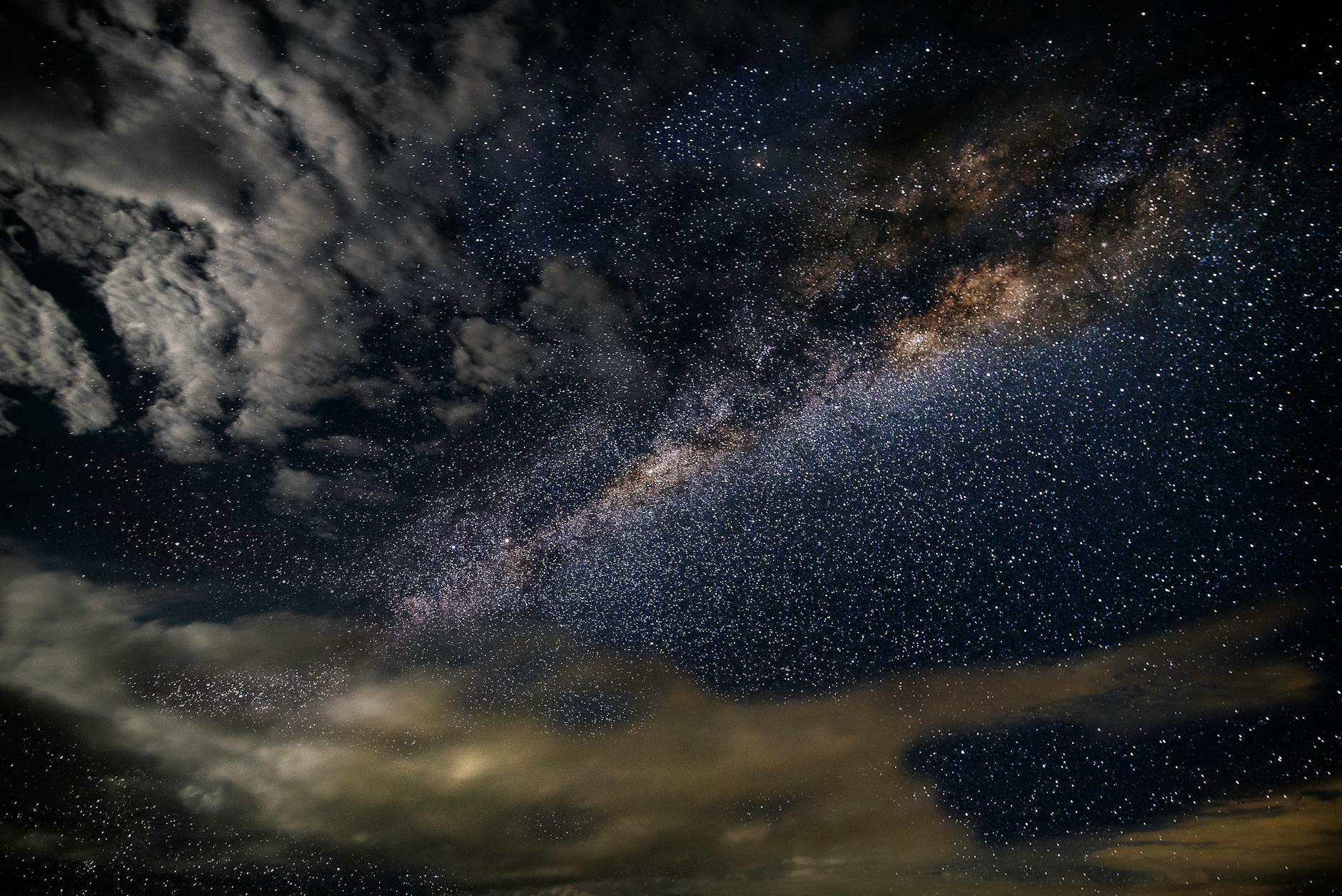
The Sloan Digital Sky Survey V (SDSS‑V) just unveiled its 20th public data release, DR20, adding more than two million stellar spectra to the public archive. The Milky Way Mapper (MWM) component now includes a full‑sky halo program with 250,000 halo star spectra, reaching out to 65,000 light‑years. With twin spectrographs in New Mexico and Chile, the survey offers the most complete chemical and kinematic map of our Galaxy to date. Astronomers can now probe the fossil record of the Milky Way’s assembly across both hemispheres. This flood of high‑quality data promises fresh insights into galactic archaeology and stellar evolution.
What happened
SDSS‑V’s DR20 expands the Milky Way Mapper catalog to over two million spectra, collected by optical spectrographs at Apache Point Observatory and Las Campanas Observatory. The release includes repeat observations that improve precision on stellar temperatures, ages, and chemical abundances.
The centerpiece of the update is the MWM Halo Program, which provides spectra for 250,000 halo stars. It covers giant stars out to more than 65,000 light‑years, fast‑moving stars within 3,000 light‑years of Earth, and ultra‑metal‑poor stars with iron abundances below 1 % of the Sun’s. These data already revealed the most pristine star known, discovered by undergraduate researchers.
Why it matters
By delivering an all‑sky, high‑resolution spectroscopic map, DR20 lets scientists trace the Milky Way’s assembly history with unprecedented detail. The halo sample captures remnants of past mergers, enabling tests of hierarchical galaxy formation models. Chemical fingerprints across the disk and halo also refine our understanding of nucleosynthesis pathways and stellar evolution.
- Unmatched sample size and sky coverage.
- Publicly accessible data accelerate community research.
- Combined with Gaia, it provides full 6‑D phase‑space information.
- Selection effects bias toward brighter, less extincted stars.
- Faint halo spectra still carry higher uncertainties.
- Full calibration of repeat observations is ongoing.
How to think about it
Start by querying the DR20 catalog through the SDSS SkyServer or API, focusing on the halo program identifiers. Cross‑match the spectra with Gaia DR3 astrometry to obtain precise distances and motions. Use the provided stellar parameter pipelines as a baseline, but validate critical results with independent spectral fitting when possible. Prioritize targets that fill gaps in existing surveys to maximize the scientific return of follow‑up observations.
FAQ
How can I access the DR20 spectra?+
What types of stars are included in the halo program?+
What are the limitations of the current dataset?+
- astronomy·3 min readSeven New Quasar‑Lens Systems Discovered Using AI in 800,000 Spectra
Astronomers used AI to sift through 800,000 quasar spectra, uncovering seven new quasar‑lens systems and roughly doubling the known sample.
- astronomy·3 min readDESI side project captures spectra of debris‑polluted white dwarfs, revealing exoplanet compositions
DESI’s off‑target observations have captured clear spectra of white dwarfs accreting planetary debris, showing compositions similar to inner‑solar system bodies.
- astronomy·3 min readOldest Stars in the Galaxy Shed Light on Cosmology's Biggest Argument
Astronomers find oldest stars in Milky Way, estimating universe's age at 13.8 billion years.