Oldest Stars in the Galaxy Shed Light on Cosmology's Biggest Argument
Astronomers find oldest stars in Milky Way, estimating universe's age at 13.8 billion years.
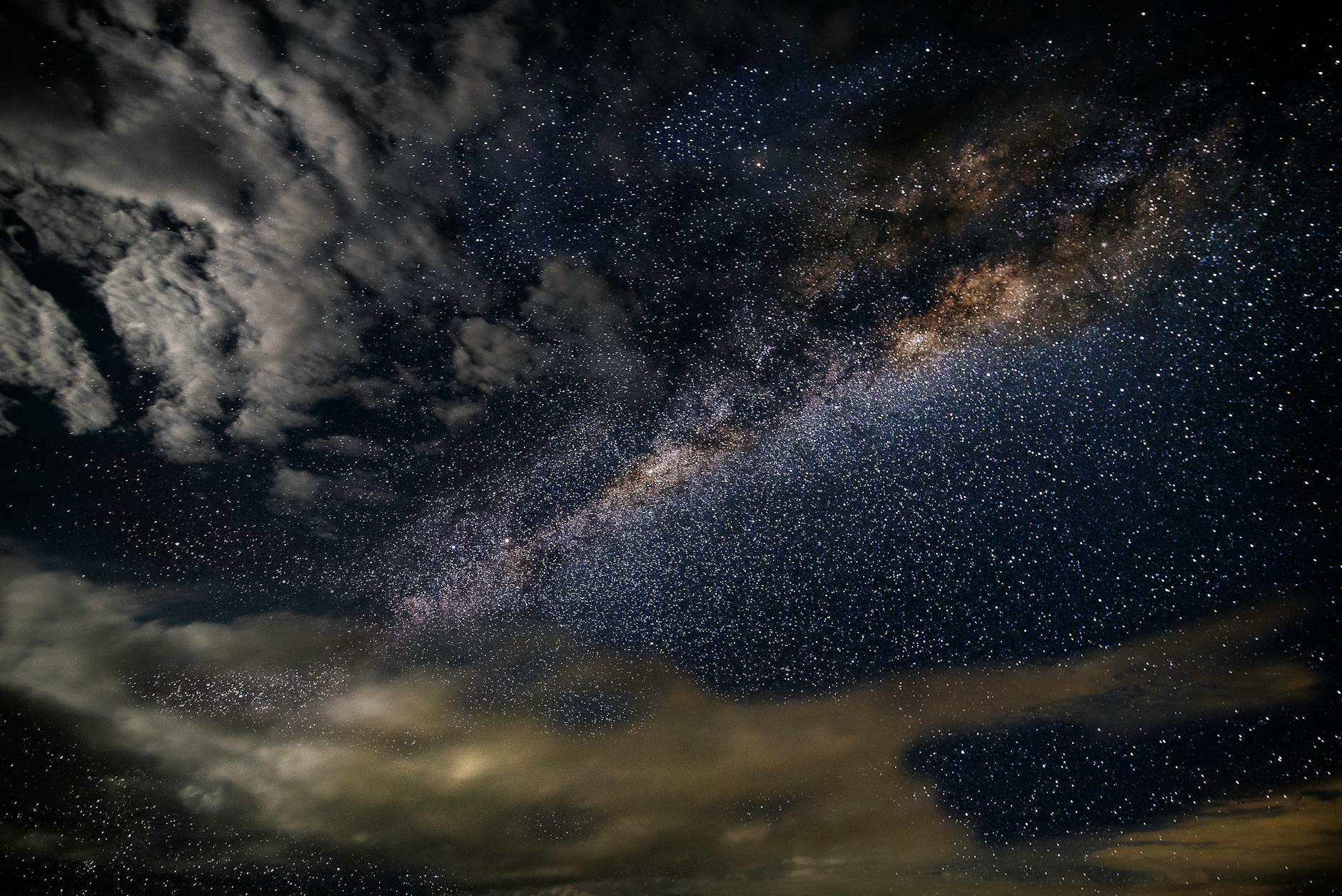
Astronomers have long sought to determine the universe's age without relying on a cosmic 'birth certificate.' One approach is to study the oldest surviving stars in the galaxy. A team led by Indranil Banik at the University of Portsmouth analyzed nearly 250,000 Milky Way stars, focusing on those nearing the end of their lifespan. By applying detailed computer models of stellar evolution, the team estimated the age of these ancient stars.
What happened
The team used high-resolution spectroscopy from the LAMOST telescope and precise distance measurements from the European Gaia satellite to analyze 247,103 Milky Way stars. They applied strict data quality checks, requiring ancient stars to be metal-poor and enriched in specific chemical elements. This process yielded a final sample of 155,600 stars, with the oldest star estimated to be around 13.73 billion years old.
The researchers also cross-checked their results against an independent set of ages calculated using Gaia data alone. By adding a small allowance for the time it took for the universe's first long-lived stars to form after the Big Bang, the team arrived at a cosmic age of approximately 13.8 billion years.
This estimate aligns with the figure derived from the cosmic microwave background, the faint afterglow of the Big Bang. The study's findings have significant implications for cosmology, particularly in resolving the Hubble tension debate.
Why it matters
The study's results have far-reaching implications for our understanding of the universe. The estimated age of 13.8 billion years supports one side of the Hubble tension debate, which questions the rate of the universe's expansion. This debate has significant implications for our understanding of the universe's evolution, composition, and ultimate fate.
The study's findings also demonstrate the importance of combining multiple datasets and methodologies to achieve precise estimates of the universe's age. By using a combination of LAMOST and Gaia data, the researchers were able to achieve a high level of accuracy and precision in their estimates.
- Provides a precise estimate of the universe's age using a novel approach.
- Supports one side of the Hubble tension debate, shedding light on the universe's expansion rate.
- Demonstrates the importance of combining multiple datasets for precise estimates.
- The study's results are based on a specific sample of stars and may not be representative of the entire galaxy.
- The estimate of the universe's age is still subject to some uncertainty, which may impact the conclusions drawn from the study.
- The study's findings may not be directly applicable to other galaxies or regions of the universe.
How to think about it
When considering the study's findings, it's essential to understand the context of the Hubble tension debate and the significance of estimating the universe's age. The study's results provide a new perspective on this debate, highlighting the importance of combining multiple approaches to achieve a more accurate understanding of the universe.
FAQ
What is the estimated age of the universe based on the study?+
What is the Hubble tension debate?+
How did the researchers estimate the age of the stars?+
- astronomy·3 min readSDSS‑V DR20 releases 2 million spectra, mapping the Milky Way’s halo in detail
SDSS‑V’s 20th data release provides over 2 million stellar spectra, including 250 k halo stars, opening new windows on the Galaxy’s formation.
- astronomy·3 min readNew 3‑D Mapping Technique Reveals Detailed Distribution of Cosmic Dark Matter
A novel method combines gravitational lensing data to produce a high‑resolution 3‑D map of dark matter, sharpening our view of the universe’s hidden scaffolding.
- astronomy·3 min readeROSITA DR2 doubles known X‑ray sources, sharpening view of the high‑energy sky
The second eROSITA data release adds ~2 million X‑ray sources, doubling the catalog and enabling new tests of cosmic structure formation.