Radio Telescopes Reveal Molecular Maps of Star‑Forming Clouds and Their Role in Stellar Birth
New high‑resolution radio maps trace molecules in cold clouds, linking chemistry to the earliest stages of star birth.
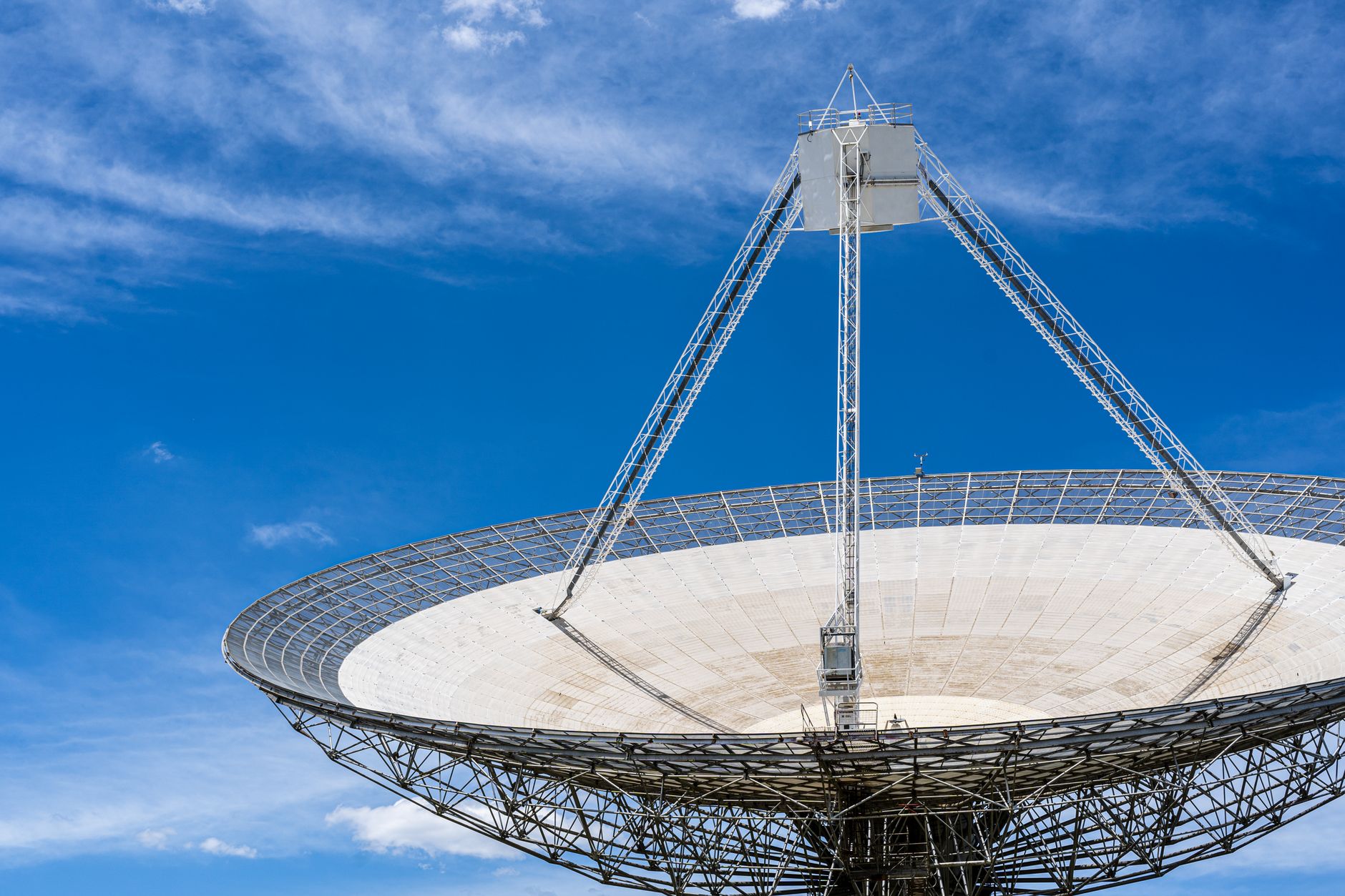
Ever wonder why we’re made of “star‑stuff”? Radio astronomers are now charting the exact chemistry of the clouds where stars are born, using ever‑sharper radio maps. By comparing fresh high‑resolution surveys with older data, researchers have confirmed that molecular abundances, temperatures and motions line up across decades of observation. These findings tighten the link between interstellar chemistry and the physical conditions that spark stellar birth, offering a clearer picture of how the raw ingredients of life assemble in space.
What happened
Scientists used modern interferometers to produce sub‑arcsecond maps of key molecules—such as CO, HCN and CH₃OH—in several high‑mass star‑forming regions. The new data were overlaid on legacy surveys to test consistency, revealing that the spatial distribution of each species matches previous large‑scale patterns while adding fine‑grained detail on temperature gradients and gas motions.
Cold molecular clouds start at about -442°F (-263°C) and a density of roughly 100 molecules per cubic centimeter—far thinner than Earth’s atmosphere. As protostars ignite, temperatures climb to between -279°F and -100°F (-173°C to -73°C) and densities rise to ten million molecules per cubic centimeter or more, creating the conditions for the first complex chemical reactions.
The comparison showed that, despite the ten‑fold improvement in angular resolution, the overall abundance ratios remain stable, confirming that earlier, coarser maps captured the essential chemistry even if they missed localized hotspots.
Why it matters
Linking precise molecular distributions to temperature and density regimes clarifies which reactions dominate at each stage of collapse, informing models of planet‑forming material and the origin of prebiotic molecules. Better constraints on these processes improve predictions of where new stars will emerge, guiding future telescope time allocation. The work also validates decades‑old survey data, ensuring that the astronomical community can safely build on that foundation.
- Higher resolution reveals small‑scale chemical gradients.
- Confirms reliability of historic molecular surveys.
- Improves models of star and planet formation chemistry.
- Fine‑scale maps require extensive observing time.
- Interpretation depends on assumed excitation conditions.
- Complex chemistry may still be missed in very dense cores.
How to think about it
When you read a molecular map, first note the temperature and density markers indicated by colour gradients—these tell you which phase of collapse the gas is in. Next, compare the distribution of simple tracers (like CO) with more complex species (like CH₃OH) to gauge chemical maturity. Finally, consider the map’s resolution: features smaller than the beam size may be blended, so treat sharp peaks as lower‑limit estimates of true abundance.
FAQ
How do radio telescopes detect specific molecules?+
What do the temperature and density ranges tell us about star formation?+
Can molecular maps predict where new stars will appear?+
- astronomy·3 min readNew HI Observations Reveal Hidden Cavity and Structures in the Extended Orion Nebula
Radio maps from the VLA and FAST uncover a previously unknown cavity in the Extended Orion Nebula, reshaping our view of star‑forming environments.
- astronomy·3 min readNew Galactic Bar Shock Fronts Trigger Star Formation, Challenging Milky Way Spiral Arm Models
A Ph.D. student discovers shock‑driven star formation near the Milky Way’s bar, questioning the existence of the Norma spiral arm.
- astronomy·2 min readJames Webb Space Telescope Reveals Unexpected Star Formation in Distant Galaxy Cluster
JWST images show a burst of star formation in a galaxy cluster billions of light‑years away, challenging current models of early galaxy growth.