MOTHRA Telescope Reveals Bow Shocks Recycling Stellar Material in the Helix Nebula
New MOTHRA observations capture bow shocks where the Helix Nebula’s expelled gas is being stripped and mixed back into the interstellar medium.
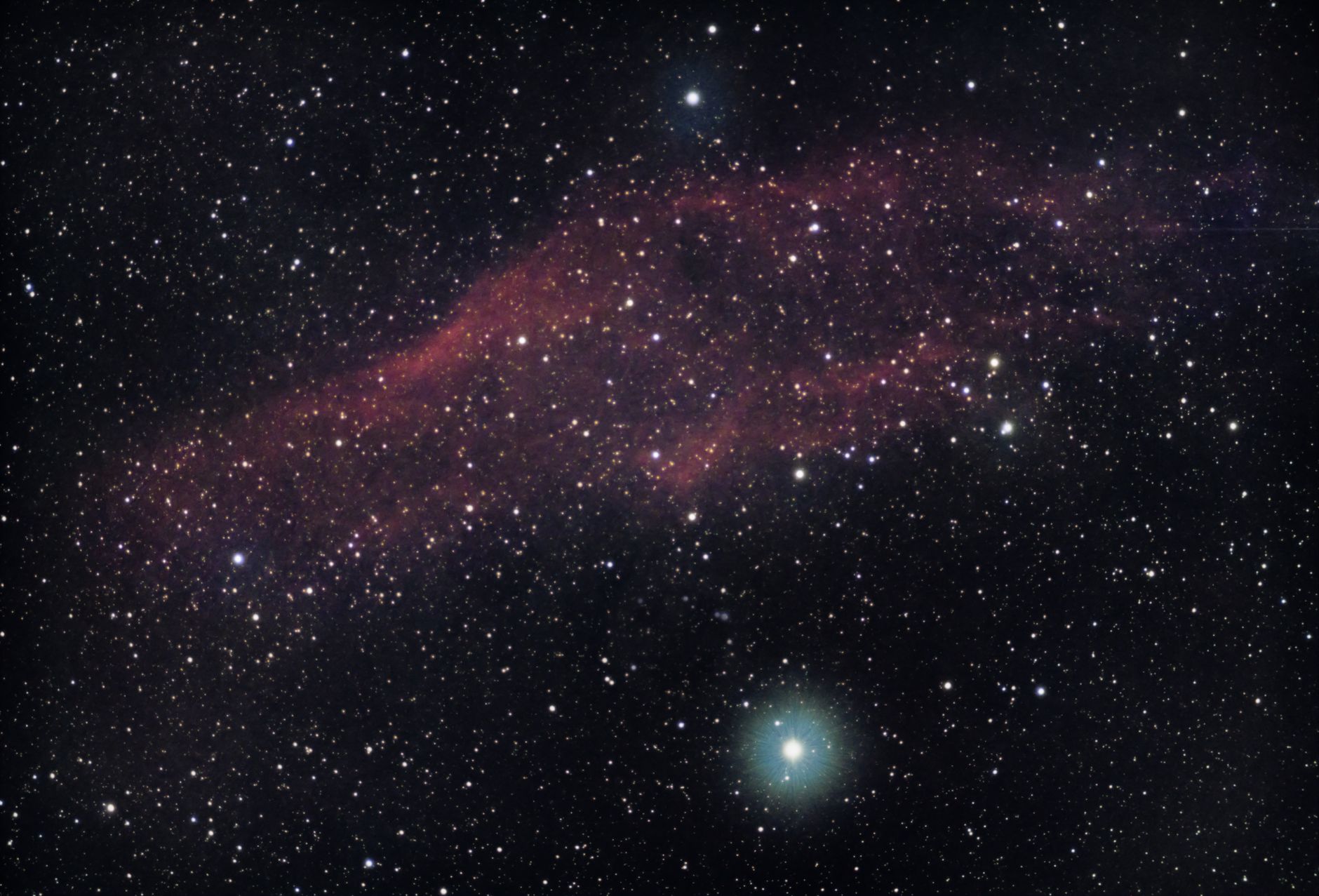
The Helix Nebula, a glowing eye‑shaped planetary nebula 650 light‑years from Earth, has revealed a hidden phase of stellar death. Using the prototype MOTHRA telescope, astronomers captured dozens of bow‑shaped shock fronts in the nebula’s outer shell. These shocks trace the stripped, metal‑rich gas that the dying star is shedding back into the interstellar medium. The discovery offers the first direct view of how low‑mass stars recycle their material after the planetary‑nebula phase.
What happened
The Modular Optical Telephoto Hyperspectral Robotic Array (MOTHRA) is a ground‑based instrument built from 1,140 high‑end Canon telephoto lenses. By suppressing internal diffraction, the array achieves a sharp, wide‑field view that complements space‑based images from Hubble and JWST. Although still under construction, the prototype was pointed at the Helix Nebula in a recent campaign.
The team, led by Pieter van Dokkum of Yale University, published their results in Nature under the title “Numerous bow shocks in the outer Helix Nebula.” The images reveal a network of bow‑shaped shock fronts where the nebula’s outer gas is being stripped by the surrounding interstellar wind. The morphology matches theoretical predictions of fragmented, metal‑enriched material mixing into the interstellar medium.
Why it matters
Seeing the recycling process in action closes a long‑standing observational gap in stellar evolution. Low‑ and intermediate‑mass stars like the Sun are the primary contributors of carbon, nitrogen and other life‑essential elements to the galaxy. By confirming that their expelled envelopes can fragment and merge with the ISM, the study refines models of chemical enrichment and informs how future generations of stars and planets acquire their building blocks.
- Provides unprecedented spatial resolution of the Helix’s outer structures.
- Demonstrates the feasibility of lens‑array telescopes for diffuse astronomical targets.
- Offers direct evidence of material mixing into the interstellar medium.
- MOTHRA is still incomplete, limiting the depth of current data.
- Ground‑based observations remain subject to atmospheric seeing.
- Interpretation of shock geometry can be ambiguous without complementary spectroscopy.
How to think about it
When evaluating similar nebular studies, consider the instrument’s resolution relative to the size of the structures, the role of complementary space‑based data, and the theoretical framework linking observed shocks to mass‑loss processes. Use a layered approach: first map morphology, then compare with hydrodynamic models, and finally assess chemical signatures through spectroscopy.
FAQ
What are bow shocks and why do they form in planetary nebulae?+
How does MOTHRA achieve higher detail than traditional telescopes?+
What does stellar recycling mean for the future of the Milky Way?+
- astronomy·2 min readJWST Reveals Stunning New View of the Lion’s Head Nebula (NGC 2392)
JWST’s NIRCam and MIRI capture a detailed image of planetary nebula NGC 2392, revealing how a Sun‑like star’s death shapes gas and dust.
- astronomy·3 min readNew Galactic Bar Shock Fronts Trigger Star Formation, Challenging Milky Way Spiral Arm Models
A Ph.D. student discovers shock‑driven star formation near the Milky Way’s bar, questioning the existence of the Norma spiral arm.
- astronomy·3 min readExploring the Horsehead and Flame Nebulas: Highlights from NASA’s November 19 APOD
NASA’s November 19 APOD showcases the iconic Horsehead Nebula beside the vibrant Flame Nebula, captured from Utah’s remote observatory.