The Hubble Tension: A Crisis at the Heart of Modern Cosmology
Two independent ways of measuring how fast the universe is expanding give two incompatible answers. The discrepancy has sharpened over the past decade as the measurements have grown more precise. Astronomers call it the Hubble tension, but a more accurate name might be a crisis: it suggests either a systematic error somewhere or that our standard model of cosmology is incomplete.
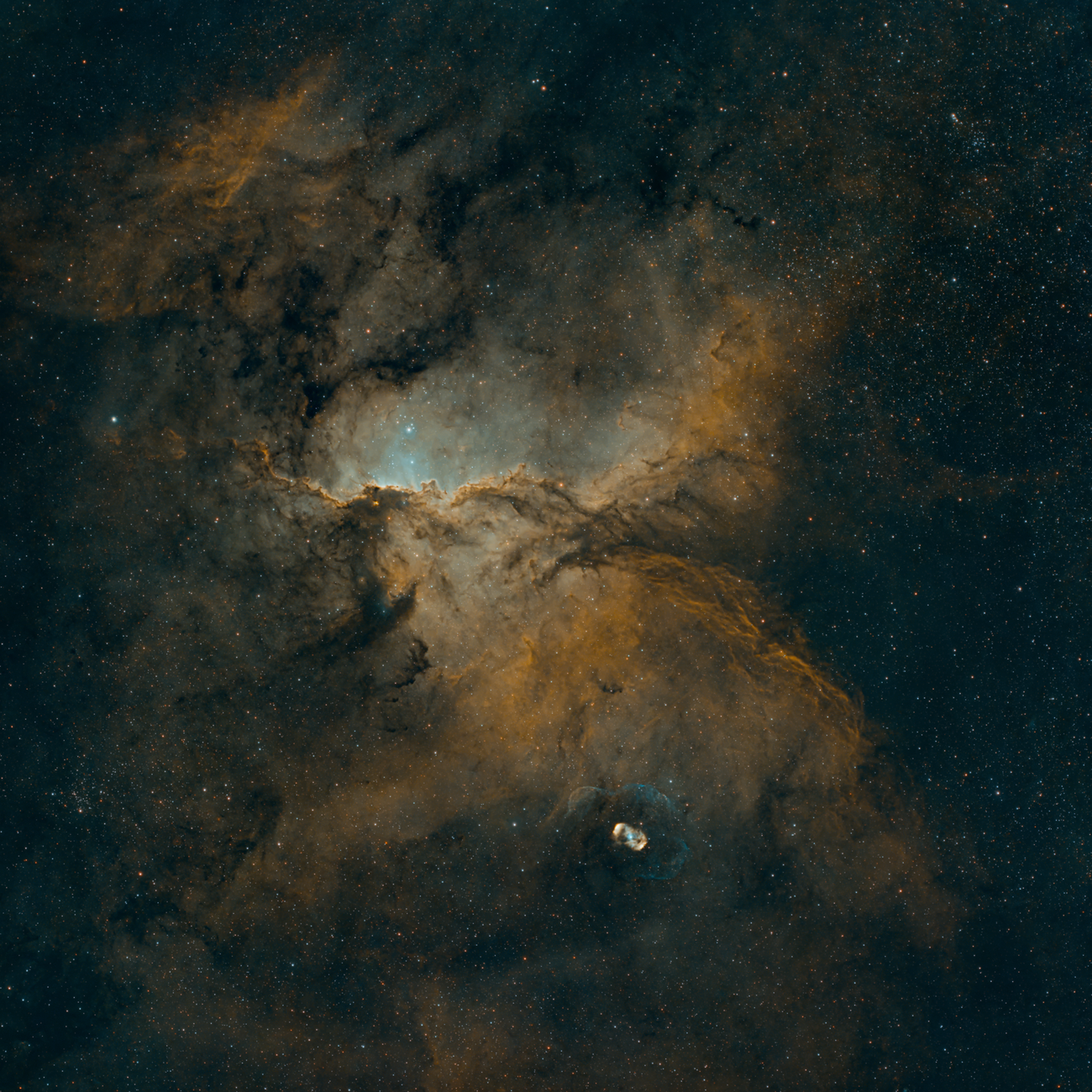
For a century, the expanding universe has been one of astronomy's foundational facts. The current puzzle is not whether space expands, but how fast. Strangely, the answer depends on how you measure it. Methods tied to the early universe and the cosmic microwave background prefer a lower Hubble constant than direct measurements in the nearby universe. The gap has persisted long enough that cosmologists can no longer dismiss it casually.
What happened
The two main camps are easy to summarize. One infers the expansion rate from the early universe by fitting the cosmic microwave background within the standard cosmological model, often called Lambda-CDM. That route yields a Hubble constant around the high sixties in kilometers per second per megaparsec. The other route uses the cosmic distance ladder, calibrating nearby objects such as Cepheid variables or red giant stars and then applying them to farther standard candles like Type Ia supernovae. Those measurements tend to land around the low seventies.
A few kilometers per second per megaparsec may sound minor, but the statistical significance and consistency of the discrepancy are what make it serious. If one side suffers hidden systematics, then precision cosmology still has a calibration problem. If the measurements are both basically right, then the standard model may be missing physics such as early dark energy, unusual neutrino behavior, or something even stranger affecting the universe's expansion history.
The debate has intensified because multiple independent methods now line up with one side or the other rather than collapsing neatly into agreement. Gravitational lensing time delays, baryon acoustic oscillations, and other probes add nuance but have not erased the tension. The result is a field in which the most precise measurements are producing less comfort, not more.
Why it matters
This matters because the Hubble constant is not an isolated parameter. It sits inside the wider architecture of cosmology: the age of the universe, the behavior of dark energy, the inventory of matter, and the validity of the model used to connect the early and late cosmos. A real mismatch here could be the first crack in a framework that has been extraordinarily successful for decades.
It also matters methodologically. Science often advances when precision becomes high enough to expose contradiction. The Hubble tension may turn out to be a calibration headache, but even that would teach us something important about how hard it is to measure the universe. If it is new physics, the payoff is even larger.
- The tension may point toward new physics beyond the standard cosmological model.
- It has driven major improvements in measurement techniques and cross-checks.
- Independent methods provide multiple ways to test where the discrepancy originates.
- Systematic uncertainties in distance calibration remain difficult to eliminate completely.
- Proposed new-physics fixes often create new tensions elsewhere in cosmology.
- The disagreement can be overstated publicly before the evidence reaches decisive clarity.
How to think about it
A useful mental model is to imagine two clocks built from different physical processes, both claiming to measure the same cosmic history. If the clocks disagree persistently, either one is miscalibrated or the theory linking them is incomplete. The tension is therefore not just a number mismatch. It is a consistency test for cosmology as a whole.
This is why many scientists find the issue exciting rather than discouraging. Mature fields need anomalies. When multiple precise observations fail to fit comfortably inside a trusted framework, that is often where the next big advance begins. The Hubble tension may yet be a nuisance, but it has already become one of the most productive nuisances in science.
FAQ
What is the Hubble constant?+
Why is the Hubble tension a big deal?+
Has the tension been solved yet?+
- astrophysics·9 min readUnraveling the Universe's Genesis: A Deep Dive into the Big Bang Theory and Its Evolution
Explore the Big Bang theory, the prevailing scientific model for the universe's origin and evolution. Understand its empirical evidence, historical development, and ongoing refinements in modern…
- astrophysics·3 min readNew Study Finds Dark Matter’s Hidden Attractive Force May Slow Cosmic Structure Growth
Researchers reveal a hidden dark‑matter force that paradoxically suppresses large‑scale structure growth, challenging standard cosmology.
- astrophysics·5 min readEuclid Telescope Uncovers 31 Ancient Quasars, Rewriting Early Universe History
The Euclid space telescope has discovered 31 of the most ancient quasars, including the two earliest ever observed. This breakthrough offers unprecedented insights into the universe's infancy and…