Euclid Telescope Uncovers 31 Ancient Quasars, Rewriting Early Universe History
The Euclid space telescope has discovered 31 of the most ancient quasars, including the two earliest ever observed. This breakthrough offers unprecedented insights into the universe's infancy and…
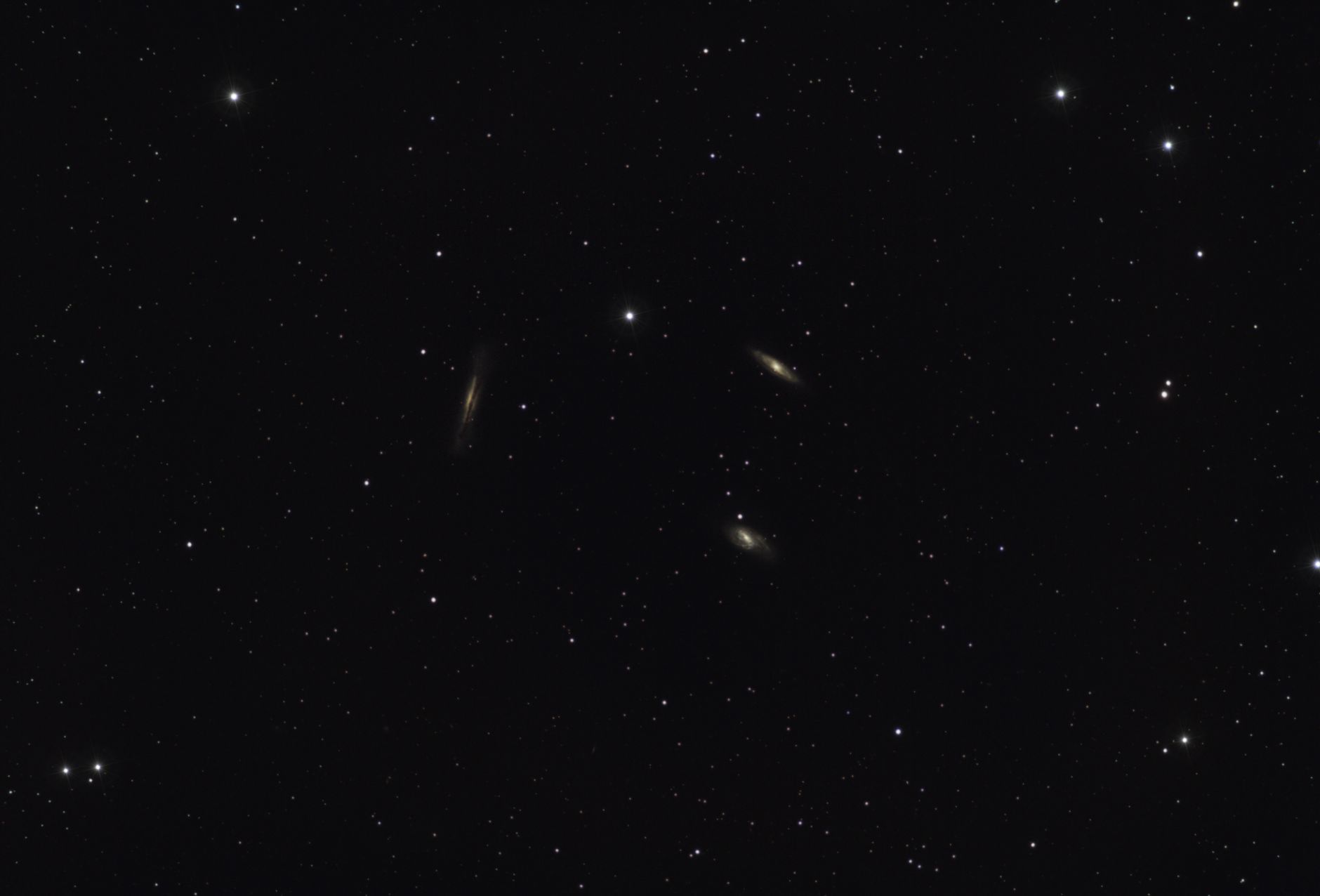
The European Space Agency's Euclid space telescope has achieved a significant breakthrough, identifying 31 of the most ancient quasars ever observed. Among these are two record-setting objects that shone when the universe was just 670 million years old, a mere 5% of its current age. This unprecedented discovery is providing astronomers with a vital 'census' of these incredibly bright galactic cores, powered by supermassive black holes. Understanding these early quasars is crucial for unraveling the mysteries of how the first galaxies and their central black holes formed and grew so rapidly in the cosmic dawn.
What happened
The European Space Agency's Euclid space telescope has successfully identified an unprecedented 31 new quasars originating from the early universe. This significant haul includes 12 quasars with a redshift of 7 or above, corresponding to the universe's first 770 million years. Crucially, two of these, designated EUCL J172902.75+641018.1 and EUCL J125308.55+705432.3, boast redshifts of 7.77 and 7.69 respectively, making them the most ancient quasars ever detected. They emerged when the cosmos was only 670 million years old, shining with the luminosity of a trillion suns.
Before Euclid, astronomers had spent over a decade to find roughly ten quasars at a redshift of 7 or higher. Euclid's advanced capabilities allowed it to discover more than that in a single year, efficiently surveying vast areas of the sky to capture fainter light. This shift from identifying only the brightest, rare outliers to observing a more representative population marks a pivotal moment in the study of cosmic evolution, providing a true 'census' of these objects at the dawn of the universe.
Why it matters
This discovery profoundly impacts our understanding of the early universe, particularly the rapid formation and growth of supermassive black holes and their host galaxies. Quasars represent a brief, intensely luminous phase where vast amounts of material spiral into a central black hole, releasing immense energy. Finding these objects so early in cosmic history challenges existing models, as it suggests these gargantuan black holes and their surrounding galaxies matured far quicker than previously thought possible. For astrophysicists, this new data provides crucial observational constraints, helping to refine theories on how cosmic structures first emerged and evolved.
The ability to study a broader population of ancient quasars, rather than just the brightest few, allows researchers to move beyond anecdotal evidence to a more statistically robust understanding. This 'census' approach enables a deeper investigation into the mechanisms driving early galaxy formation and the co-evolution of supermassive black holes with their hosts. It sets the stage for future missions to build upon these findings, pushing the boundaries of what we know about the universe's infancy.
- Provides an unprecedented 'census' of ancient quasars, moving beyond rare outliers.
- Offers crucial observational data to refine models of supermassive black hole and galaxy co-evolution.
- Demonstrates Euclid's unique capability to efficiently survey vast sky areas for faint, distant objects.
- Quasars from the universe's infancy remain inherently rare and challenging to detect.
- Distinguishing primordial quasar light from closer, foreground stars requires sophisticated techniques.
- The precise mechanisms enabling such rapid black hole and galaxy growth still require further investigation.
How to think about it
When considering this discovery, it's helpful to view it not merely as finding the 'oldest' objects, but as gaining a critical new dataset. Imagine trying to understand a complex ecosystem by only observing its largest, most obvious predators. Euclid's achievement is akin to suddenly being able to observe the entire food chain, including smaller, more numerous species that reveal the true dynamics. This allows astrophysicists to build more complete and accurate simulations of the early universe, testing hypotheses about how matter coalesced, how stars formed, and how the seeds of galaxies grew into the structures we see today. It’s a move from isolated data points to a comprehensive understanding of cosmic evolution during a pivotal era.
FAQ
What exactly is a quasar?+
Why are these early quasars so difficult to detect?+
How did the Euclid telescope manage to find so many ancient quasars?+
- astronomy·10 min readUnveiling the Cosmos: How the James Webb Space Telescope Explores the Early Universe in Infrared
Discover how the James Webb Space Telescope uses infrared astronomy to peer back in time, observing the first stars and galaxies forming in the early universe. Learn about its advanced capabilities…
- astronomy·3 min readAstronomers Uncover Earliest Signs of Galaxy-Building in Action
Astronomers discover the earliest known signs of galaxy-building, a compact star-forming structure at the heart of a galaxy dating back over 9 billion years.
- missions·7 min readWhat James Webb Has Already Taught Us About the Early Universe
The James Webb Space Telescope has been operating for less than three years and has already rewritten our understanding of the early universe — detecting galaxies from within 300 million years of the Big Bang and challenging the standard timeline of cosmic structure formation.