Zhurong data reveal standing liquid water on Mars much more recently than thought
Zhurong rover data reveal selenite crystals that point to standing liquid water on Mars much later than the 3‑billion‑year freeze.
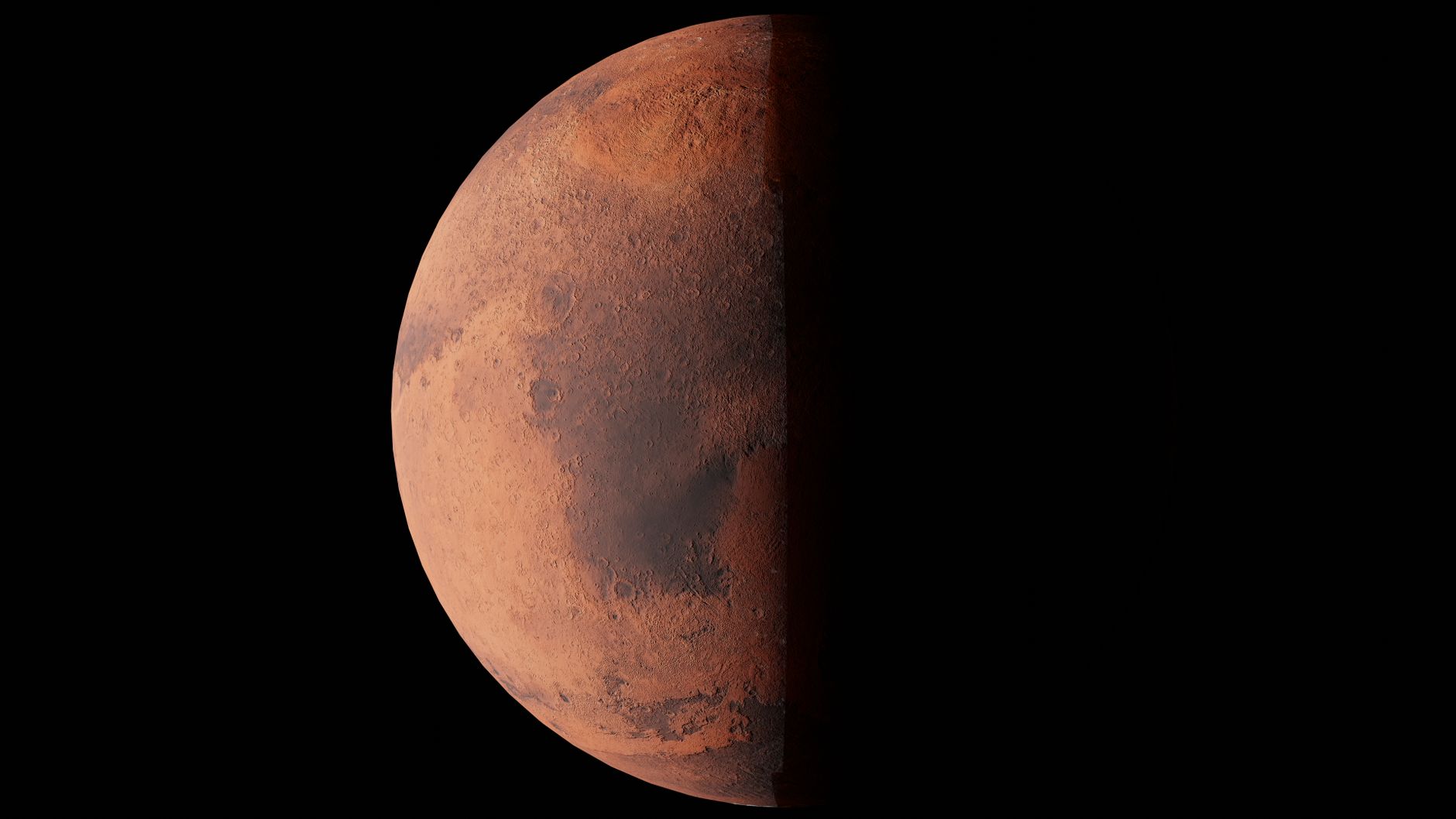
For decades scientists have assumed Mars’ surface froze solid around 3 billion years ago, sealing away any liquid water. New analysis of mineral data from China’s Zhurong rover challenges that view, revealing crystal formations that only grow in standing salty water. If correct, the findings push the timeline for liquid water on Mars forward by hundreds of millions of years, reshaping our ideas of the planet’s habitability.
What happened
Zhurong touched down in Utopia Planitia in May 2021 and spent 93 days gathering high‑resolution images and spectroscopic measurements before a dust storm ended its mission. The rover’s laser and infrared instruments recorded mineral signatures from bright, flat rocks that protruded through the sand.
In a new study, Liu’s team re‑examined those legacy data, concentrating on the shapes of tiny crystals just beneath the rock surfaces. They identified selenite—a large‑crystal form of gypsum—that only crystallizes directly from concentrated salty water.
By measuring the thickness of the selenite‑bearing layer, the researchers calculated that forming it would have required a standing water sheet between 6.25 and 25 meters deep, pooling on the surface over time.
Why it matters
If Mars hosted standing bodies of water far later than the previously assumed 3‑billion‑year freeze, the window for potential microbial life widens dramatically. Such environments could have supported habitable niches and may have left biosignatures still detectable today. The discovery also influences where future landers and sample‑return missions might search for evidence of past life.
- Extends the possible habitability window on Mars.
- Provides a concrete target for future in‑situ investigations.
- Demonstrates the lasting scientific value of legacy rover data.
- Interpretation relies on mineralogical models that have uncertainties.
- Depth estimates are indirect and could be revised with new data.
- Limited spatial coverage—findings apply only to a specific site.
How to think about it
Treat the Zhurong findings as a compelling piece of a larger puzzle. Incorporate the possibility of late‑stage surface water into climate and geological models, but weigh it against other constraints such as atmospheric loss. When evaluating future mission sites, prioritize regions where similar mineral signatures could be confirmed with on‑the‑ground analysis.
FAQ
What specific mineral indicates past standing water?+
How recent could the water have been?+
Will this change where NASA looks for life?+
- missions·3 min readCuriosity Rover Reveals Pinstriped Bedrock Layers Near Fourth of July, Sols 4941‑4947
During sols 4941‑4947, Curiosity captured striking pinstriped strata at a geologic boundary, shedding light on Mars’ sedimentary history.
- missions·7 min readThe Perseverance Rover: Drilling Into Mars for Signs of Ancient Life
NASA's Perseverance rover has been operating on Mars since February 2021, crawling through Jezero Crater — an ancient lake delta — drilling rock samples that may contain fossilized microbial life for a future return mission to Earth.
- astronomy·3 min readReanalysis of Spirit Rover Data Reveals Widespread Hematite, Suggesting Vast Ancient Martian Water
A new synthesis of Spirit rover Mössbauer measurements uncovers widespread hematite and altered magnetite, indicating far more ancient water on Mars than previously thought.