Seeing Venus at Its Greatest Evening Elongation on August 15, 2026
Venus reaches its brightest evening appearance on Aug 15, 2026 at 46° from the Sun, visible low in the western twilight.
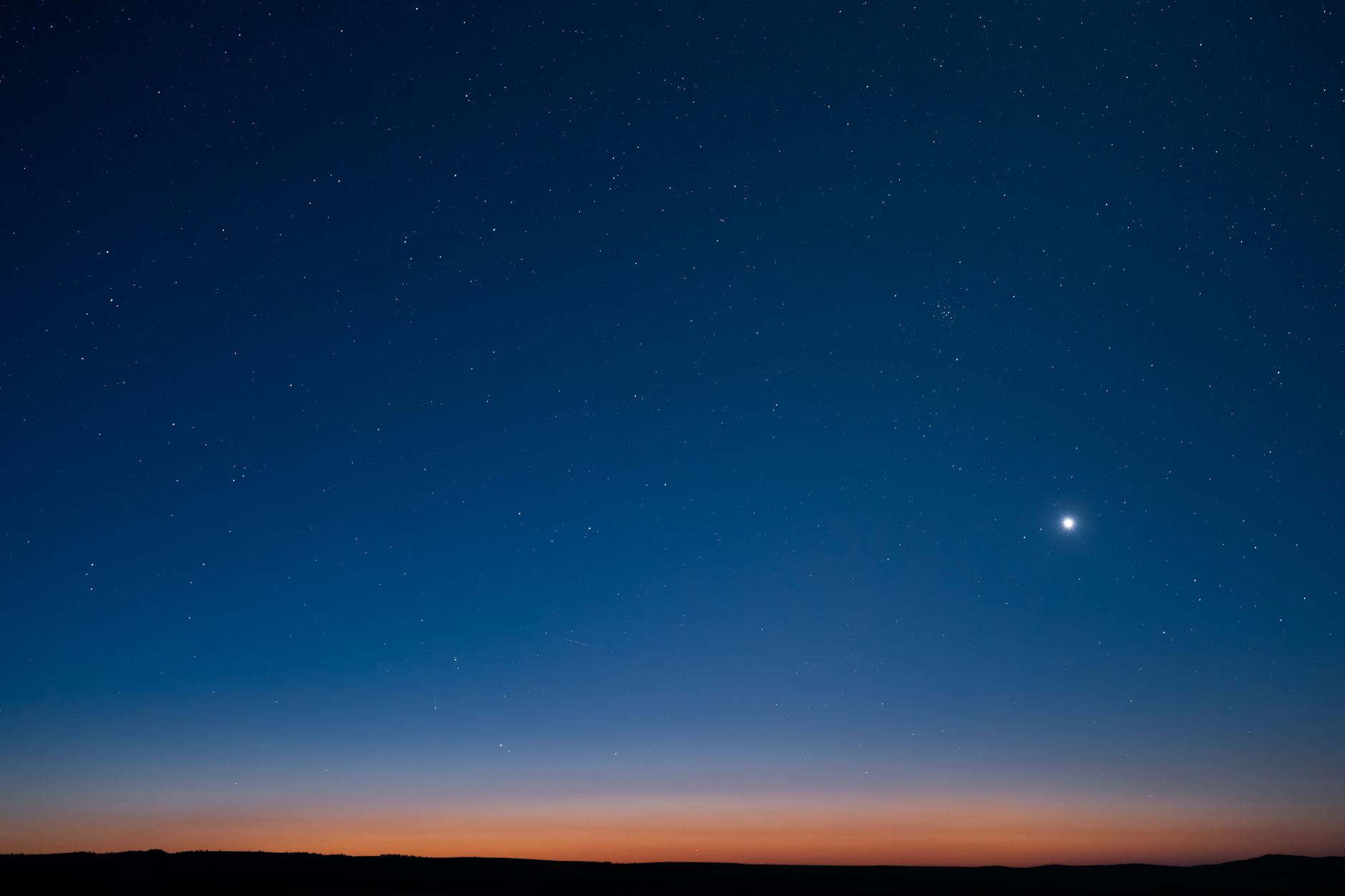
On the night of August 15, 2026, Venus will reach its greatest evening elongation, appearing farthest from the Sun in our sky. At 6 UTC (1 a.m. CDT) the planet will sit 46° west of the sunset point, shining at magnitude ‑4.4. This event makes Venus the most prominent object in the western twilight, visible to the naked eye and through modest telescopes. Observers will be able to track its slow drift toward the Sun until it disappears around late October.
What happened
The greatest elongation occurs at 6 UTC on August 15, 2026, when Venus reaches an angular separation of 46 degrees from the Sun. At this moment the planet’s apparent magnitude is –4.4, making it brighter than any star and rivaling the Moon’s brightness in twilight. Through a telescope Venus will be about 49 % illuminated, resembling a first‑quarter phase, and will span roughly 24.48 arcseconds.
Elongations vary between about 45.4° and 47.3° depending on the year; the 46° separation this August is near the average maximum. After the peak, Venus will gradually slide closer to the sunset horizon, eventually slipping behind the Sun at inferior conjunction on October 24, 2026. The planet remains visible in the evening sky through October, offering a long window for casual and scientific observation.
Why it matters
Venus’s extreme brightness and low evening altitude create a rare, low‑light‑pollution showcase for both casual stargazers and amateur astronomers. Its near‑first‑quarter phase reveals surface details such as cloud bands and the planet’s terminator, providing a hands‑on lesson in planetary phases and orbital geometry. Because the event spans several weeks, educators can plan outreach activities that connect skywatching with lessons on orbital mechanics and the inner solar system.
- Exceptionally bright, easy to spot with the naked eye.
- Visible for several months, allowing extended study.
- Phase and apparent size are ideal for amateur telescopic observation.
- Low altitude after sunset can be hampered by atmospheric haze.
- Bright twilight reduces contrast for faint surface details.
- Viewing window narrows quickly after greatest elongation as Venus approaches the Sun.
How to think about it
Plan ahead with a free planetarium app such as Stellarium to locate Venus’s exact azimuth and altitude for your location. Aim for a viewing window 30–90 minutes after sunset, when Venus is high enough above the horizon to clear most ground‑level haze but still well before it sinks toward the western horizon. Choose a dark site with minimal light pollution, and use binoculars or a modest telescope (8‑10 in) to appreciate the 49 % illuminated disk and crisp terminator. Remember that Venus never rises in the midnight sky; its appearance is confined to the western twilight during this apparition.
FAQ
When is the optimal time to view Venus on August 15, 2026?+
How does Venus’s brightness at greatest elongation compare to other planets?+
What phase will Venus display through a telescope during this elongation?+
- astronomy·3 min readAugust 2026 Skywatching Guide: Venus, Mercury‑Jupiter Conjunction and Best Planet Views
Learn when and where to spot Venus, Mercury, Jupiter, Saturn and Mars in August 2026, plus tips for safe and rewarding viewing.
- astronomy·3 min readMercury’s Greatest Morning Elongation on August 2 2026: How and Where to Spot It
Mercury reaches its greatest morning elongation on Aug 2 2026, appearing 19° from sunrise at magnitude +0.1. Learn when and where to see it.
- astronomy·3 min readJuly's Full Buck Moon Leads a Mini Planet Parade Across the Summer Sky
Tonight the July full Buck Moon rises with Venus, Saturn, Mars and Mercury, creating a bright planetary parade for skywatchers.