Why Venus’s Cloud Speed Misleads Rotation Measurements and What It Means for Exoplanet Studies
Venus’s fast‑moving clouds hide its true 243‑day spin, a mistake that could skew exoplanet rotation estimates as PLATO prepares to launch.
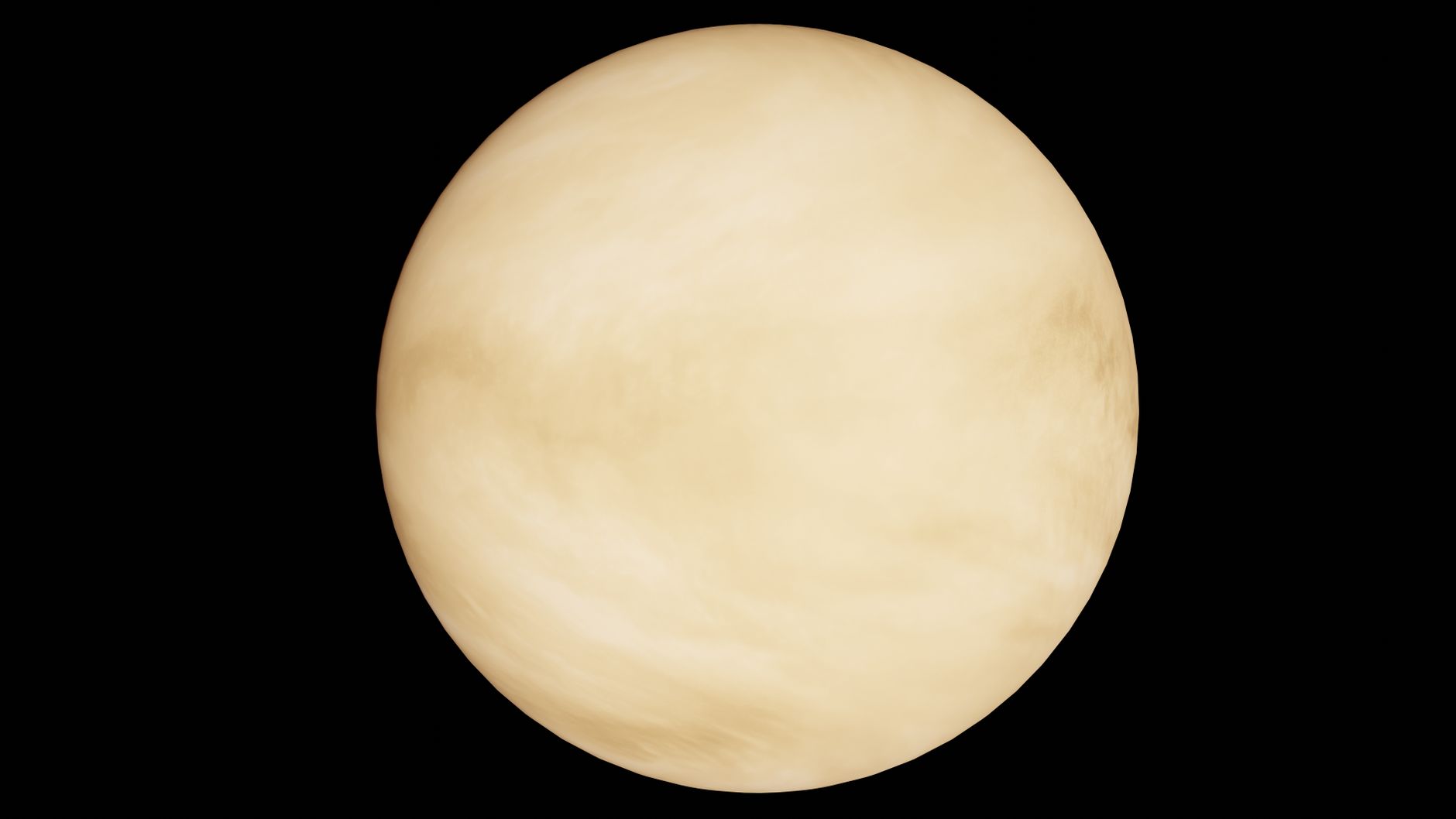
Venus appears to spin far faster than it actually does when we watch its bright clouds. The planet’s solid body takes 243 Earth days to complete one rotation, yet its upper atmosphere circles the world in about four days—a discrepancy of roughly sixty‑fold. New research by Stephen Kane highlights how this mismatch can lead astronomers to misinterpret rotation rates on distant worlds. As the ESA PLATO mission readies for launch, understanding the difference becomes crucial for exoplanet climate models.
What happened
Venus’s solid surface rotates once every 243 Earth days, one of the slowest spins in the Solar System. In contrast, the planet’s dense cloud deck moves around the globe in roughly four days, a phenomenon known as super‑rotation that makes the planet appear to spin about sixty times faster than its core.
Kane’s paper points out that many exoplanet rotation estimates rely on spectral signatures that actually trace atmospheric winds rather than the underlying planet. By observing a target at multiple wavelengths—including infrared that penetrates deeper into the atmosphere—researchers can map wind speeds at different altitudes and infer the true rotation of the solid body beneath the clouds.
Why it matters
Rotation governs how stellar heat is redistributed, shaping weather patterns, atmospheric chemistry, and potential habitability. An error of two orders of magnitude in rotation period propagates through climate models, leading to inaccurate predictions of temperature extremes and atmospheric dynamics on exoplanets. With PLATO set to deliver thousands of precise planet measurements, a systematic bias could skew statistical studies of planetary climates across the galaxy.
- Multi‑wavelength profiling yields more reliable rotation rates.
- Improved climate models enhance habitability assessments.
- Helps prioritize PLATO targets for follow‑up observations.
- Requires additional observing time and instrument resources.
- Faint exoplanet signals may remain below detection thresholds.
- Complex data reduction can introduce new systematic errors.
How to think about it
When interpreting rotational signatures, first ask which atmospheric layer the measurement probes. Combine optical, near‑infrared, and thermal‑infrared spectra to build a vertical wind profile. Compare the derived profile against general circulation models to separate bulk rotation from wind‑driven Doppler shifts. Apply this layered approach consistently across PLATO’s target list to keep rotation estimates on solid footing.
FAQ
Why does Venus’s atmosphere rotate faster than its surface?+
Can the multi‑wavelength method be applied to all exoplanets?+
How will PLATO benefit from correcting rotation estimates?+
- explainers·3 min readUnderstanding What Makes an Exoplanet Habitable After Andy Weir’s New Audio Drama
Explore the key factors that determine exoplanet habitability, from stellar light to atmosphere, inspired by Andy Weir’s Audible thriller.
- explainers·3 min readCan Rapidly Spinning Black Holes Divide into Two? New Theory Explores the Possibility
A new study suggests that only black holes rotating near their maximum rate could theoretically split into two, though real‑world evidence is lacking.
- explainers·3 min readJWST reveals a highly reflective atmosphere on lava world TOI-561b
JWST phase‑curve data reveal that ultra‑short‑period lava planet TOI‑561b reflects unusually high starlight, suggesting a reflective atmosphere.