Vaporizing Meteor Streaks Across Great Lacerta Nebula in APOD Image of August 3 2026
A bright meteor vaporized during a long exposure over the Great Lacerta Nebula, revealing colorful gas trails and clues to its composition.
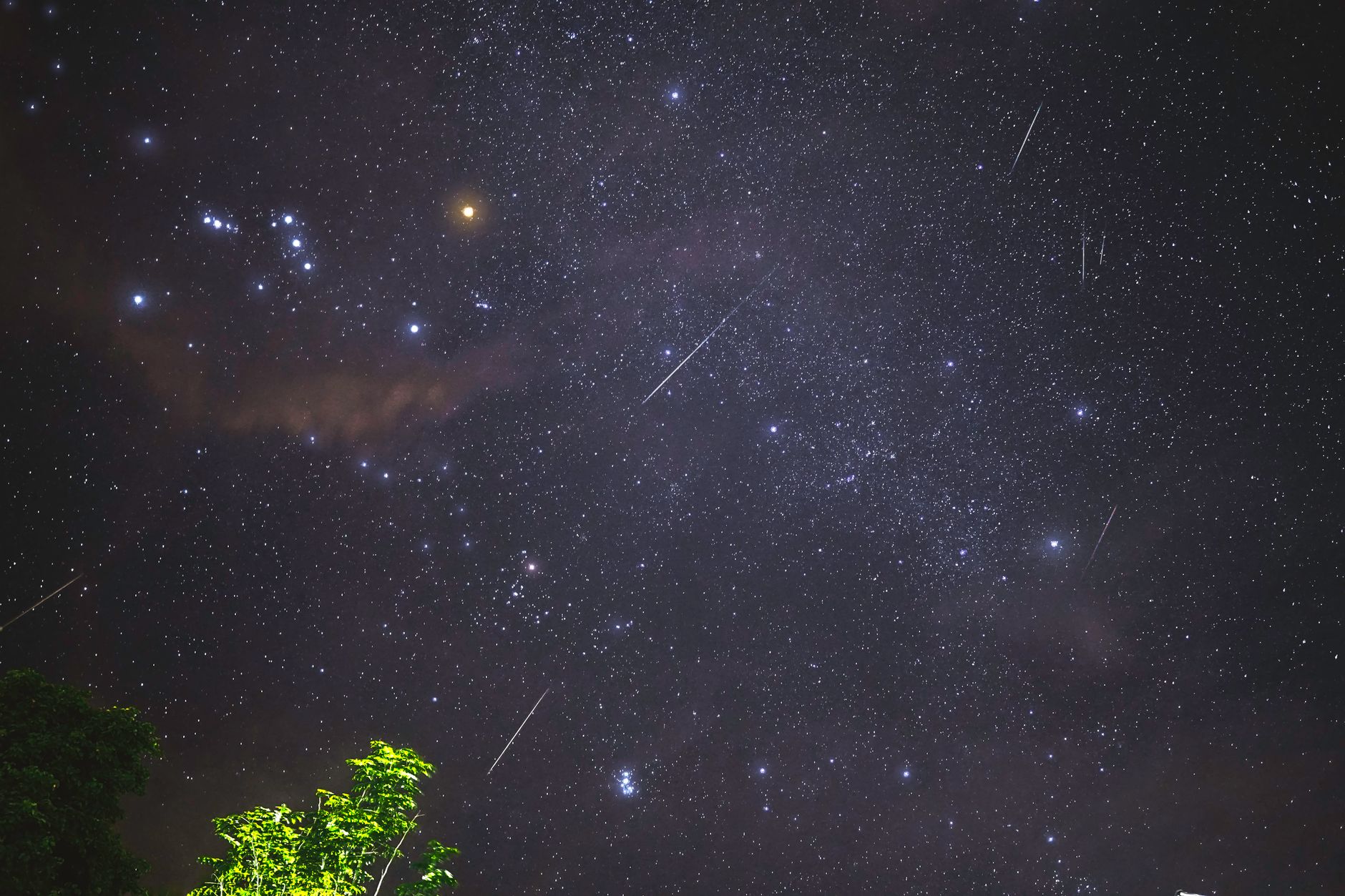
On August 3 2026, NASA’s Astronomy Picture of the Day showcased a striking long‑exposure photograph of the Great Lacerta Nebula that was unexpectedly bisected by a bright, vaporizing meteor. The meteoroid burned up in Earth’s atmosphere, leaving a vivid, multicolored trail that hints at its elemental makeup. Captured from the Death Valley Observatories, the image arrived during a month unusually rich in meteor activity. The coincidence of a gibbous Moon and three active meteor showers, including the Perseids, adds context to the fleeting display. This brief flash offers both a visual delight and a scientific clue about meteoroid composition.
What happened
The APOD image shows the faint red glow of the Great Lacerta Nebula at its core, overlaid by a bright, linear streak that quickly brightened and faded during the exposure. As the meteoroid entered Earth’s atmosphere, friction heated and excited the surrounding air, producing a luminous plasma that vaporized the stone itself. The resulting gas and dust expanded outward, scattering sunlight and creating the observed spectrum of reds, oranges, and blues that serve as compositional fingerprints.
The photograph was taken from the Death Valley Observatories in Nevada, a site known for dark skies and stable atmospheric conditions. August 2026 proved especially favorable for meteor watching, with three meteor showers active and the Perseids poised to peak in about ten days. Although a bright gibbous Moon competed for darkness, the meteor’s intrinsic brightness allowed it to dominate the frame.
These observations illustrate how a simple long‑exposure can capture both deep‑sky nebular structures and transient atmospheric events, linking celestial and atmospheric phenomena in a single frame.
Why it matters
The colored trail left by a vaporizing meteoroid offers a rare, natural spectroscopy that can hint at the presence of elements such as iron, magnesium, and sodium without a dedicated instrument. Understanding meteoroid composition informs models of solar system formation and the delivery of material to Earth. Additionally, the image highlights the value of coordinated sky‑watching during active shower periods, encouraging both amateur and professional observers to capture similar events. Publicly shared images like this also boost interest in night‑sky photography and reinforce the importance of dark‑site observatories.
- Provides visual evidence of meteoroid composition through color.
- Combines deep‑sky nebula imaging with transient atmospheric phenomena.
- Encourages public participation in meteor watching during peak showers.
- The meteor’s brief visibility limits detailed scientific analysis.
- Bright Moonlight can mask fainter meteors and affect color perception.
- Without spectroscopic equipment, compositional conclusions remain tentative.
How to think about it
When planning a night‑sky session, check the lunar phase and active meteor shower calendars to maximize contrast between meteors and the background sky. Use a sturdy mount and long exposure times to capture both faint nebular light and fast‑moving meteors. If you aim to infer composition, consider adding a low‑resolution spectrograph or color filter set to record the trail’s wavelength distribution more precisely. Finally, share striking captures on platforms like APOD to contribute to community awareness and inspire further observations.
FAQ
What causes a meteor to vaporize and leave a colored trail?+
How can the colors of a meteor’s trail indicate its composition?+
When is the best time to observe meteors like the one in the APOD image?+
- explainers·2 min readAPOD August 8, 2026: Comet Tempel 2 Near Globular Cluster M30
NASA’s APOD captures comet 10P/Tempel 2 passing near globular cluster M30, illustrating how comet dust trails can appear to pierce distant clusters.
- explainers·3 min readHow to Optimally Watch the Perseid Meteor Shower on Aug 12-13
Learn the best times, locations, and viewing tips to see the Perseid meteor shower at its peak on Aug 12‑13, when dark skies and optimal conditions align.
- news·3 min readCanada's Night Sky to Host Peak Perseid Meteor Shower and Partial Solar Eclipse on Aug 12-13
The Perseid meteor shower peaks Aug 12‑13, coinciding with a partial solar eclipse, offering Canadians a spectacular sky show.