Astronomers Uncover 'Improbable' TOI-201 System, Challenging Planet Formation Theories
A recent study of the TOI-201 system reveals how a highly eccentric brown dwarf shaped the formation of its inner planets, defying traditional models. This discovery offers new insights into…
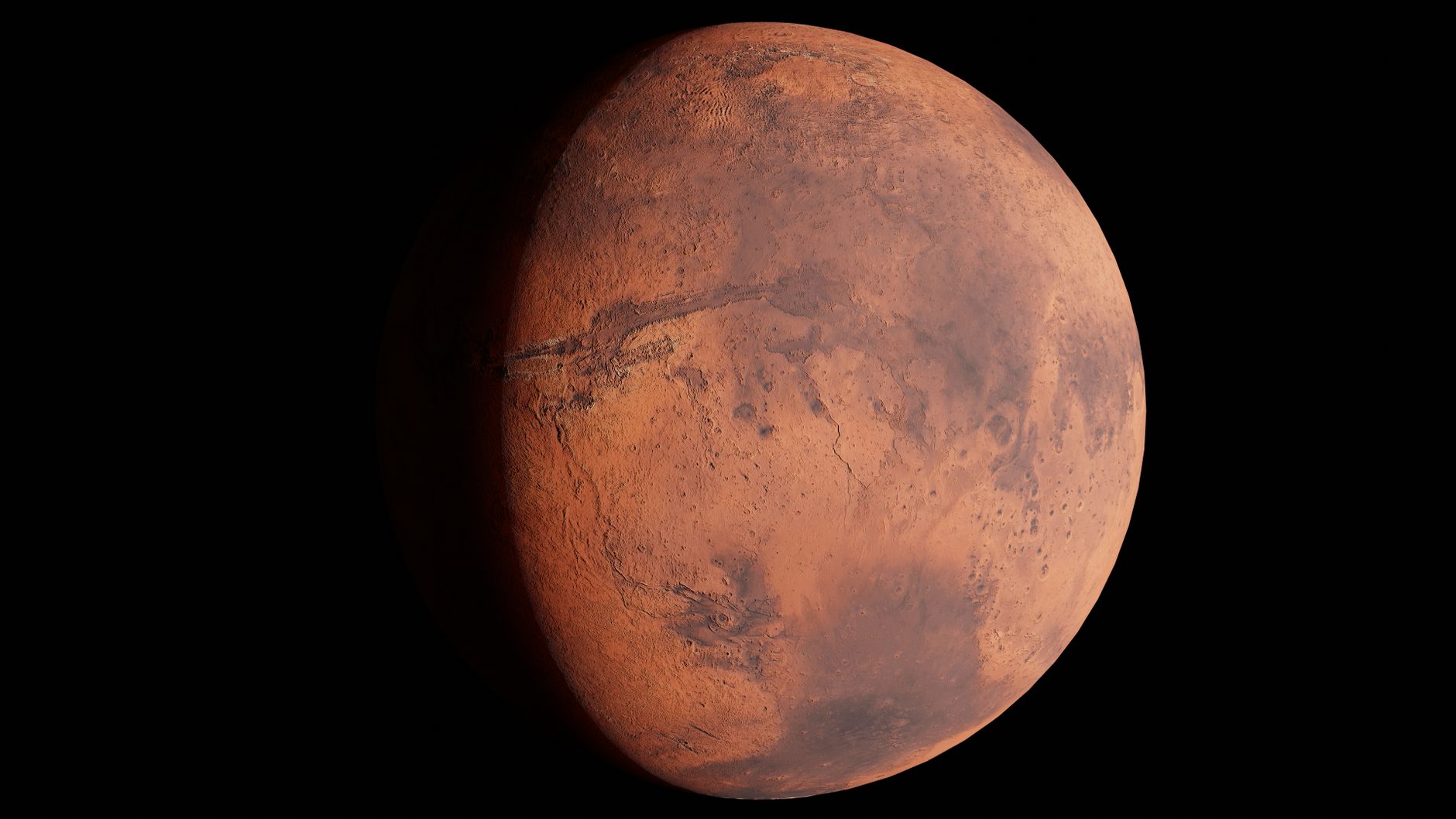
Astronomers have recently characterized a remarkable exoplanetary system, TOI-201, which features a brown dwarf with an unusually elliptical orbit. This compact system, observed by an international team using data from NASA's TESS, presents a unique scenario where the brown dwarf's powerful gravitational influence appears to have dictated the formation and orbital alignment of its two inner planets. The findings challenge long-held assumptions about how planetary systems evolve, particularly in the presence of massive, eccentric companions.
What happened
An international team, led by the European Southern Observatory (ESO) and the National Institute for Astrophysics (INAF), investigated the TOI-201 system, which comprises a brown dwarf (TOI-201 c), a rocky super-Earth (TOI-201 d), and a gaseous warm Jupiter (TOI-201 b). The brown dwarf, TOI-201 c, stands out with its highly elliptical orbit (eccentricity of 0.622) and an exceptionally long orbital period of 2,881 days. Its mass, near the upper limit for giant planets, was precisely constrained by combining a single transit observation from TESS with spectroscopic data and new radial velocity measurements, making it the transiting object with the longest known orbital period for which the mass has been confirmed.
Despite the brown dwarf's dramatic orbit, the two inner planets, TOI-201 d (5.8-day period) and TOI-201 b (53-day period), orbit on planes perfectly aligned with TOI-201 c, a configuration astronomers term a "restricted system." Traditional models typically predict that gas giants form at distances of 2 to 3 Astronomical Units (AU) from their star, and an object as massive and eccentric as TOI-201 c would be expected to destabilize regions beyond 1.5 AU. Instead, the brown dwarf's gravitational influence appears to have forced the inner planets to form within a narrow, innermost zone, with the warm Jupiter exhibiting strong transit timing variations indicative of intense dynamic interactions with TOI-201 c.
Why it matters
This discovery significantly impacts our understanding of planet formation, particularly in systems with massive, eccentric companions. It suggests that gravitational perturbations from such objects are not always disruptive; they can, unexpectedly, act as sculptors, constraining and enabling the formation of compact planetary architectures. The TOI-201 system provides a crucial real-world example that pushes the boundaries of theoretical models, highlighting the diverse and complex pathways of planetary evolution. Furthermore, the successful characterization of TOI-201 c using multiple methodologies—photometric transits, transit timing variations, radial velocities, and soon, space astrometry from Gaia—sets a new standard for investigating unique and challenging exoplanetary systems.
- Challenges and refines existing planet formation models, expanding our understanding of planetary system diversity.
- Reveals a new mechanism where massive, eccentric objects can constrain and shape compact inner planetary architectures.
- Showcases the power of combining multiple observational techniques for comprehensive exoplanet characterization.
- The "improbable" nature of TOI-201 suggests it may represent a rare exception rather than a universal formation pathway.
- Requires re-evaluation of assumptions about dynamically unstable regions around eccentric massive companions.
- Further observations and theoretical work are needed to fully understand the long-term stability and evolutionary implications of such systems.
How to think about it
When considering exoplanetary systems, it's crucial to move beyond simplified models and embrace the full spectrum of gravitational interactions. The TOI-201 system reminds us that stellar and substellar companions, even those with highly eccentric orbits, aren't always destructive forces. Instead, their gravitational fields can act as cosmic architects, sculpting unique and stable configurations within a system. This implies that our search for habitable worlds or understanding planetary evolution should account for these complex, often counter-intuitive, dynamic relationships rather than assuming a universal, linear formation process.
FAQ
What is a brown dwarf and how is TOI-201 c unique?+
How does TOI-201 challenge traditional planet formation theories?+
What does 'restricted system' mean for TOI-201?+
- astronomy·4 min readAstronomers Discover Two Jupiter-Sized 'Super-Puff' Exoplanets Lighter Than Cotton Candy
Astronomers have identified two new 'super-puff' exoplanets, each the size of Jupiter but with a density lighter than cotton candy. This rare discovery challenges planet formation theories.
- missions·4 min readTESS Uncovers First Microlensing Exoplanet, Expanding Its Planet-Hunting Horizon
NASA's TESS satellite has unexpectedly discovered its first exoplanet using gravitational microlensing, a method distinct from its usual transit technique. This breakthrough suggests more distant…
- astronomy·4 min readAstronomers Uncover a Novel Class of Exoplanets Exhibiting Peculiar Atmospheric Signatures
Scientists have identified a new category of exoplanets displaying unexpected atmospheric compositions. This discovery challenges current planet formation models and opens new avenues for…