How the Sun’s Galactic Path and Early Superflares Influenced Earth’s Climate
New NASA studies link the Sun’s movement through the Milky Way and its youthful superflare activity to ancient climate swings on Earth.
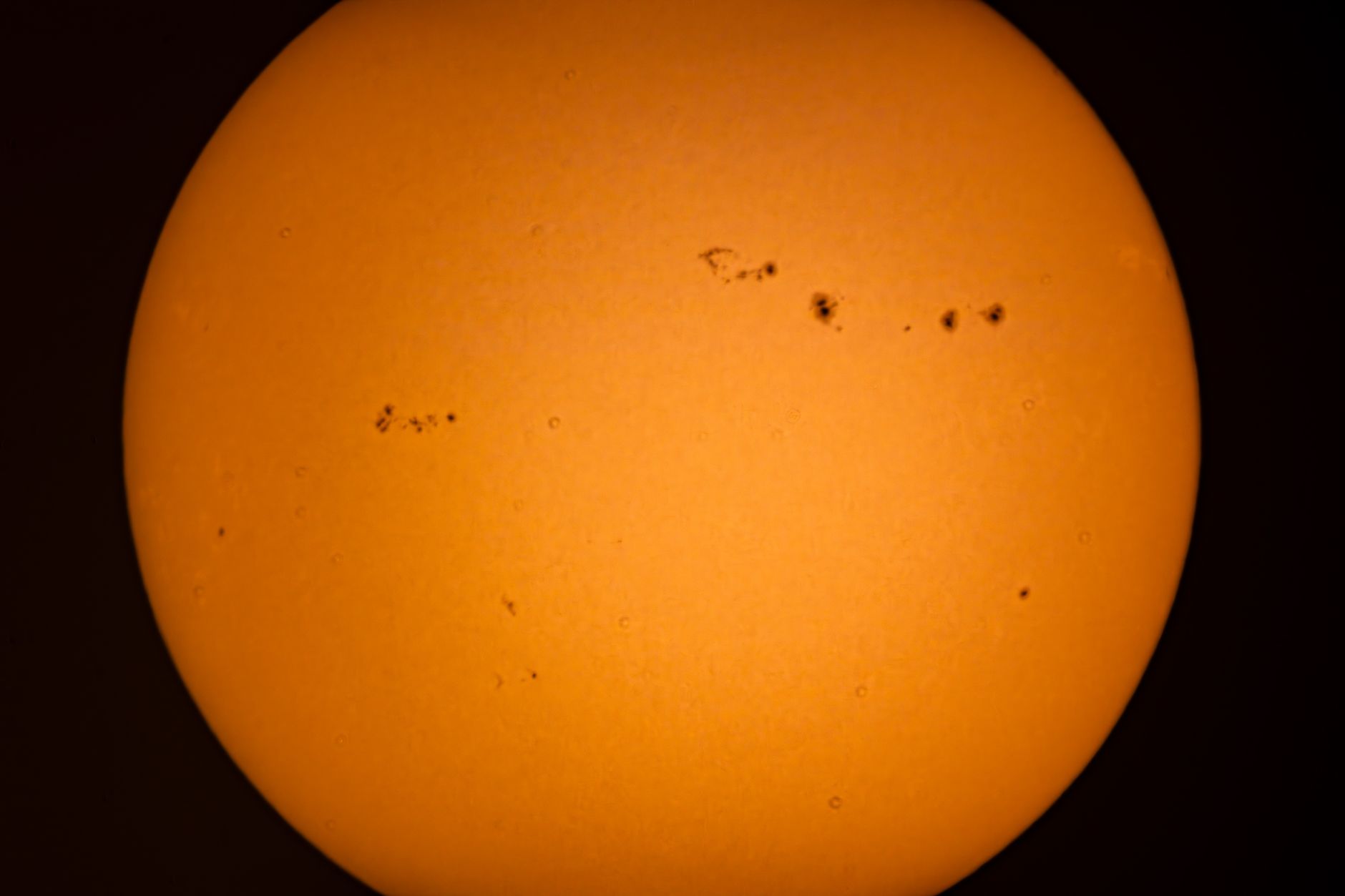
The Sun is more than a static light source; its journey through the Milky Way and its tempestuous early years have left fingerprints on Earth’s climate. Recent NASA research reconstructed the heliosphere’s galactic trajectory and examined how a superflare‑rich young Sun could have boosted greenhouse gas production. These findings offer a new lens on the ice‑age swings that punctuated the planet over the past tens of millions of years. Understanding this stellar‑climate link reshapes how we interpret past climate change and anticipate future solar influences.
What happened
Scientists at NASA’s SHIELD center used computer models to reverse‑engineer the heliosphere’s motion through the Milky Way. The simulations show the bubble of solar wind has traversed regions of varying interstellar density, altering cosmic‑ray flux and solar wind pressure at Earth. Those external changes are thought to have modulated cloud formation and, consequently, global temperature.
In a companion study, researchers examined the young Sun, which was dimmer but erupted far more frequently with powerful superflares. Energetic particles from those flares can drive atmospheric chemistry that produces potent greenhouse gases such as nitrogen oxides and hydrogen sulfide, providing an extra warming boost despite lower solar luminosity.
Together, the two lines of evidence suggest that both the Sun’s galactic environment and its early magnetic activity contributed to the temperature swings recorded in the geological record.
Why it matters
Linking stellar behavior to Earth’s climate adds a third, often overlooked driver to the classic Milankovitch‑orbital and greenhouse‑gas framework. It refines our understanding of past ice ages, improves climate reconstructions, and offers a template for assessing habitability of exoplanets orbiting variable stars. Moreover, recognizing the magnitude of ancient solar influences helps calibrate how much modern solar variability can affect today’s warming trend.
- Provides a physical mechanism for unexplained temperature swings.
- Bridges stellar astrophysics with Earth system science.
- Improves models of exoplanet climates under variable stellar environments.
- Heliosphere simulations involve uncertainties in interstellar medium properties.
- The superflare greenhouse effect remains theoretical and hard to validate.
- Separating solar influence from terrestrial factors in the rock record is challenging.
How to think about it
When evaluating any climate episode, treat the Sun as a three‑part actor: its intrinsic luminosity, its magnetic‑flare activity, and the external galactic environment that shapes the heliosphere. Compare these solar variables alongside orbital forcing and atmospheric composition to build a more complete causal chain. For exoplanet studies, map a star’s galactic trajectory and flare history before drawing conclusions about surface conditions.
FAQ
How could a dimmer young Sun still warm Earth?+
What evidence ties heliosphere passages to climate events?+
Can this research improve predictions of future solar impacts on climate?+
- explainers·3 min readInouye Telescope Captures Visible Image of Sun, Revealing Kelvin‑Helmholtz Instability
A new visible-light image from the Inouye Solar Telescope shows the Sun’s surface with city‑size detail, revealing Kelvin‑Helmholtz instability.
- explainers·3 min readThree mind-blowing space facts: lunar dinosaur fossils, planets between Earth and Moon, Sun’s roar
Explore three astonishing space facts: possible dinosaur fossils on the Moon, all planets fitting between Earth and Moon, and the Sun’s deafening roar.
- explainers·9 min readUnveiling the Milky Way: Our Barred Spiral Home in the Cosmic Expanse
Explore the Milky Way, our home galaxy, from its barred spiral structure and supermassive black hole to its place in the Local Group. Understand its immense scale and the ongoing scientific journey.