Rapid Stellar Spin Explains Dimming Flashes in Repeating Partial Tidal Disruption Events
New research shows a star’s pre‑encounter spin can cause the fading light of repeated partial tidal disruption events around supermassive black holes.
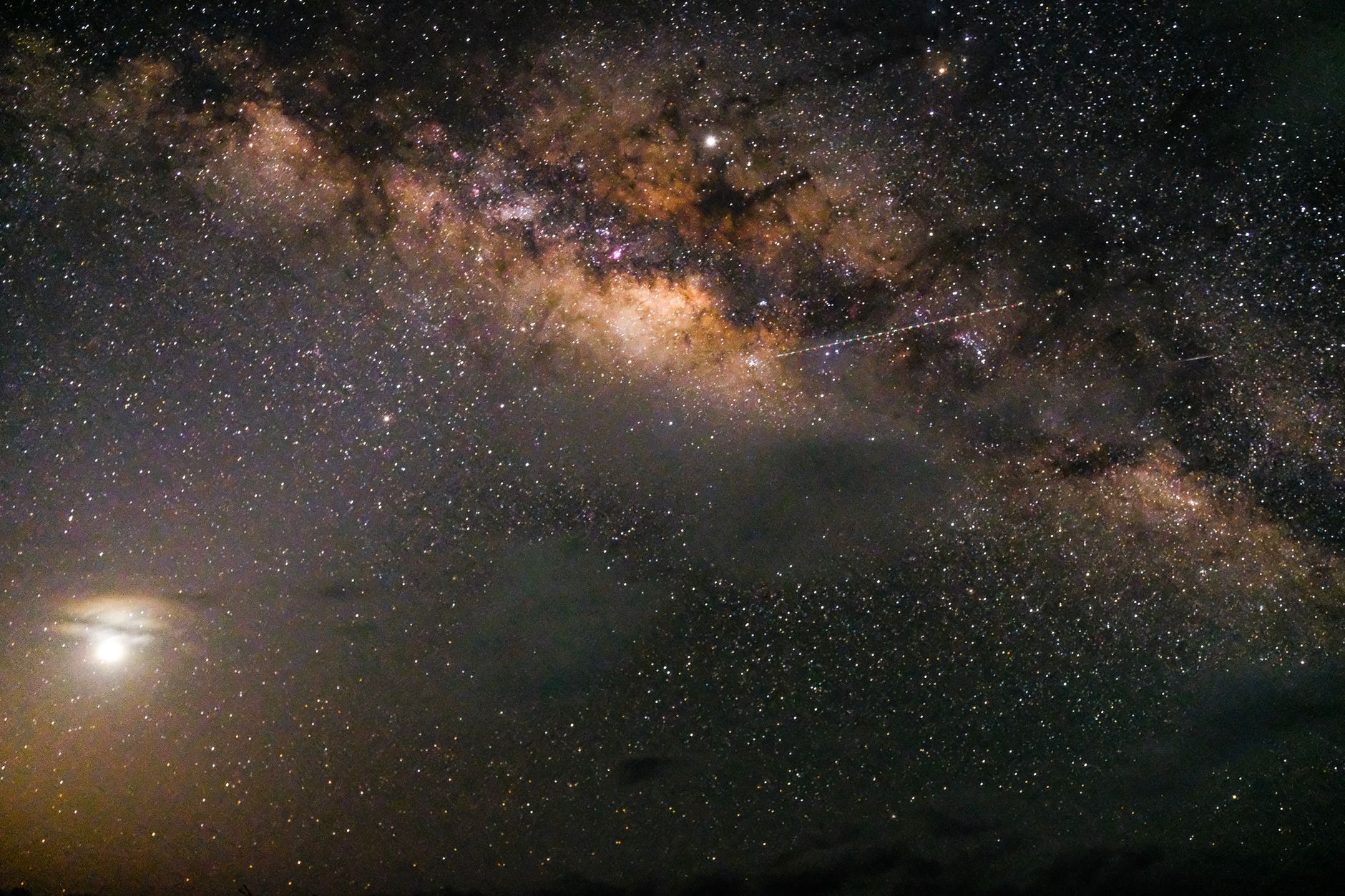
Stars that swing too close to a supermassive black hole can survive the encounter, only to return for another close pass. These repeating partial tidal disruption events (rpTDEs) produce bright flares each time, but astronomers have noticed that the flashes grow dimmer with each orbit. A recent study from Syracuse University links this fading to the star’s original spin rate, offering a physical explanation for a long‑standing puzzle. Understanding the role of stellar spin helps refine models of black‑hole feeding and the life cycles of stars in galactic cores.
What happened
The research examined several rpTDEs captured by wide‑field time‑domain surveys, focusing on how the brightness of each flare changed over successive encounters. By incorporating stellar rotation into tidal‑disruption simulations, the team reproduced the observed trend of steadily fainter flashes. The models show that a fast‑spinning star is partially stripped of its outer layers during the first close approach, leaving a more compact core that yields less luminous emission on later passes.
Why it matters
If spin drives the fading, rpTDE light curves become a diagnostic tool for measuring stellar rotation in environments where direct observation is impossible. This insight improves estimates of how much material black holes accrete from stars, influencing predictions of black‑hole growth and feedback in galaxies. It also clarifies why some galactic nuclei show repeated, weakening outbursts rather than a single, catastrophic flare.
- Provides a physical mechanism for observed dimming in rpTDEs.
- Enables indirect measurement of stellar spin in extreme gravitational fields.
- Refines models of black‑hole feeding and galaxy evolution.
- Relies on assumptions about stellar structure that are hard to verify.
- Limited to events where sufficient flare data exist.
- Does not explain all variability seen in tidal disruption events.
How to think about it
When evaluating a new rpTDE, consider the star’s possible rotation as a factor alongside its mass and encounter distance. Compare the flare’s luminosity decay across multiple passages; a systematic decline may hint at a high‑spin progenitor. Use this perspective to prioritize follow‑up observations with time‑domain telescopes, aiming to capture early‑stage flares that hold the strongest spin signatures.
FAQ
What distinguishes a repeating partial tidal disruption event from a full tidal disruption?+
How can astronomers infer a star’s spin from flare observations?+
Will all future rpTDE observations show dimming if the star is spinning fast?+
- astrophysics·2 min readWhy Black Hole Jets Are Brighter at the Edges: New Insight from Centaurus A
Astrophysicists uncover why jets from the supermassive black hole in Centaurus A glow brighter at their edges, reshaping our view of jet physics.
- astrophysics·3 min readReanalysis of UHZ1 Discredits Earlier Claim of a Massive Early‑Universe Black Hole
A new study reprocesses Chandra and JWST data, finding no evidence for the previously claimed 10‑100 million‑solar‑mass black hole in galaxy UHZ1 at redshift 10.
- astrophysics·3 min readHot plasma flow near supermassive black holes enables powerful relativistic jets
New XRISM and radio observations reveal a hot plasma flow that bridges the accretion disk and jet in galaxy 3C 120, solving a long‑standing jet puzzle.