Stargazing for Patriots: Three Celestial Targets Celebrating America's 250th
Celebrate America's 250th birthday by exploring unique night sky targets. Discover the Apollo 11 landing site, the star Spica, and the constellation Aquila, connecting history with the cosmos.
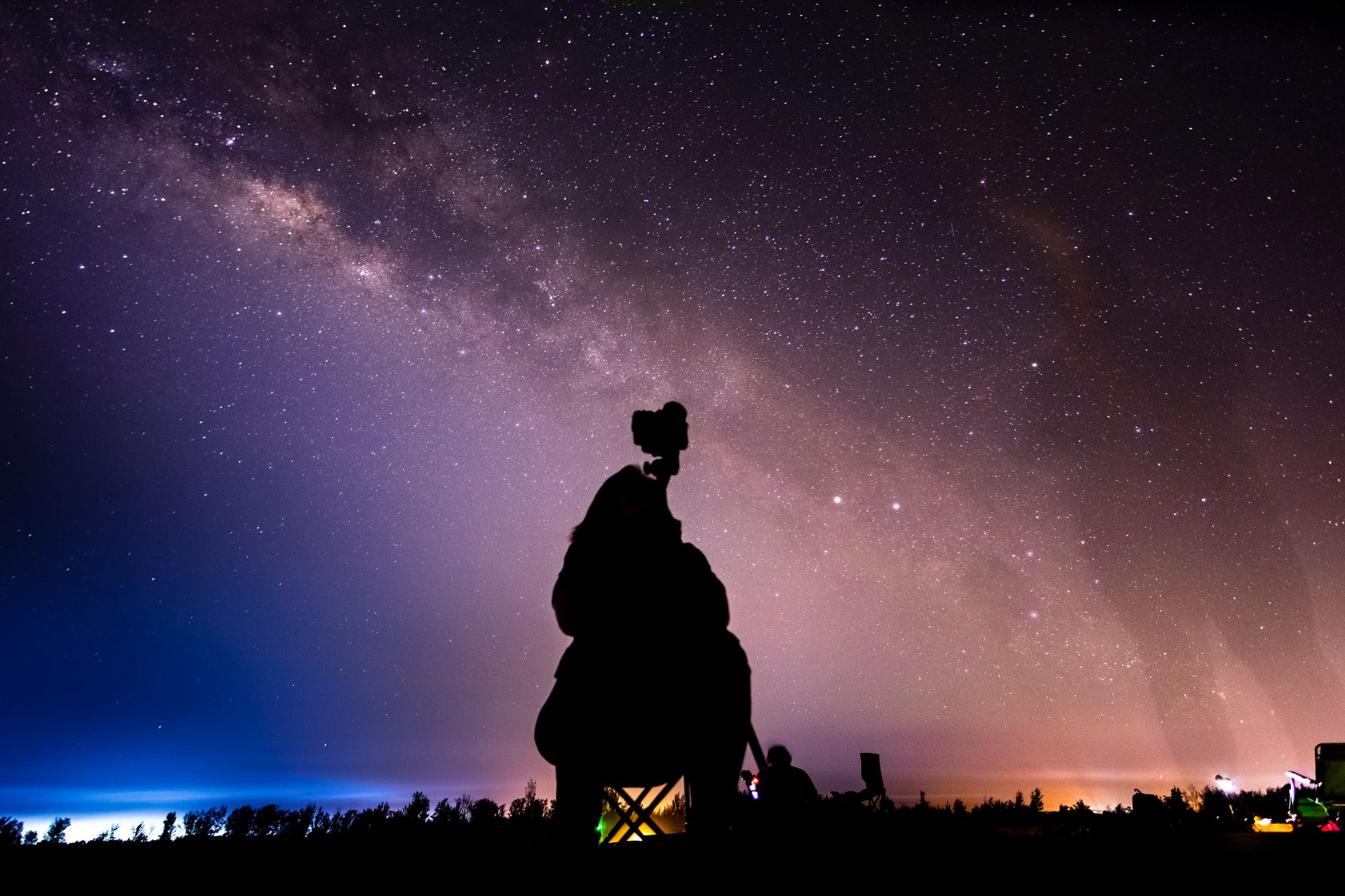
As the United States approaches its semiquincentennial, a unique opportunity arises to blend historical reflection with cosmic wonder. Instead of traditional celebrations, enthusiasts can turn their gaze skyward to observe celestial objects that hold symbolic or direct connections to American history and achievement. This summer, the night sky offers a chance to explore a lunar landmark, a star whose light began its journey 250 years ago, and a constellation embodying a national emblem, providing a profound new perspective on the nation's enduring legacy.
What happened
For America's 250th birthday, three distinct celestial targets offer a chance to connect with the nation's past. First, the Apollo 11 "Tranquility Base" landing site on the Moon can be located. With the naked eye, one can find the dark expanse of Mare Tranquilitatis on the Moon's eastern limb. For a more precise view, a small telescope can reveal the specific landing area between the Sabine and Moltke impact craters, marking humanity's first steps on another world on July 20, 1969.
Next, stargazers can seek out the blue-white double star system Alpha Virginis, better known as Spica. Located approximately 250 light-years from Earth in the constellation Virgo, the light we see from Spica today began its journey around the time the United States declared its independence. To find it, locate the Big Dipper's handle, follow its curve past Arcturus, and Spica will be the next bright blue-white star along that arc.
Finally, the constellation Aquila, the "Eagle," provides a symbolic link. Adopted as a national emblem in 1782, the Bald Eagle finds its celestial counterpart in Aquila, which has been associated with an eagle for millennia. Shining along the Milky Way in early summer, Aquila's brightest star, Altair, can be found glowing halfway up the southern sky for U.S. viewers around midnight. Altair, along with Alshain and Tarazed, forms the head of this majestic celestial bird.
Why it matters
Connecting these celestial observations to America's 250th anniversary provides a unique and profound way to appreciate both human endeavor and the cosmic scale. It transforms a historical milestone into an active, engaging experience, fostering a deeper sense of wonder and perspective. By gazing at the Moon's Tranquility Base, we're reminded of the nation's pioneering spirit and monumental achievements in space exploration. Observing Spica, whose light embarked on its journey when the nation was born, offers a tangible link to the passage of time and the enduring legacy of a nascent republic.
Furthermore, identifying Aquila, the celestial eagle, reinforces the symbolic ties between the nation's identity and the natural world, extending that connection to the cosmos. This form of celebration encourages education, curiosity, and a shared experience under the vast night sky, uniting present-day observers with historical moments through the timeless medium of starlight. It's a powerful reminder that while national histories unfold on Earth, humanity's story is also written among the stars.
- Offers a unique and memorable way to celebrate a historic national anniversary.
- Encourages learning about astronomy, constellations, and space history.
- Provides a tangible connection to the vastness of space and the passage of time.
- Accessible to many, with some targets visible to the naked eye or with basic equipment.
- Fosters a sense of wonder and shared experience among stargazers.
- Some targets, like the precise Apollo 11 site, require a small telescope.
- Light pollution can significantly hinder visibility in urban areas.
- Lunar observation requires specific phases of the moon for optimal viewing.
- Requires some prior knowledge or the use of stargazing apps to locate targets.
- Weather conditions can prevent successful observation.
How to think about it
Approaching this celebration through stargazing invites a shift from traditional festivities to a more contemplative and educational experience. Instead of just fireworks and parades, consider setting aside an evening to actively engage with the night sky. This isn't just about passively looking up; it's about connecting with stories, science, and history. Use stargazing apps to guide your exploration, or consult star charts to familiarize yourself with the constellations. Think of it as a cosmic treasure hunt, where each discovery deepens your appreciation for the nation's journey and humanity's place in the universe. It's an opportunity to reflect on how far we've come, both as a nation and as a species reaching for the stars, making the 250th anniversary a truly universal celebration.
FAQ
What equipment do I need to see these targets?+
When is the best time to observe the Apollo 11 landing site?+
How does Spica's distance relate to America's 250th anniversary?+
- explainers·12 min readUnlocking the Cosmos: A Comprehensive Guide to Stargazing Without a Telescope
Unlock the night sky's wonders without a telescope. Learn to begin amateur astronomy with just your eyes or binoculars, observing celestial objects and contributing to citizen science.
- astronomy·3 min readWhat to Expect at Each of the Five Stages of the August 12, 2026 Total Solar Eclipse
Learn the five key phases of the August 12, 2026 total solar eclipse, from first contact to the end of totality, and why they matter.
- astronomy·3 min readAugust 12, 2026 Partial Solar Eclipse: When and Where to Watch Across the U.S. and Canada
A partial solar eclipse will sweep across North America on August 12, 2026. Find out the best viewing times and locations for the U.S. and Canada.