Solar Sails and Lightsails: Sailing to the Stars on Photons
Light carries momentum. When photons bounce off a reflective surface, they push it — imperceptibly at first, but in the vacuum of space with no air resistance, that gentle push accumulates for years and years. Solar sails use sunlight to accelerate spacecraft without carrying any fuel at all. Laser-driven lightsails could push them to a fraction of the speed of light.
Photon propulsion is a wonderful reminder that nature rewards patience. A beam of light pushes so weakly that the force is almost absurd at human scales. In space, however, tiny forces applied continuously can outperform big bursts that end quickly. Solar sails exploit that truth by replacing propellant with time and reflectivity. Lightsails take the same idea and add an external laser, turning a gentle solar nudge into a potentially interstellar shove.
What happened
A solar sail is a large, lightweight reflective membrane that gains momentum from sunlight. Because no onboard fuel is burned for thrust, the spacecraft can keep accelerating as long as light pressure and trajectory permit. Missions such as JAXA's IKAROS and The Planetary Society's LightSail 2 have shown that solar sailing is not just theoretical. It is a real, flown form of propulsion, especially attractive for small spacecraft and long-duration missions where low continuous thrust is acceptable.
The limitation is that sunlight is weak and falls off with distance from the Sun. That makes pure solar sails most useful in the inner solar system or for missions where gradual trajectory shaping is enough. A laser-driven lightsail changes the equation by supplying a far more intense beam from a distant power source. This is the logic behind concepts like Breakthrough Starshot: keep the spacecraft tiny, keep the sail reflective, and move the giant energy system off the vehicle entirely.
Engineering challenges remain significant. Sails must deploy reliably, stay pointed correctly, survive thermal loads, and preserve shape despite extreme thinness. For laser sails, beam control, sail stability, and materials performance under intense illumination become decisive. But the core physics is elegantly simple. Light pushes. Space does not slow you down. Time converts a whisper of force into meaningful velocity.
Why it matters
Solar and laser sails matter because they point toward a different philosophy of propulsion. Instead of carrying ever more reaction mass, they use environmental or external energy sources. That reduces spacecraft mass and can make very high final velocities possible for small probes. In a field dominated by tanks and engines, sails are a radically minimalist idea.
They also matter because they scale across futures. Today, solar sails can support specialized scientific missions. Tomorrow, lightsails may enable rapid outer-solar-system probes or the first interstellar flybys. Few propulsion concepts connect present-day hardware so directly to long-term starflight ambitions.
- Sails do not need onboard propellant for primary thrust, reducing spacecraft mass.
- Continuous low thrust can build substantial speed over long missions.
- Laser-driven versions could achieve velocities far beyond conventional spacecraft.
- Thrust is very low, so sails are unsuited to missions that need rapid maneuvering.
- Large delicate membranes are difficult to deploy and control reliably.
- Lightsail systems require enormous external infrastructure and precise beam guidance.
How to think about it
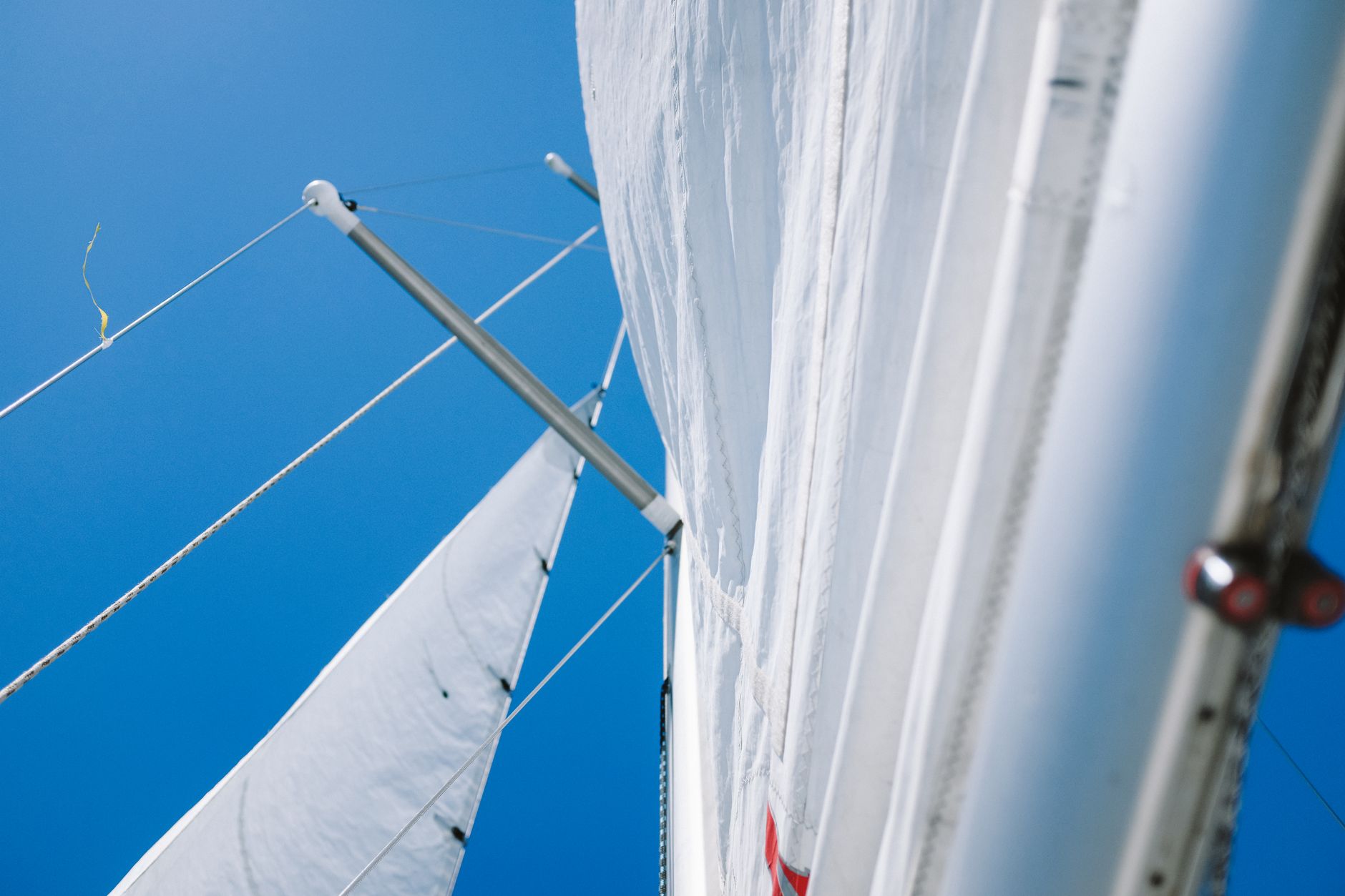
The best mental model is maritime rather than automotive. Sails do not overpower the environment; they work with a persistent flow. In space, the flow is photons rather than wind, and the vessel is a membrane rather than a hull. That analogy explains both the beauty and the limitation of the concept: you trade brute acceleration for endurance.
This matters because many future missions may reward exactly that trade. Not every spacecraft needs to sprint. Some need to cruise efficiently for years, adjust trajectories subtly, or exploit giant beamed-energy infrastructure. Sails remind us that propulsion is not one problem with one answer, but a menu of strategies shaped by distance, mass, and patience.
FAQ
Do solar sails really work?+
What is the difference between a solar sail and a lightsail?+
Could a lightsail reach another star?+
- missions·4 min readBreakthrough Starshot and Laser-Pushed Lightsails to Alpha Centauri
In 2016, a coalition of scientists and billionaires announced a project to send a thumbnail-sized spacecraft to Alpha Centauri within a generation. The plan: accelerate a tiny sail to 20% the speed of light using a ground-based laser array. The physics works. The engineering is the challenge.
- spaceflight·3 min readAntimatter Propulsion: Assessing Its Potential for Future Interstellar Missions
Explore how matter‑antimatter annihilation could power interstellar spacecraft, its challenges, and why it matters for humanity’s deep‑space future.
- spaceflight·4 min readNuclear Pulse Propulsion and Project Orion: A Star Drive That Almost Was
In the late 1950s and early 1960s, a group of physicists at General Atomics designed what remains the most powerful spacecraft propulsion system ever seriously considered: a ship that would ride a series of nuclear explosions to velocities capable of reaching other stars within a human lifetime. Project Orion was cancelled in 1963. Its physics still works.