Single Asteroid Impact Likely Formed Deimos' South‑Pole Depression and Regolith Layer
New simulations suggest a single, non‑destructive asteroid impact created Deimos' south‑pole depression and its dusty regolith.
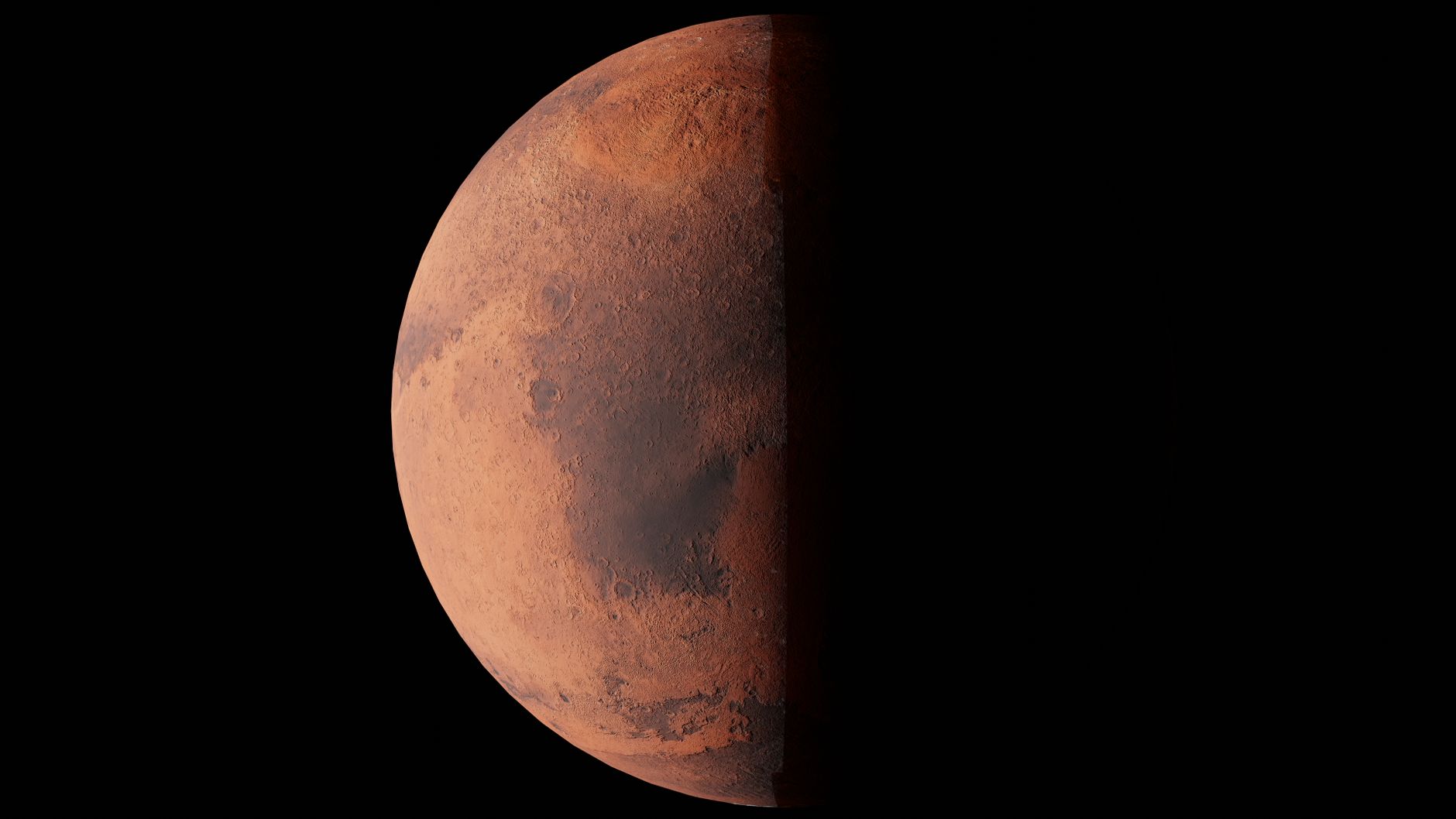
A puzzling depression at Deimos' south pole and its dusty surface have long baffled scientists. New research using high‑resolution SPH simulations shows that a single, non‑destructive asteroid impact can produce both features. The study, the first to incorporate data from ESA’s Hera flyby, offers a unified explanation for Deimos' appearance. Understanding how small moons acquire regolith informs broader theories of surface evolution across the solar system.
What happened
Researchers led by Dr. Sabina Raducan applied the Bern Smoothed Particle Hydrodynamics (SPH) code to model collisions between an asteroid and Deimos. The simulations, which break the bodies into millions of particles and account for gravity, density, and material strength, reproduced a shallow, oval depression at the moon’s south pole and generated a loose, dust‑laden surface layer.
The team integrated high‑resolution imagery from ESA’s Hera spacecraft, which recently flew by Deimos, to constrain the impact geometry and validate the model. Their findings were published in Nature Astronomy, marking the first study to combine Hera data with SPH modeling for this moon.
Why it matters
Linking a single impact to both the polar depression and the regolith provides a parsimonious explanation for Deimos’ distinct morphology, reducing the need for multiple, unrelated processes. It also demonstrates how mission data can refine impact simulations, improving our ability to interpret surface features on other small bodies. The results may influence how scientists assess the evolution of irregular moons and asteroids throughout the solar system.
- Offers a unified formation scenario for two distinct features.
- Incorporates real spacecraft observations (Hera flyby).
- Shows the power of SPH modeling for small‑body geology.
- Relies on assumptions about material strength and impact angle.
- Simulation resolution may miss finer‑scale processes.
- Cannot completely exclude alternative formation mechanisms.
How to think about it
When evaluating unusual surface structures on moons or asteroids, start by asking whether a single impact could account for multiple observations. Use high‑fidelity SPH codes to test a range of impact angles, velocities, and material properties, and then compare the outcomes with any available spacecraft imagery or spectral data. If the model reproduces both topographic and textural features, it strengthens the case for an impact‑driven origin, but always consider complementary processes such as thermal fracturing or space‑weathering.
FAQ
What evidence links the impact to the south‑pole depression?+
Could other processes have formed Deimos’ regolith?+
How does the Hera flyby data improve the simulation?+
- astronomy·3 min readMartian Crust Meteorite 'Black Beauty' Shows Evidence of Early Surface Water
New tomography of the Martian crust meteorite NWA 7034 reveals hydrated minerals, indicating a sizable early water reservoir on Mars.
- missions·3 min readMars Global Surveyor Launches in 1996, Reviving Mars Exploration After Two Decades
NASA's 1996 Mars Global Surveyor launch revived Mars exploration, mapping the planet and relaying rover data for a decade.
- missions·3 min readNASA's Psyche spacecraft completes Mars gravity‑assist flyby, delivering new data
NASA's Psyche probe used Mars' gravity on May 15, gathering instrument data that validates its tools before the 2029 asteroid mission.