Could a Wandering Rogue Planet Ever Host Life or a Future Colony?
Astronomers believe there are more rogue planets — worlds flung out of their solar systems, drifting alone through the galaxy — than stars. Most are frozen and dark. A small fraction might not be. And some futurists have asked whether rogue planets could serve as generation-ship way stations or even destinations.
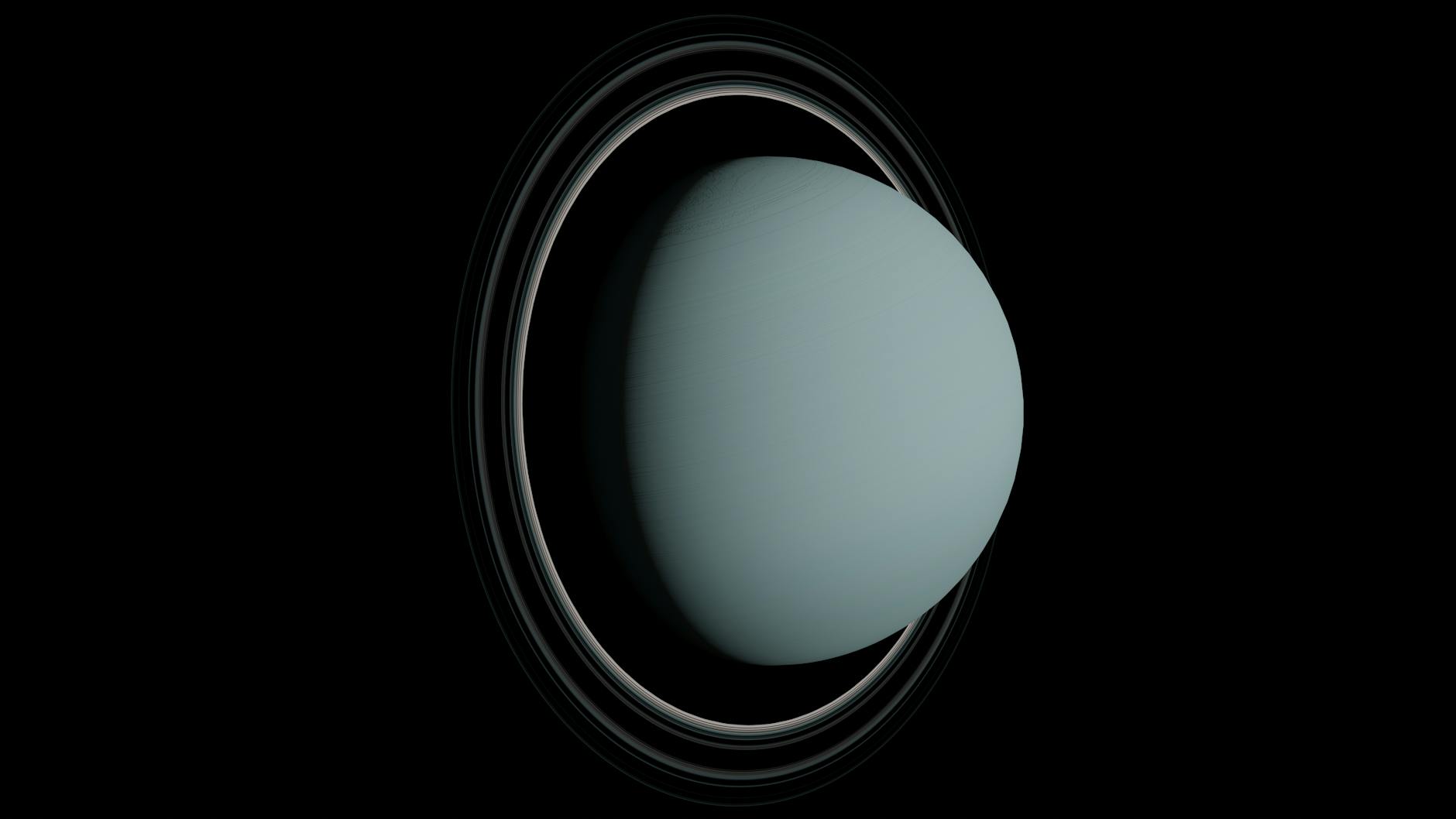
A rogue planet is what remains when a world loses its star. Gravitational chaos can eject planets during the violent early evolution of planetary systems, sending them into the dark between suns. At first glance that sounds like the coldest possible place for life. Yet modern astrobiology is careful about first glances. Internal heat, thick atmospheres, and subsurface oceans can make a starless world less dead than intuition suggests.
What happened
Free-floating planets are difficult to detect, which is why microlensing surveys have been so important. These events briefly reveal otherwise invisible masses when they bend the light of background stars. Estimates remain uncertain, but there may be enormous numbers of rogue planets in the Milky Way. Some are likely giant planets, while others may be Earth- or super-Earth-sized bodies expelled from young systems during episodes of orbital instability.
A rogue planet with no starlight would certainly have a dark surface, but surface darkness is not the whole story. Radioactive decay and leftover formation heat can warm the interior. If a terrestrial rogue planet retained a very thick hydrogen atmosphere, some studies suggest it could trap geothermal heat effectively enough to support liquid water at the surface or beneath ice. Even without that, subsurface oceans like those suspected on icy moons could persist for long periods beneath insulating crusts.
That makes rogue planets interesting not only for life but for future exploration. A sufficiently massive rogue world with internal energy, volatiles, and stable geology might serve as a strange kind of destination: isolated, cold, but resource-rich and free from stellar radiation extremes. The bigger obstacle is not whether such worlds could exist, but whether we could ever find and reach one efficiently.
Why it matters
Rogue planets matter because they widen the definition of habitable real estate. Habitability may not depend strictly on sitting in a narrow circumstellar goldilocks zone. If life can persist on worlds warmed by internal energy and protected under ice or atmosphere, then the galaxy may host many more potentially life-bearing environments than standard star-centric thinking implies.
They also matter as a test of imagination in exoplanet science. The discovery of rogue planets reminds us that planetary systems are dynamic and often violent. Worlds do not merely form and stay put. They migrate, scatter, collide, and sometimes become drifters, carrying whatever geology or biology they once had into the interstellar dark.
- Rogue planets expand the range of environments that astrobiology must consider seriously.
- Internal heat and thick atmospheres could preserve liquid water in some cases.
- They reveal how chaotic and diverse planetary-system evolution can be.
- These worlds are extremely hard to detect and characterize in detail.
- Most rogue planets are likely cold, dark, and hostile at the surface.
- Any future human use would face enormous navigation and logistics challenges.
How to think about it
The best way to think about rogue planets is as hidden laboratories. They decouple planetary science from starlight and force researchers to ask what habitability looks like when sunlight disappears. That is valuable because it shifts attention toward geothermal energy, atmospheric insulation, chemistry, and subsurface environments.
For futurists, the takeaway is subtler. Rogue planets are not likely to be humanity's first interstellar homes, but they remind us that the galaxy contains more kinds of destinations than the bright textbook image of a Sun-like star with a blue planet. The map of interesting places is stranger and richer than our instincts suggest.
FAQ
Can a rogue planet really support life?+
How do astronomers find rogue planets?+
Would humans ever colonize one?+
- astronomy·4 min readUnveiling the Secrets of Exoplanet Atmospheres with Next-Generation Telescopes
Explore how advanced telescopes are revolutionizing our understanding of exoplanet atmospheres, revealing insights into their composition and potential for life.
- astronomy·4 min readAstronomers Uncover a Novel Class of Exoplanets Exhibiting Peculiar Atmospheric Signatures
Scientists have identified a new category of exoplanets displaying unexpected atmospheric compositions. This discovery challenges current planet formation models and opens new avenues for…
- astrophysics·4 min readUnveiling the Secrets of Exoplanet Atmospheres: A Breakthrough in Biosignature Detection
New research reveals advanced techniques for identifying potential biosignatures in exoplanet atmospheres. This discovery significantly enhances our search for extraterrestrial life and habitable…