Could We Deflect a Civilization-Ending Asteroid, and How?
Earth has been struck by large asteroids before — the one that ended the non-avian dinosaurs 66 million years ago released energy equivalent to a billion nuclear bombs. For the first time in the planet's history, a species has the technology to prevent such an impact. In 2022, NASA proved it works.
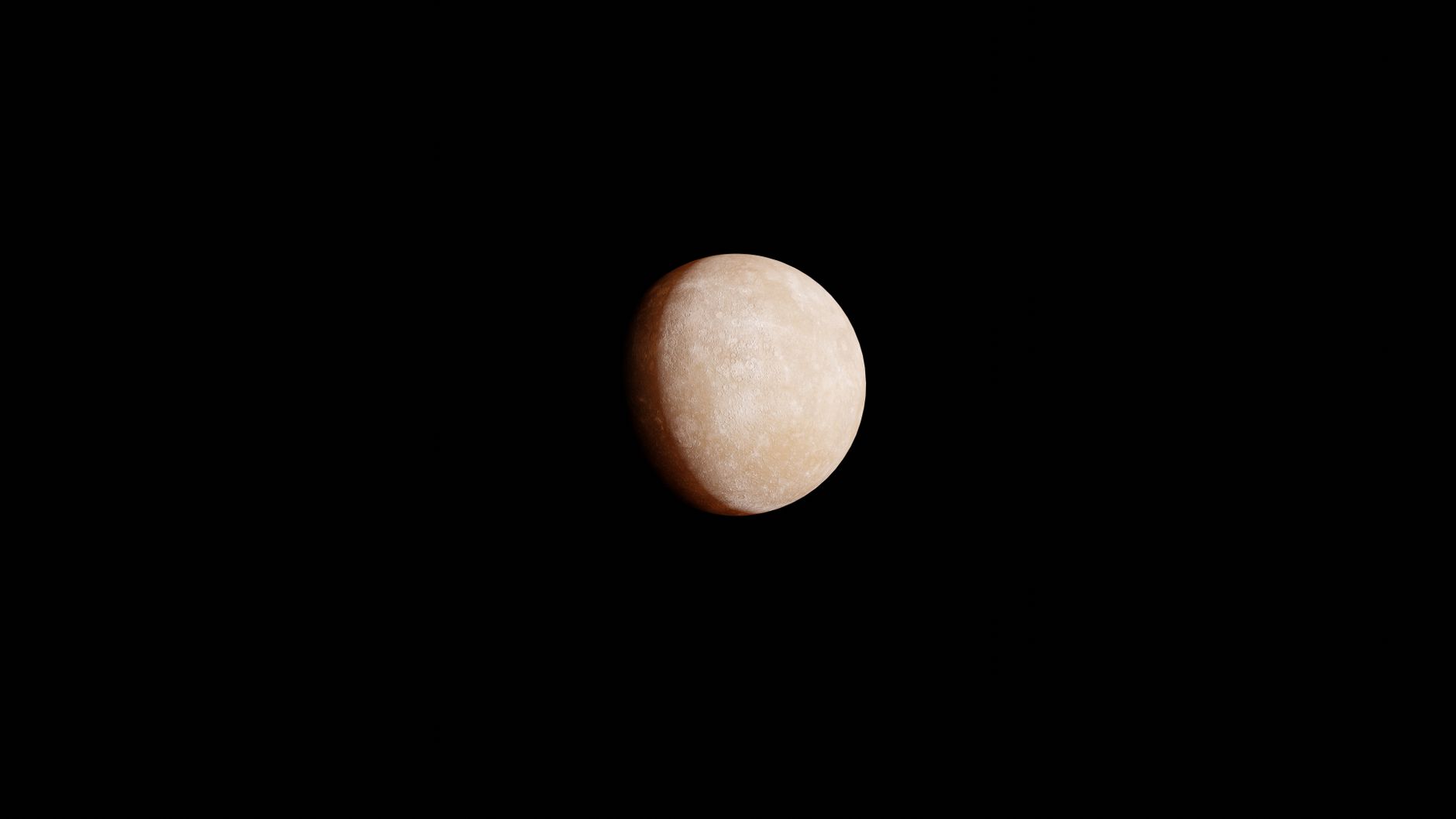
Planetary defense used to sound like a movie genre. Then NASA deliberately rammed a spacecraft into an asteroid moon and changed its orbit. With DART, the issue moved from hypothetical to operational: humanity now has direct evidence that we can alter the trajectory of a natural celestial body. That does not mean the problem is solved. It means the era of helplessness is over.
What happened
The first line of planetary defense is not deflection but detection. Astronomers survey near-Earth objects to find asteroids and comets whose orbits approach Earth. Most of the known large ones are not impact threats in the near term, but smaller bodies can still be devastating and are harder to catalog completely. The crucial variable is warning time. A tiny orbital nudge applied years in advance can produce a huge miss distance later.
DART demonstrated the kinetic-impactor method by striking Dimorphos, the small moon of asteroid Didymos, in 2022. The impact shortened Dimorphos's orbital period by more than the mission's minimum success threshold, proving that a spacecraft can measurably change an asteroid's motion. It was a carefully chosen test on a non-threatening target, but the principle is scalable: move the object early enough and you do not need to blow it apart like in the movies.
Other concepts exist for harder cases. A gravity tractor would hover near an asteroid and gently tug it over time using only gravity. Nuclear devices might be used in standoff mode to vaporize surface material and create thrust if warning time is short or the object is large. Each method has tradeoffs, and none matter if the object is discovered too late. Planetary defense is therefore a chain: detection, orbit calculation, international coordination, mission readiness, and public communication.
Why it matters
This matters because asteroid impacts are among the few natural disasters that are both globally catastrophic and, in principle, preventable. Earthquakes and volcanoes cannot be stopped. An incoming asteroid can be spotted, tracked, and nudged. That makes planetary defense a rare area where foresight converts directly into survival.
It also matters politically. A serious impact threat would demand international trust, shared data, clear authority, and rapid decision-making under uncertainty. Building those habits before a crisis is as important as building hardware. DART was not just a spacecraft test; it was a rehearsal for coordinated planetary responsibility.
- We now have direct evidence that kinetic impact can alter an asteroid's orbit.
- Even small early deflections can prevent catastrophic impacts given enough warning time.
- Planetary defense is a rare existential risk that can be addressed with practical engineering.
- Many hazardous objects remain undiscovered, especially smaller but still destructive ones.
- Late detection can turn a manageable problem into an emergency with few good options.
- International coordination during a real threat could be politically difficult.
How to think about it
A useful mental model is to compare asteroid defense to steering a ship far offshore rather than swerving a car at the last second. The earlier you act, the gentler the correction can be. That is why survey telescopes, orbit prediction, and preparedness matter more than dramatic last-minute heroics.
This also clarifies the public conversation. The real breakthrough is not that we can destroy asteroids with spectacular force. It is that precision, timing, and boring preparation are enough to change the outcome. Planetary defense is less apocalypse cinema than celestial civil engineering.
FAQ
Did DART destroy the asteroid?+
Would a nuclear weapon be the best defense?+
How likely is a civilization-ending impact?+
- news·8 min readNear-Earth Objects: Mapping and Deflecting the Rocks That Could End Civilization
There are hundreds of thousands of asteroids with orbits that bring them near Earth. A significant fraction are large enough to cause regional or global catastrophe. In 2022, NASA proved it could change an asteroid's orbit. The question now is whether we would have enough warning.
- missions·4 min readHayabusa2 Successfully Flies Past Asteroid Torifune, Advancing Planetary Defense Capabilities
JAXA's Hayabusa2 successfully flew past asteroid Torifune, capturing images and testing orbital maneuvers for planetary defense. This extended mission provides vital data on near-Earth objects.
- news·3 min readCommunity College Instructors Revamp OpenStax Astronomy Textbook with NASA Active‑Learning Resources
NASA’s SciAct program helped community college instructors transform the OpenStax Astronomy 101 textbook into an active‑learning experience for Fall 2026.