Reanalysis Debunks Lunar-Mass Primordial Black Hole Claim, Identifies 'Phoebe' as Variable Star
A new study reexamines DECam data, finding the star 'Phoebe' is a variable star, not evidence of a lunar-mass primordial black hole. This debunks a recent claim and restores consistency with other…
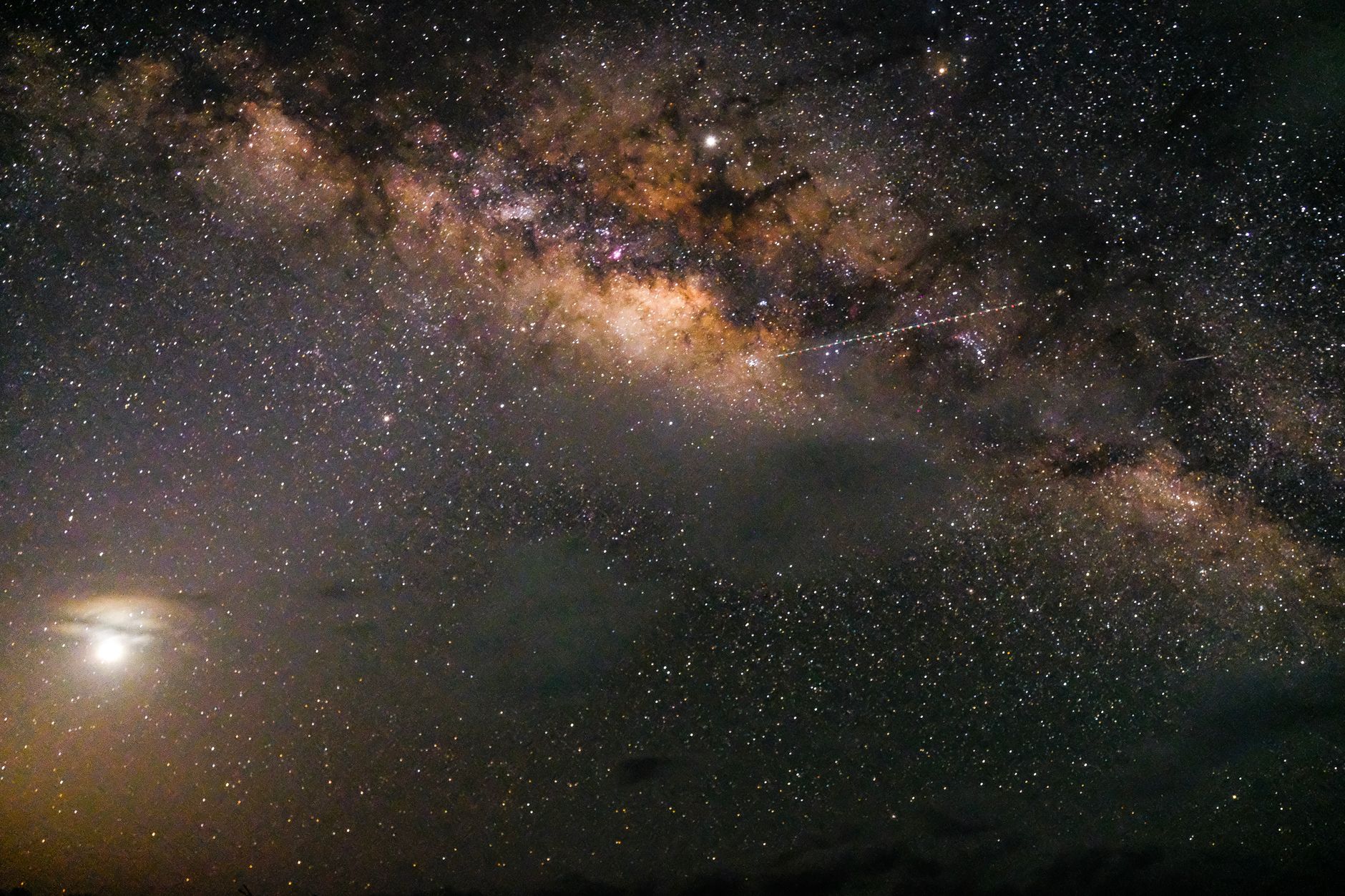
A recent claim suggesting the detection of a lunar-mass primordial black hole, nicknamed "Phoebe," has been debunked by a new reanalysis of observational data. Initially interpreted as a gravitational microlensing event, where a tiny, unseen object briefly magnifies a star's light, this finding had sparked excitement among astrophysicists. However, independent research now indicates that the star in question is simply an ordinary variable star, naturally changing its brightness over time. This reinterpretation significantly impacts the ongoing search for dark matter candidates and underscores the critical need for comprehensive, long-term astronomical observations.
What happened
In May 2026, a research team reported evidence for primordial black holes (PBHs) after observing a brief flicker of light from a star in the Large Magellanic Cloud using the Dark Energy Camera (DECam). This short-duration brightening, lasting less than an hour, was interpreted as a gravitational microlensing event caused by an object with approximately the mass of the Moon. The team hypothesized this object to be a primordial black hole, a hypothetical relic from the early universe considered a potential component of dark matter.
However, this interpretation contradicted data from the Optical Gravitational Lensing Experiment (OGLE), which has meticulously monitored the same sky region for years. If lunar-mass PBHs were abundant enough to constitute dark matter, OGLE's high-precision observations should have detected hundreds to thousands of similar events, which they did not. This discrepancy prompted Andrzej Udalski and Przemek Mróz of the University of Warsaw to conduct an independent reanalysis.
Udalski and Mróz examined the same public DECam data, supplemented with additional observations from 2020 and 2021 that were not included in the initial study. Their findings revealed that the star, now referred to as "Phoebe" in their paper, brightened at least three separate times over several years, one of which was the event previously interpreted as microlensing. Crucially, its average brightness also varied over time. Since a genuine microlensing event caused by a single passing object cannot repeat, these multiple brightening episodes, confirmed by the steady brightness of nearby control stars, strongly indicate that Phoebe is an ordinary variable star, a common phenomenon in astrophysics.
Why it matters
The existence of primordial black holes as a significant component of dark matter is a compelling, yet unconfirmed, theory. The initial claim of detecting a lunar-mass PBH offered a rare and potentially groundbreaking piece of evidence that could have reshaped our understanding of the universe's composition. The reanalysis, by identifying "Phoebe" as a variable star, effectively removes this piece of evidence, restoring consistency with other long-term microlensing surveys that have placed strong limits on the abundance of such objects.
This outcome underscores the rigorous and self-correcting nature of the scientific process. While initial findings can generate excitement, they are subject to scrutiny and re-evaluation with more comprehensive data and independent analysis. For the field of dark matter research, this means that the search for viable candidates continues, with less emphasis now placed on lunar-mass primordial black holes based on microlensing events.
- Restores consistency between DECam observations and long-term surveys like OGLE, strengthening confidence in microlensing limits.
- Highlights the importance of comprehensive, multi-year observational data in distinguishing rare astrophysical transients.
- Refines the landscape of potential dark matter candidates by ruling out a specific, highly publicized piece of evidence for lunar-mass PBHs.
- Removes a promising, albeit controversial, piece of evidence that had briefly supported the existence of primordial black holes as dark matter.
- Initial excitement and speculative theories surrounding the PBH detection were ultimately premature.
- Emphasizes the inherent difficulty in distinguishing unique, short-duration gravitational lensing events from common stellar variability.
How to think about it
When encountering new scientific claims, especially those with profound implications, it's crucial to appreciate the iterative and self-correcting nature of scientific inquiry. Initial observations and interpretations often serve as hypotheses that require further validation through independent analysis, additional data, and peer review. This case perfectly illustrates how a seemingly compelling observation can be recontextualized and understood differently with a broader dataset and deeper scrutiny. It reinforces that scientific understanding evolves, and what appears to be a definitive discovery can sometimes be a more common, albeit interesting, astrophysical phenomenon.
FAQ
What is a primordial black hole (PBH)?+
How does gravitational microlensing work?+
Why is it important to distinguish variable stars from microlensing events?+
- astrophysics·5 min readNew Bullet Cluster Study Presents Alternative to Dark Matter, Challenging Core Evidence
A recent JWST study on the Bullet Cluster proposes an alternative explanation for observed gravitational lensing, potentially challenging long-held evidence for dark matter's existence.
- astrophysics·4 min readNew DESI Data Challenges Cosmological Principle, Suggesting a Less Uniform Universe
New analysis of DESI data reveals that the distribution of galaxies may not be uniform on the largest scales, challenging the cosmological principle. This could necessitate a fundamental rethinking…
- astrophysics·11 min readUnveiling the Universe's Hidden Mass: What is Dark Matter and Why Do We Believe It Exists?
Explore the mysteries of dark matter, the invisible substance making up 85% of the universe's mass. Learn about the compelling gravitational evidence for its existence and its crucial role in cosmic…