The Perseverance Rover: Drilling Into Mars for Signs of Ancient Life
NASA's Perseverance rover has been operating on Mars since February 2021, crawling through Jezero Crater — an ancient lake delta — drilling rock samples that may contain fossilized microbial life for a future return mission to Earth.
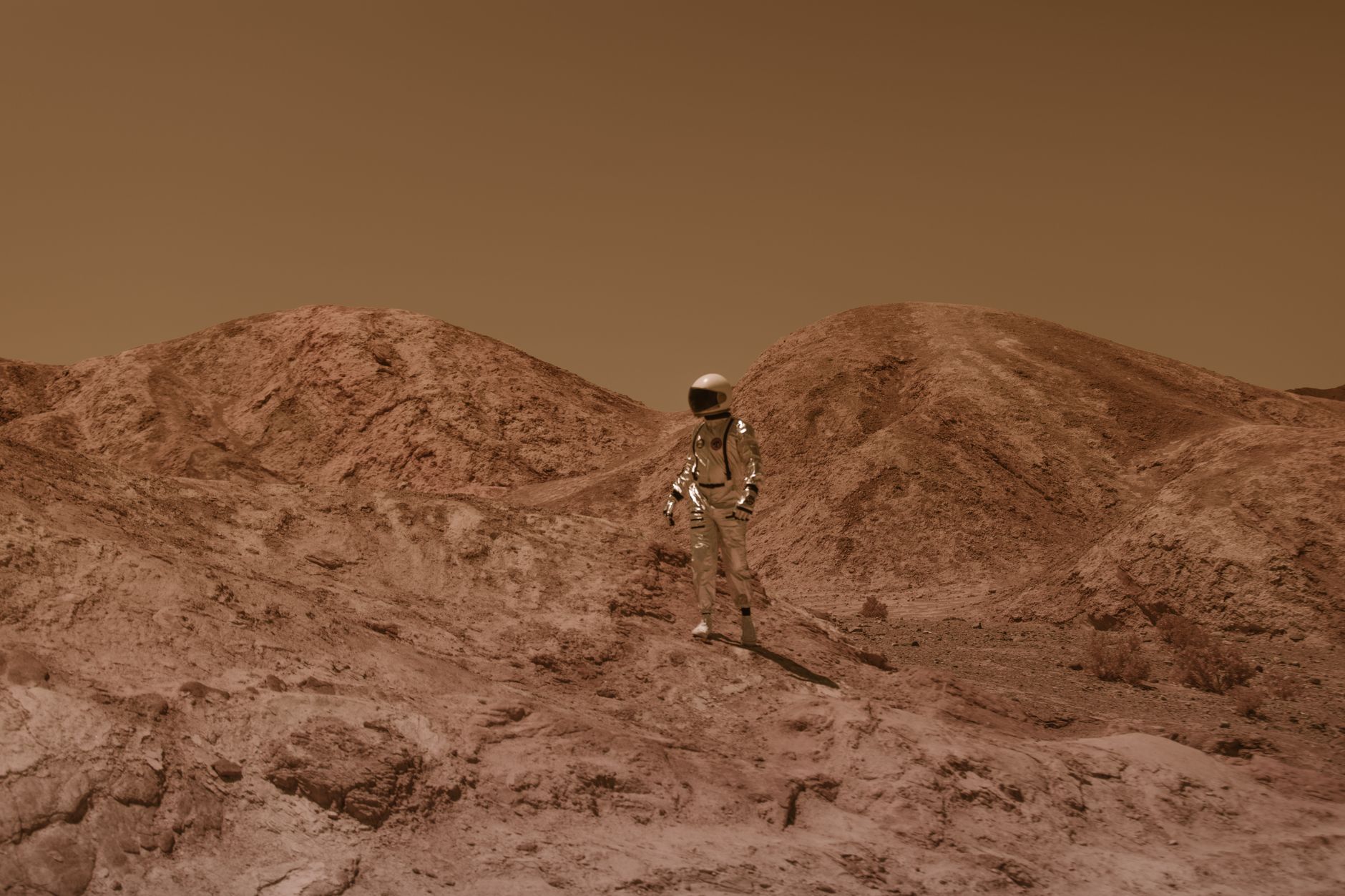
Perseverance landed in Jezero Crater on February 18, 2021 — a crater that 3.5 billion years ago was a lake fed by river channels visible from orbit. That paleo-lake, roughly 45 km across, was chosen precisely because it is one of the places on Mars most likely to have preserved signs of ancient life, if any ever existed there. Over the years since landing, Perseverance has driven along the ancient delta, climbed its edge, and drilled samples from rocks that have not been touched since they were laid down in that long-dead lake bed. When those samples eventually return to Earth — in a mission not yet fully funded but already in planning — they will give scientists the most detailed look at Mars's geological history and best chance at detecting ancient biosignatures yet attempted.
What happened
Perseverance is the most capable rover ever landed on Mars. It carries 23 cameras, two microphones (recording the sound of Mars for the first time), and seven scientific instruments including PIXL (for fine-scale X-ray chemistry), RIMFAX (ground-penetrating radar), SHERLOC (a laser Raman spectrometer for organic detection), and MOXIE (a technology demonstrator that produced oxygen from Mars's CO2 atmosphere, a crucial capability for future human missions).
It also carries Ingenuity — the first powered aircraft to fly on another planet. Ingenuity was originally planned for just five flights as a technology demonstration. By 2024 it had completed over 70 flights covering roughly 17 km, demonstrating sustained powered flight in Mars's thin atmosphere and serving as a scout for Perseverance's driving route.
The rover's primary science goal is the search for signs of past life through careful geological exploration of Jezero Crater. The crater's delta — where sediment carried by ancient rivers was deposited as the water slowed and spread — is particularly prized. Sedimentary rocks in river deltas on Earth preserve organic molecules and microfossils extremely well; if ancient life ever existed in the Jezero lake, the delta is where the evidence is most likely to be preserved. Perseverance has examined dozens of rock outcrops, found organic molecules in several, and identified geological features consistent with an ancient lake environment.
The sample caching system is Perseverance's most important contribution. The rover drills 6-cm cores from rocks, seals them in titanium tubes, and either stores them in its own belly or deposits them on the surface as a backup cache. As of 2025, over 20 samples have been collected. The Mars Sample Return mission — a joint NASA-ESA effort — would send a lander with a small rocket to retrieve these samples, rendezvous with an Earth Return Orbiter, and bring them back to Earth's surface, probably in the early 2030s.
Why it matters
The potential discovery of ancient life on Mars would be the most profound finding in the history of biology: confirmation that life is not unique to Earth, that it can arise independently on other worlds, and that the universe is in principle biologically rich. Even finding organic molecules that look biologically produced — without definitive proof of life — would be enormously significant, providing the strongest evidence yet that biology is a plausible explanation for Martian chemistry.
The sample return architecture matters because laboratory analysis on Earth is orders of magnitude more sensitive than anything a rover can carry. Mass spectrometers and electron microscopes in Earth labs can detect organic molecules at parts-per-trillion concentrations, image potential microfossils at nanometer resolution, and measure isotopic ratios that can distinguish biological from non-biological chemistry. The same questions Perseverance is already asking with its instruments can be answered far more definitively when researchers have the rocks themselves.
Perseverance also demonstrated that oxygen can be extracted from Mars's CO2 atmosphere using electricity from a nuclear-powered source — crucial validation for human Mars missions that would need to produce both rocket propellant (liquid oxygen) and breathable air in situ rather than transporting it from Earth.
- Jezero Crater is an ideal target for life detection — an ancient lake with well-preserved sedimentary rocks in a delta environment that on Earth is optimal for preserving biosignatures.
- The sample caching system preserves pristine geological material with scientific value that will increase as Earth-based analytical technology improves over the coming decades.
- MOXIE demonstrated in-situ oxygen production on Mars, a foundational capability for future human missions and a potential propellant source for a Mars Sample Return ascent rocket.
- Mars Sample Return is facing severe budget pressure as of 2025-2026, with the original architecture costing more than NASA can accommodate — the timeline for returning the samples is genuinely uncertain.
- Even with sample return, detecting ancient life in 3.5-billion-year-old Martian rocks would be extraordinarily difficult — Earth has very few microfossils from that era, and their identification is contested even with laboratory access.
- Perseverance's organics detections could be geological in origin — many carbon-containing molecules form without biology — and distinguishing biotic from abiotic organics requires exactly the laboratory capabilities that sample return would provide.
How to think about it
The Perseverance mission is best understood as the geological field collection phase of a much longer investigation. A geologist in the field does not do the final analysis on-site; they collect carefully documented samples and bring them to the laboratory. Perseverance is the field geologist on Mars — its job is to find the most scientifically promising rocks, document their context, and preserve them for analysis.
The patience required for this approach is considerable. The samples will sit in their titanium tubes for years before returning to Earth, and then years more of laboratory analysis will follow before confident conclusions emerge. But this patience is justified by the extraordinary sensitivity of what Earth laboratories can do with the samples. The Martian meteorites already in our collections — rocks blasted off Mars by asteroid impacts and fallen to Earth — have been analyzed for decades with improving techniques, and each new advance extracts new information from the same rocks. Perseverance's samples will be studied for generations.
The search for ancient life on Mars is, in the end, a search for context: context for whether life's origin on Earth was a local accident or a universal consequence of chemistry, energy, and time. Mars is close enough to have had similar early conditions and far enough from Earth that any life found there would almost certainly be independently evolved. Finding it would change everything; not finding it would also be informative.
FAQ
Has Perseverance found any evidence of life yet?+
What happened to the Ingenuity helicopter?+
Why is Mars Sample Return so expensive and what might happen to the program?+
- astronomy·2 min readZhurong data reveal standing liquid water on Mars much more recently than thought
Zhurong rover data reveal selenite crystals that point to standing liquid water on Mars much later than the 3‑billion‑year freeze.
- missions·3 min readCuriosity Rover Reveals Pinstriped Bedrock Layers Near Fourth of July, Sols 4941‑4947
During sols 4941‑4947, Curiosity captured striking pinstriped strata at a geologic boundary, shedding light on Mars’ sedimentary history.
- missions·5 min readNASA's ERNEST Prototype Demonstrates Autonomous Navigation for Future Lunar and Martian Missions
NASA's ERNEST rover prototype completed a 16-mile autonomous trek in the California desert, showcasing advanced AI and mobility for future lunar and Mars exploration. This technology aims to enable…