Perseverance captures Phobos solar eclipse on Mars, a rare alien sky event
NASA's Perseverance rover photographed Phobos partially covering the Sun on Aug 13, 2026, offering a first glimpse of a Martian solar eclipse.
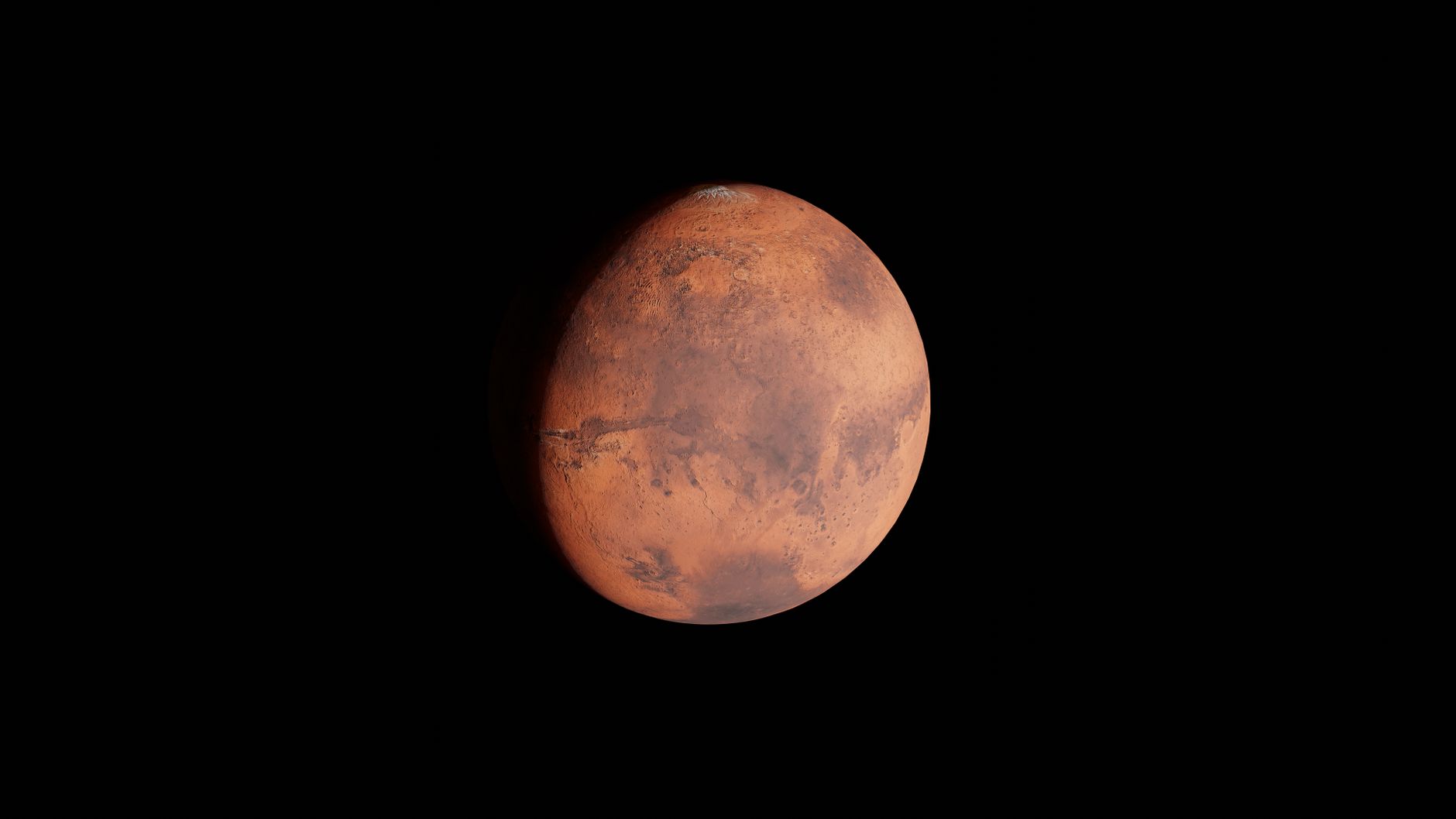
On August 13, 2026, NASA's Perseverance rover turned its Mastcam‑Z camera skyward and captured a rare Martian solar eclipse. The image shows Phobos, the larger of Mars’ two moons, partially covering the Sun as seen from the Jezero crater. This event mirrors Earth’s eclipses but occurs on a world with a much smaller moon and a thinner atmosphere. Observing an eclipse on another planet provides a unique perspective on planetary illumination and orbital dynamics. The photo, featured as Space.com’s photo of the day on August 19, highlights the scientific value of robotic explorers.
What happened
On the morning of Aug 13, 2026, Perseverance’s left Mastcam‑Z camera recorded a bright disc of the Sun being partially obscured by a dark silhouette moving across the sky.
Analysis of the silhouette’s size and motion matches the orbit of Phobos, indicating that the moon was the eclipsing body. The image captures the moment when Phobos covered roughly a quarter of the solar disc, creating a striking crescent of sunlight.
Solar eclipses on Mars are brief because Phobos orbits Mars in just over 7 hours and its shadow sweeps across the surface at high speed.
Why it matters
Seeing a solar eclipse from another planet confirms that the geometry of moon‑planet‑sun alignments is a universal phenomenon, and it offers a natural experiment for studying atmospheric scattering on Mars. The event also demonstrates the precision of Perseverance’s mast‑mounted cameras, which can be repurposed for astronomical observations beyond their primary geology mission. For future human explorers, understanding how eclipses affect surface lighting and temperature could inform habitat design and power‑management strategies.
- Provides rare scientific data on Martian illumination.
- Engages the public with a visually striking, alien sky event.
- Shows the versatility of Perseverance’s imaging suite.
- Only a partial eclipse was captured, limiting scientific detail.
- Observation is limited to the rover’s fixed location and viewing angle.
- No human observers; interpretation relies on robotic instrumentation.
How to think about it
When evaluating eclipse images from other worlds, consider the size of the eclipsing body, its orbital speed, and the planet’s atmospheric opacity. On Mars, Phobos is tiny and moves quickly, so its eclipses are short and often only partial. Use the timing and geometry of the event to refine models of the moon’s orbit and to probe how dust in the thin Martian atmosphere scatters sunlight.
FAQ
What caused the eclipse observed by Perseverance?+
How does a Phobos eclipse differ from an Earth‑Moon eclipse?+
Can future missions use eclipses for scientific measurements?+
- spaceflight·3 min readPerseverance Rover Tests Spacesuit Swatches to Gauge Martian Dust Storm Risks
NASA's Perseverance rover examined spacesuit material after 1,645 sols, revealing how fine Martian dust adheres and what training astronauts need.
- missions·3 min readJapan’s MMX Probe Set to Launch on Historic Round‑Trip Mission to Phobos
JAXA’s MMX probe will launch on an H3 rocket to orbit and sample Phobos, aiming for the first round‑trip to a Martian moon and returning material to Earth.
- missions·3 min readJapan’s MMX mission launches to collect Phobos samples and unlock Mars moon origins
JAXA’s MMX spacecraft lifts off Oct 19 on an H3 rocket to orbit Phobos, collect soil, and return the first Martian‑moon samples to Earth.