O'Neill Cylinders and the Case for Living in Rotating Space Habitats
In the 1970s, physicist Gerard K. O'Neill proposed that the future of humanity lies not on planetary surfaces but inside enormous spinning cylinders in space. Half a century later, his ideas have never been more relevant.
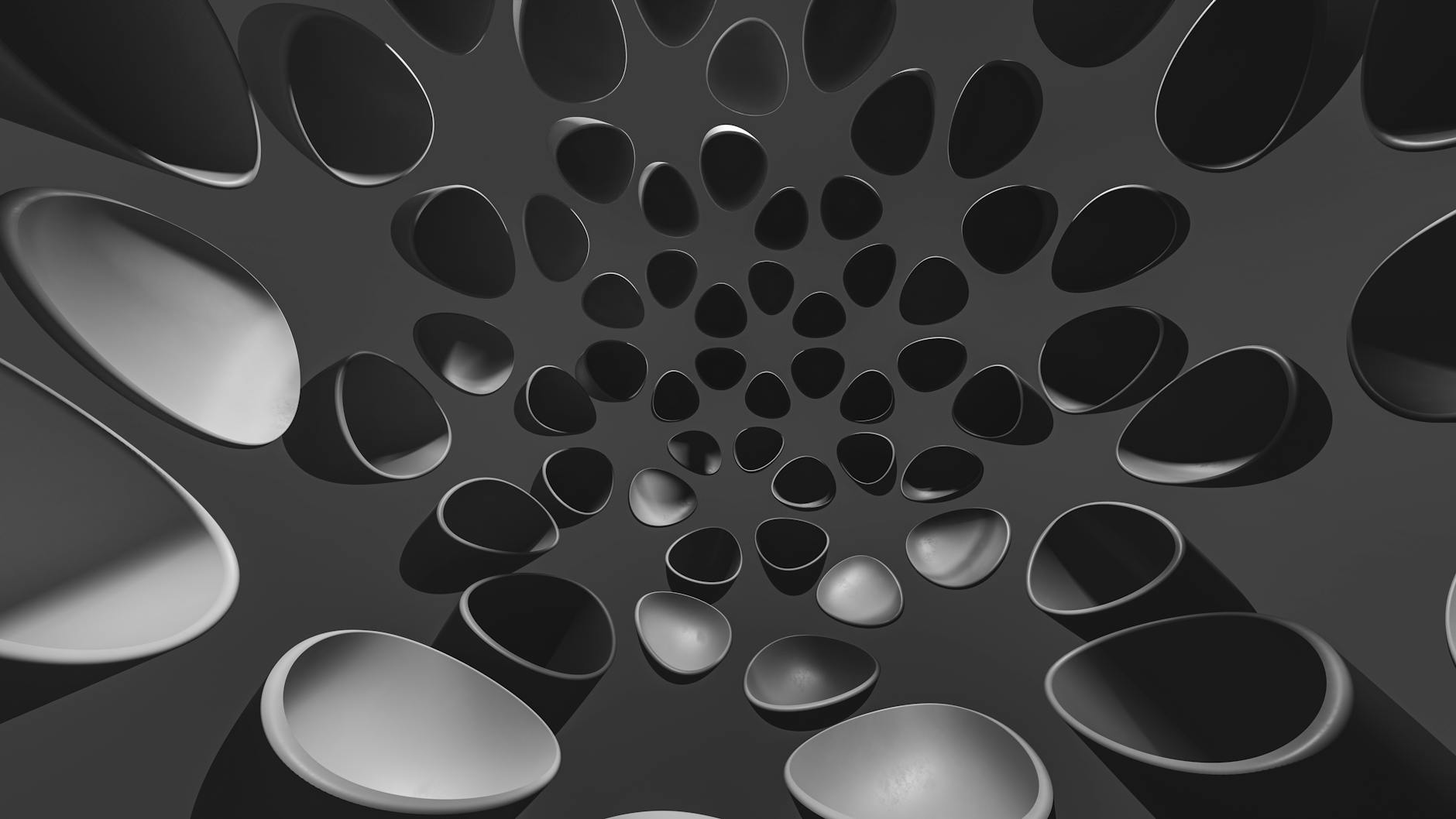
Gerard O'Neill asked a deceptively simple question: if you want billions of people to live beyond Earth, why force them to cling to the surfaces of hostile planets? His answer was to build the environment instead. An O'Neill cylinder is a giant rotating habitat that uses spin to create artificial gravity, mirrors to direct sunlight, and engineering to control climate. In many ways, it is a cleaner long-term settlement concept than Mars itself.
What happened
The classic O'Neill design consists of two counter-rotating cylinders, each several kilometers long, spinning to create about one Earth gravity on the inner surface. Residents would live on the inside wall, with land, water, and neighborhoods arranged along the cylinder's length. Large windows or mirror systems would modulate sunlight, enabling day-night cycles and agriculture. Because the environment is designed, gravity, weather, and radiation shielding can be managed more deliberately than on a marginal planet.
O'Neill argued that space habitats could be built from extraterrestrial materials rather than lifted expensively from Earth. Lunar regolith, near-Earth asteroids, and mass-driver launch systems were part of his industrial vision. Instead of treating planets as the only natural homes for life, he treated free space as the ultimate construction site. That was a radical shift from planetary colonization toward orbital civilization.
The idea faded from the center of public conversation after Apollo, but many of its underlying premises have aged well. Reusable rockets lower access costs, robotics improve remote construction, and long-duration life support has become a central challenge for every settlement plan. Meanwhile, the drawbacks of planetary surfaces remain obvious: dust, weak gravity, toxic chemistry, and limited mobility. O'Neill's answer still deserves serious attention.
Why it matters
Rotating habitats matter because they offer something planets often cannot: customizability. You can choose gravity level, lighting schedule, settlement density, and internal ecology. That makes them potentially better for human health than Moon or Mars bases, where low gravity may create unknown long-term biological problems and environmental hazards are relentless.
They also matter strategically. A network of habitats near Earth-Moon space, asteroid resources, or Lagrange points could become the backbone of a spacefaring economy. If the future includes large numbers of people living off Earth, it may arrive through engineered worlds in orbit rather than romantic cities on planetary deserts.
- Artificial gravity could provide Earthlike living conditions unavailable on most natural worlds.
- Habitats can be placed near useful resources, trade routes, or Lagrange points.
- Climate, lighting, and land use can be engineered rather than endured.
- The initial construction challenge is far beyond current industrial capability.
- Large rotating structures require precise balancing, shielding, and maintenance.
- Psychological and social design would be as important as structural design.
How to think about it
A good mental model is to imagine a habitat as a manufactured valley rather than a spaceship. People do not need to adapt to the destination; the destination is adapted to people. That inversion is powerful because it changes the settlement problem from surviving bad environments to building good ones.
Seen that way, O'Neill cylinders are not a detour from space colonization but perhaps its mature form. Planets may serve as early proving grounds and resource nodes, yet the largest future populations could live in free space where sunlight is continuous, launch costs between habitats are low, and living conditions are designed rather than found.
FAQ
Why rotate a space habitat?+
Would an O'Neill cylinder be better than living on Mars?+
Could we build one this century?+
- spaceflight·6 min readTerraforming Venus: The Alternative to Mars That Nobody Talks About
Venus is almost exactly Earth's size and mass, sits in the inner solar system, and has a solid surface. It is also 460 degrees at the surface, crushed under 90 atmospheres of CO2, and rains sulfuric acid. Some researchers argue it is actually a better long-term terraforming target than Mars.
- spaceflight·4 min readTerraforming Mars: What It Would Actually Take and How Long
Transforming the cold, thin, radiation-soaked Martian surface into something resembling a living world is one of civilization's grandest proposed engineering projects. The honest answer about feasibility is both more promising and more sobering than the headlines suggest.
- spaceflight·4 min readGeneration Ships and the Centuries-Long Voyage to Another Star
The nearest star system is so far away that any realistic spacecraft would take thousands of years to arrive. Generation ships — self-contained worlds carrying thousands of people across the void — are the most serious solution anyone has proposed.