New Horizons at Pluto and the Wonders of the Kuiper Belt
When NASA's New Horizons flew past Pluto in July 2015, it transformed a fuzzy dot into a world — mountains of water ice, a vast nitrogen plain, and an active geology. The outer solar system has not looked the same since.
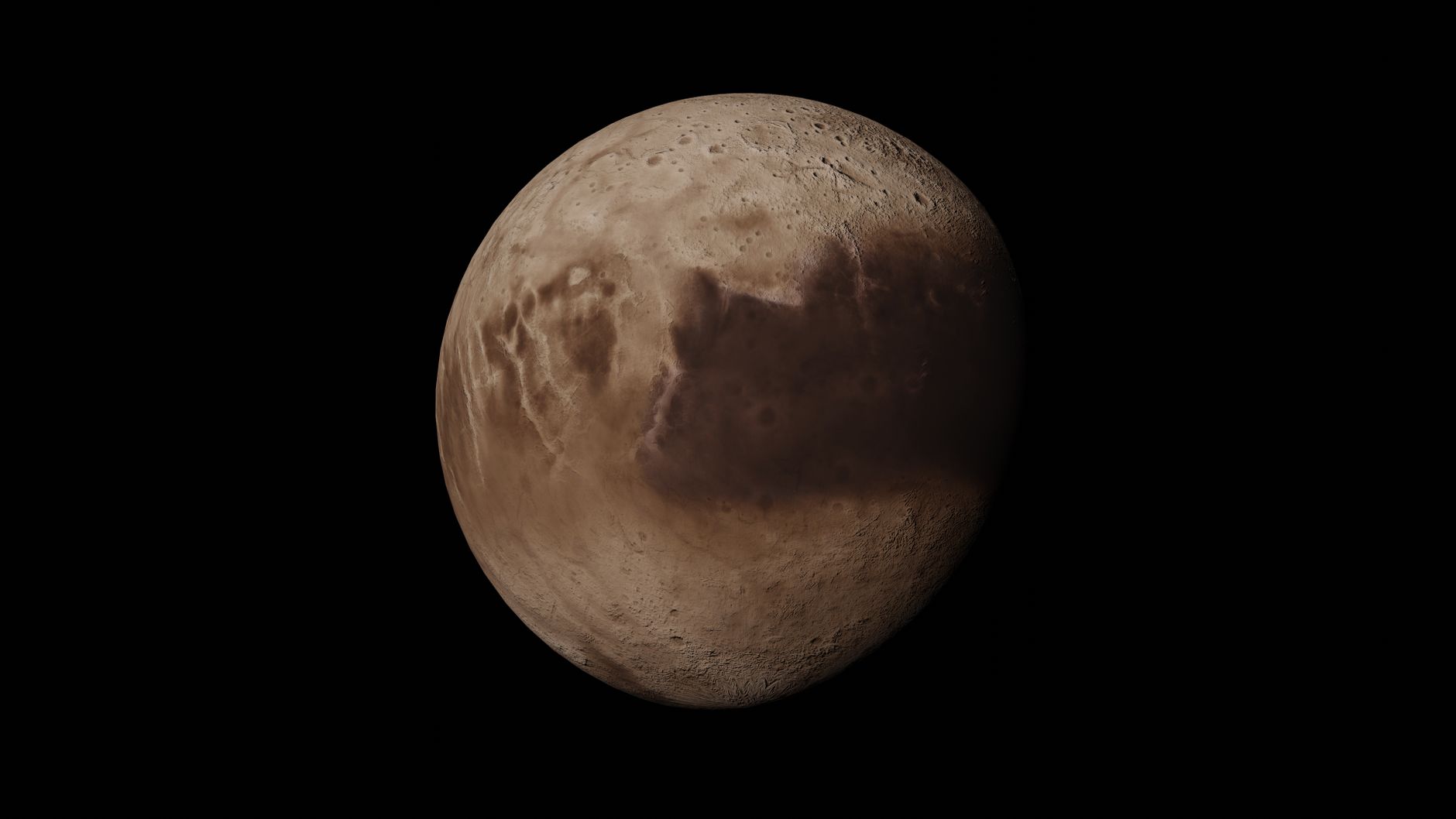
For 85 years after Clyde Tombaugh discovered it in 1930, Pluto was a mystery — the only planet (and then, after 2006, the dwarf planet) we had never visited. Its size was disputed; its surface was unknown; its moons were discovered only gradually with the best telescopes available. When New Horizons launched in 2006, it carried instruments powerful enough to transform that fuzzy dot into a world. The flyby on July 14, 2015, took nine and a half years of patient travel at nearly 60,000 km/h. The closest approach lasted only about three minutes before New Horizons was past and still moving. But the data took 16 months to download over the faint radio link across 5 billion kilometers of space, and what it revealed astonished nearly everyone: Pluto is geologically active, more complex than Mars in some respects, and beautiful in ways nobody predicted.
What happened
New Horizons was launched on January 19, 2006 — the fastest spacecraft ever launched from Earth, achieving a velocity that took it past the Moon in nine hours. It received a gravity boost from Jupiter in 2007, shortening the journey. The Pluto flyby on July 14, 2015 took the spacecraft within 12,500 km of Pluto's surface and 17,900 km of Charon, Pluto's largest moon.
The first full image returned showed a heart-shaped feature covering roughly a thousand kilometers — Tombaugh Regio, named for Pluto's discoverer. The left lobe of the heart, called Sputnik Planitia, is a vast plain of nitrogen and methane ice, roughly the size of Texas, that sits in a basin possibly created by an ancient impact. The nitrogen ice is in convective motion — warm cells rising and cool cells sinking over timescales of thousands of years, continuously renewing the surface and explaining why Sputnik Planitia has almost no impact craters. This convection was completely unexpected for a body so cold and so far from the Sun.
At Sputnik Planitia's edges, water-ice mountains rise 3,000 meters above the plain — taller than many peaks in the Rocky Mountains, built from water ice that acts like rock at Pluto's -230°C surface temperature. The mountains are geologically young (few impact craters, implying recent formation). What energy source drives this geology? Not tidal heating (Pluto has no large parent body) and not radioactive decay alone. The answer is not fully resolved, but tidal interactions with Charon in the past and the dynamics of volatile cycling between the surface and atmosphere are candidates.
Charon itself was another revelation: an enormous canyon system, Serenity Chasma, stretches 1,600 km across its surface — roughly the width of the United States — with depths of 9 km. A dark red polar cap (Mordor Macula) suggests complex photochemical processes. Pluto's smaller moons — Nix, Hydra, Kerberos, and Styx — were imaged for the first time.
In January 2019, New Horizons flew past Arrokoth (originally nicknamed Ultima Thule), a Kuiper Belt Object 6.5 billion km from the Sun. Arrokoth turned out to be a contact binary — two lobes that gently merged at low velocity early in the solar system's history, preserving a pristine record of the accretion process that built planetesimals. Its undisturbed, ancient surface (covered in reddish organic molecules called tholins) made it the most primordial object ever visited by a spacecraft.
Why it matters
The Pluto flyby fundamentally changed our understanding of the outer solar system. Before New Horizons, Pluto was a cautionary tale against expecting complexity at cold, remote distances from the Sun. After it, astronomers had to take seriously the possibility that Kuiper Belt Objects — there are hundreds of thousands of them — could be geologically complex worlds. The Kuiper Belt is not a graveyard of inert rocks; it is a population of diverse, potentially active worlds that the outer solar system still has not finished surprising us with.
For planetary science, the question of Pluto's energy source is genuinely open and scientifically important. Understanding what drives activity on Pluto would generalize to other small worlds at similar distances — both in our solar system and around other stars. The "Pluto problem" of unexpectedly vigorous geology without obvious energy sources may be common in small icy worlds.
Arrokoth's pristine state makes it a Rosetta Stone for planet formation. Its bilobed shape, formed by the gentle merger of two independently formed objects, is direct evidence for the streaming instability model of planetesimal formation — the leading theoretical mechanism for how dust coalesced into the first kilometer-scale objects. The data from Arrokoth have already constrained and confirmed models in ways no laboratory experiment could.
- New Horizons provided the first detailed characterization of a large Kuiper Belt Object, revealing complexity that has reshaped the entire field of outer solar system science.
- The Arrokoth flyby provided direct observational evidence for streaming instability as the dominant planetesimal formation mechanism — a fundamental result for planet formation theory.
- New Horizons demonstrated that a single spacecraft with limited resources could revolutionize our understanding of a previously unexplored class of solar system body.
- The flyby nature of the mission — no orbit insertion — meant that data collection was concentrated in a period of hours rather than years, limiting coverage and precluding follow-up observations of specific features.
- Pluto's geology remains incompletely understood because the single flyby covered only one hemisphere in high resolution; the far side is known only in low resolution.
- A return mission to Pluto with an orbiter would vastly increase scientific return but faces an extreme challenge: getting a spacecraft to 5 billion km and into orbit requires either nuclear propulsion or a decades-long travel time.
How to think about it
The New Horizons story is a study in the value of patience and the rewards of venturing to the unknown. Every planetary flyby in history has surprised scientists — Mars turned out to have a cratered surface (not smooth, as most expected); Jupiter turned out to have a ring; Uranus turned out to rotate on its side; Triton turned out to have geysers. The pattern is consistent: when you visit a new world with capable instruments, reality is more complex and interesting than any model predicted.
Pluto's surprise was the discovery of a geologically young, active surface driven by mysterious energy sources and dominated by nitrogen ice dynamics operating on century-to-millenium timescales. It changed the word "distant" from a synonym for "dead" to a reminder that energy budget arguments based on solar radiation miss the richness of internal processes.
The Kuiper Belt as a whole remains enormously unexplored. Of the hundreds of thousands of KBOs, exactly two have been visited by spacecraft. Each one is, in some sense, a different world — different composition, different history, different geology. The statistical diversity of the Kuiper Belt population tells us about the conditions in the outer solar nebula 4.5 billion years ago. Reading that history requires visiting more of these worlds, a project that will occupy planetary scientists for generations.
FAQ
Is Pluto still not a planet?+
How long does it take to communicate with New Horizons?+
Could a follow-up mission orbit Pluto?+
- missions·4 min readNew Horizons Mission Detects Significant Slowdown of Solar Wind in Outer Solar System
New Horizons measures the solar wind slowing down as it encounters interstellar gas, helping scientists define the heliosphere's boundary and understand our solar system's edge.
- astronomy·3 min readCharon’s Oz Terra Mountains Show Moon Spun Over Ten Times Faster Than Today
New models of Charon’s Oz Terra region reveal the moon once rotated every 14 hours—over ten times faster than its current 153‑hour day.
- spaceflight·4 min readSpaceX’s Starship Test 13 Abort and the Rise of Space‑Based Solar Power
Starship’s 13th test abort highlights challenges as SpaceX expands into defense and space solar power.