New Horizons Mission Detects Significant Slowdown of Solar Wind in Outer Solar System
New Horizons measures the solar wind slowing down as it encounters interstellar gas, helping scientists define the heliosphere's boundary and understand our solar system's edge.
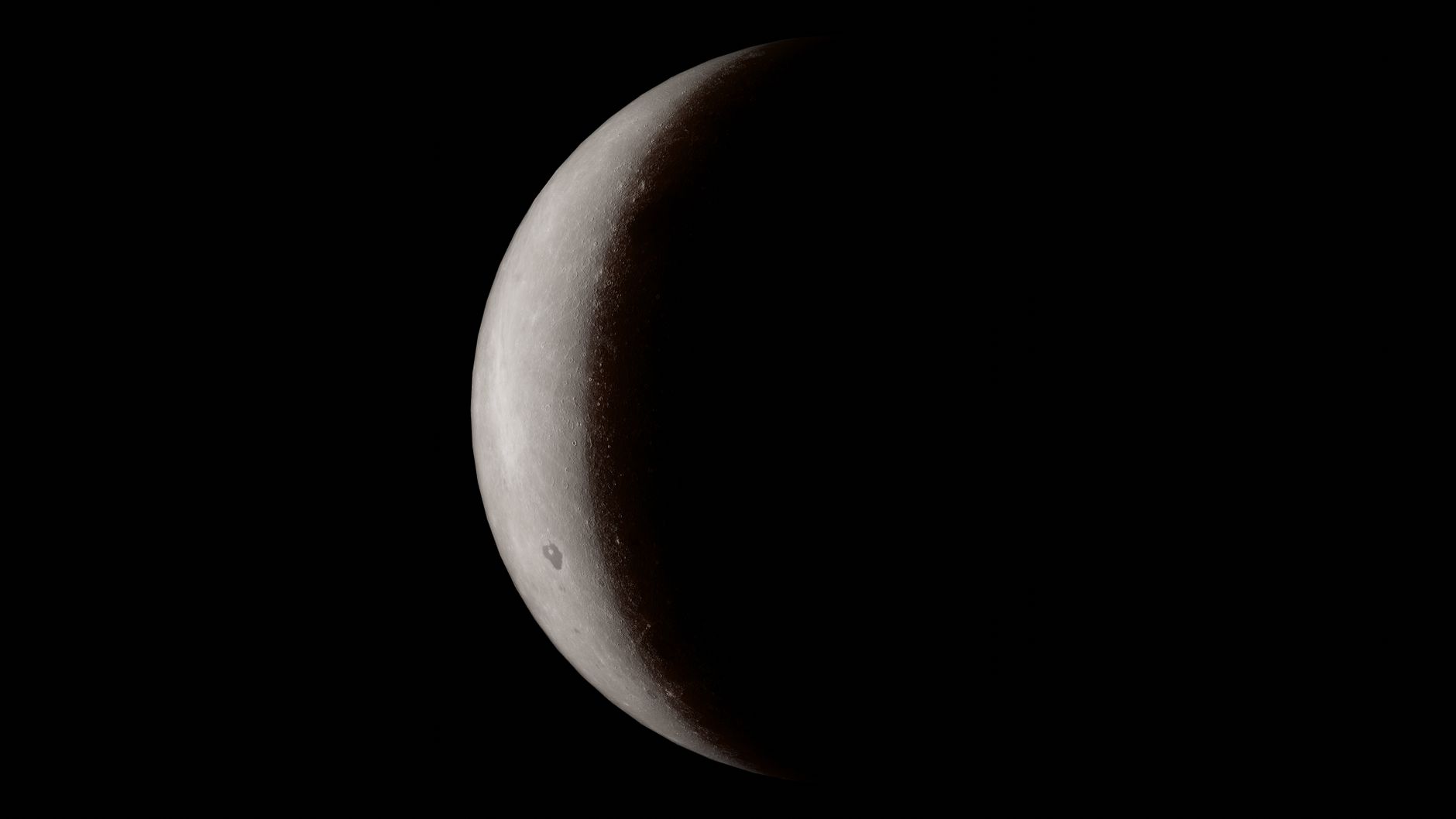
The New Horizons spacecraft, renowned for its historic Pluto flyby, continues to push the boundaries of our understanding, now by meticulously tracking the solar wind in the outer reaches of our solar system. Equipped with its Solar Wind Around Pluto (SWAP) instrument, the probe has detected a distinct and gradual slowdown of the solar wind as it journeys far from the Sun. These crucial measurements offer unprecedented insights into the dynamic interaction between our star's outflow and the interstellar medium, helping scientists precisely pinpoint where the Sun's influence wanes and interstellar space truly begins.
What happened
Using its Solar Wind Around Pluto (SWAP) instrument, the New Horizons spacecraft precisely measured distinct slowdowns of the solar wind as it traversed distances between 21 and 58 AU from the Sun. Researchers at the Southwest Research Institute, led by Heather Elliott, confirmed that this deceleration is a direct consequence of the solar wind encountering incoming interstellar neutral gas particles. As these neutral atoms become ionized through charge exchange with solar wind ions, they add mass to the solar wind, causing it to slow down.
The solar wind, a continuous outflow of plasma, originates from various solar regions like coronal holes and streamers, typically moving at speeds of 500 to 800 kilometers per hour closer to the Sun. While its average speed near Earth (1 AU) is around 400 km/h, New Horizons' data reveals a significant decrease further out. Measurements at 58 AU indicated the solar wind was 13 to 15% slower than its speed at 1 AU, building upon earlier findings from New Horizons and Voyager 2 that showed a 5 to 10% slowdown between 30 and 43 AU. These observations consistently align with existing models predicting how interstellar material influences and decelerates the solar wind as it extends into the heliosphere.
Why it matters
These findings are pivotal for accurately mapping the heliosphere, the protective bubble created by the Sun's solar wind, and precisely defining the boundary where our solar system transitions into interstellar space. By understanding the dynamics of our own solar wind's interaction with the interstellar medium, scientists gain a deeper comprehension of how similar stellar winds from distant stars shape their surrounding environments, known as astrospheres. This comparative insight is invaluable, as many exoplanetary systems possess properties common to our Sun.
Furthermore, this detailed mapping of the heliosphere's edge is not merely an academic exercise; it represents a critical step for the future of space exploration. A clearer understanding of this cosmic boundary is essential for planning and executing potential interstellar travel missions, providing necessary data on the conditions spacecraft will encounter as they venture beyond the Sun's direct influence.
- Provides crucial empirical data to precisely define the boundary of our solar system and interstellar space.
- Offers valuable insights into the behavior of astrospheres around other stars, enhancing exoplanetary studies.
- Validates and refines existing theoretical models of solar wind interaction with the interstellar medium.
- Measurements represent a single trajectory, and the heliosphere's boundary is dynamic and complex.
- The exact nature of interstellar material interaction requires further detailed study.
- While critical, this data is just one piece in the vast challenge of enabling future interstellar travel.
How to think about it
When considering these findings, it's helpful to visualize the heliosphere not as a rigid, impenetrable wall, but as a vast, dynamic bubble of influence, much like the wake left by a ship in water. The solar wind, akin to the ship's propulsion, gradually loses momentum as it pushes against the 'interstellar ocean.' New Horizons is essentially charting where this wake begins to significantly dissipate due to friction and mass exchange with the surrounding medium. This isn't a sudden drop-off, but a gradual transition zone, emphasizing the continuous, subtle interplay between our Sun's outflow and the broader galactic environment. It underscores that the 'edge' of our solar system is a region of active interaction, not a fixed line.
FAQ
What exactly is the solar wind?+
What is the heliosphere, and where does it end?+
How do these findings aid future interstellar travel?+
- missions·8 min readVoyager 1 and 2 in Interstellar Space: What They Found Beyond the Heliosphere
Launched in 1977, Voyager 1 and Voyager 2 are the most distant human-made objects in existence. Both have crossed into interstellar space and are still transmitting data. What they found at the edge of the solar system has surprised scientists.
- missions·3 min readNASA’s Psyche spacecraft captures a growing Mars crescent during 2026 flyby
NASA’s Psyche mission filmed a time‑lapse of Mars turning from a thin crescent to a full disk during its May 2‑15, 2026 gravity‑assist flyby.
- missions·3 min readNASA's Psyche spacecraft completes Mars gravity‑assist flyby, delivering new data
NASA's Psyche probe used Mars' gravity on May 15, gathering instrument data that validates its tools before the 2029 asteroid mission.