NASA Sets Initial Inhalation Limit for Martian Dust: 0.1 mg/m³
NASA recommends a 0.1 mg per cubic meter limit for fine Martian dust inhalation, guiding future habitat and suit filtration designs.
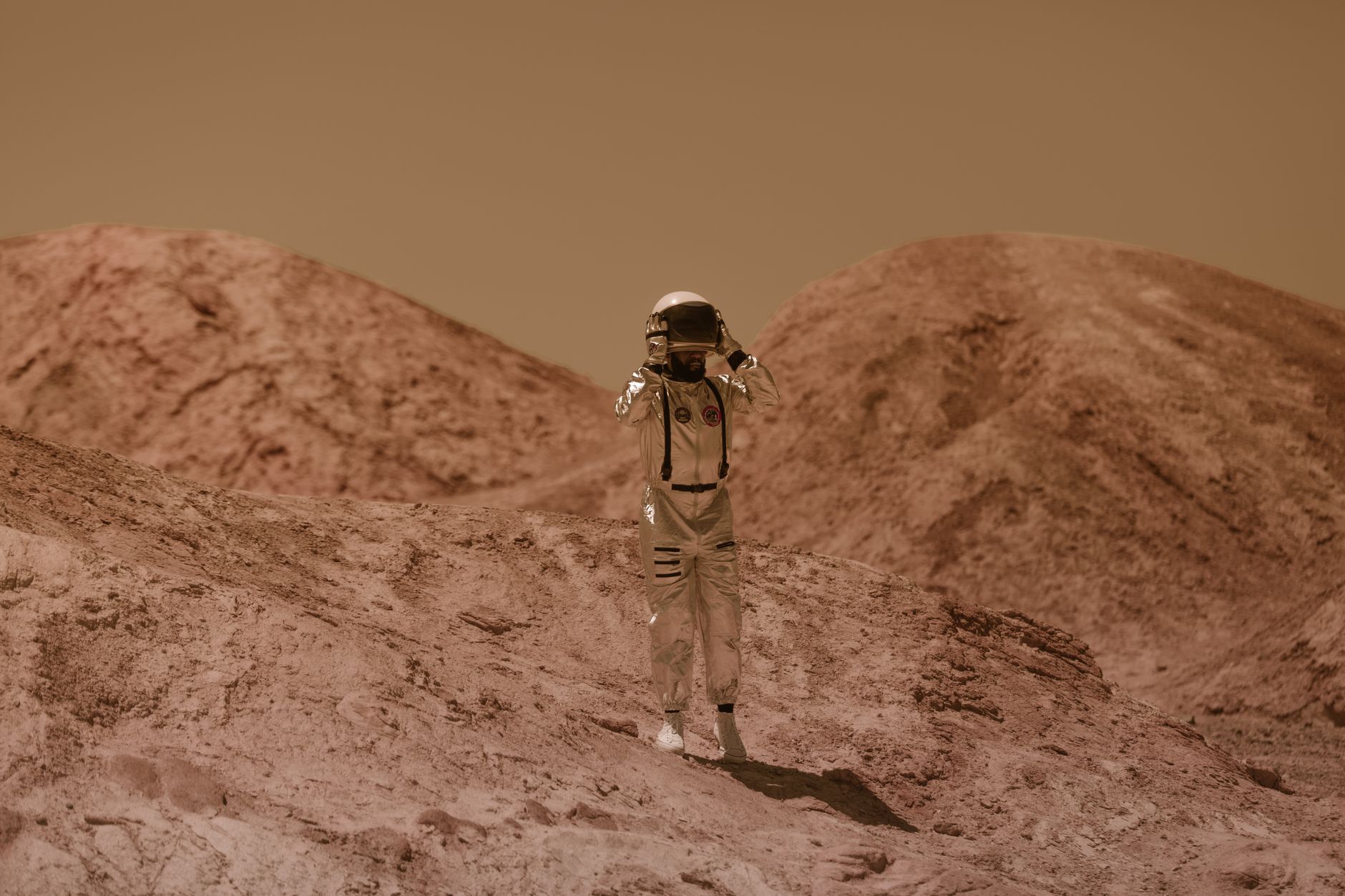
Fine, electrostatically‑charged particles that cling to suits and equipment could become an invisible health hazard on the Red Planet. NASA’s latest report sets an initial inhalation standard for Martian dust, limiting exposure to 0.1 mg per cubic meter of air averaged over 24 hours for up to 30 days. The guideline gives engineers a measurable target while the agency still has years before crewed missions launch. By defining a concrete limit now, NASA can begin testing filtration, suit‑cleaning, and habitat air‑handling systems early in the design cycle. Protecting astronaut lungs is essential for mission success and crew wellbeing.
What happened
NASA’s Mars Dust Limit Working Group, which includes planetary scientists and engineers, released a health‑based recommendation that caps fine Martian dust at 0.1 mg per cubic meter of breathable air. The limit is expressed as a 24‑hour average and applies to exposure scenarios lasting up to 30 days, providing a clear benchmark for habitat and suit designers.
The recommendation draws on multiple data streams: high‑resolution imaging from rovers and landers that characterizes particle size and composition, laboratory simulations that reproduce Martian atmospheric conditions, and analog studies of lunar dust toxicity. By integrating these sources, the working group established a precautionary exposure ceiling despite the fact that no Martian dust has yet been returned to Earth for direct testing.
Why it matters
Inhaled dust can cause irritation, inflammation, and long‑term pulmonary disease, especially when particles are ultra‑fine and carry reactive minerals. A quantified limit allows spacecraft engineers to size filters, design air‑lock procedures, and develop suit‑cleaning protocols that keep airborne concentrations below the threshold. It also informs medical monitoring plans for crews who will spend extended periods on the surface, reducing the risk of acute or chronic respiratory issues that could jeopardize mission objectives.
- Provides a clear engineering target for filtration and habitat design.
- Enables early testing of dust‑control technologies before crewed missions.
- Offers a health‑focused safeguard for astronaut respiratory safety.
- Based on limited analog data; actual Martian dust toxicity remains uncertain.
- May be overly conservative, adding mass and power demands to life‑support systems.
- Could restrict mission flexibility if dust levels exceed the predicted limit.
How to think about it
Design teams should treat the 0.1 mg/m³ figure as a baseline requirement rather than a hard ceiling. Incorporate real‑time dust monitoring sensors in habitats and suits, and build redundancy into filtration units so that performance can be verified throughout a surface stay. Develop suit‑decontamination stations that use electrostatic or acoustic methods to dislodge particles before re‑entry into the habitat. Finally, integrate medical surveillance protocols that track respiratory function over the 30‑day exposure window, allowing adjustments to operational procedures if dust concentrations trend upward.
FAQ
What does 0.1 mg/m³ mean for an astronaut’s daily exposure?+
How was the dust limit determined without actual Martian samples on Earth?+
What technologies are being pursued to meet the dust limit?+
- spaceflight·3 min readPerseverance Rover Tests Spacesuit Swatches to Gauge Martian Dust Storm Risks
NASA's Perseverance rover examined spacesuit material after 1,645 sols, revealing how fine Martian dust adheres and what training astronauts need.
- news·3 min readNASA Opens Applications for New Astronaut Class to Support Moon Base and Mars Missions
NASA invites U.S. citizens to apply by Dec. 3 to join the next astronaut class, training for lunar surface work and future Mars missions.
- spaceflight·2 min readMars dust appears less abrasive than lunar dust, study of Perseverance suit swatches shows
Perseverance’s tiny spacesuit swatches show Martian dust is smoother and less abrasive than lunar dust, easing suit‑wear concerns for future crews.