Three mind-blowing space facts: lunar dinosaur fossils, planets between Earth and Moon, Sun’s roar
Explore three astonishing space facts: possible dinosaur fossils on the Moon, all planets fitting between Earth and Moon, and the Sun’s deafening roar.
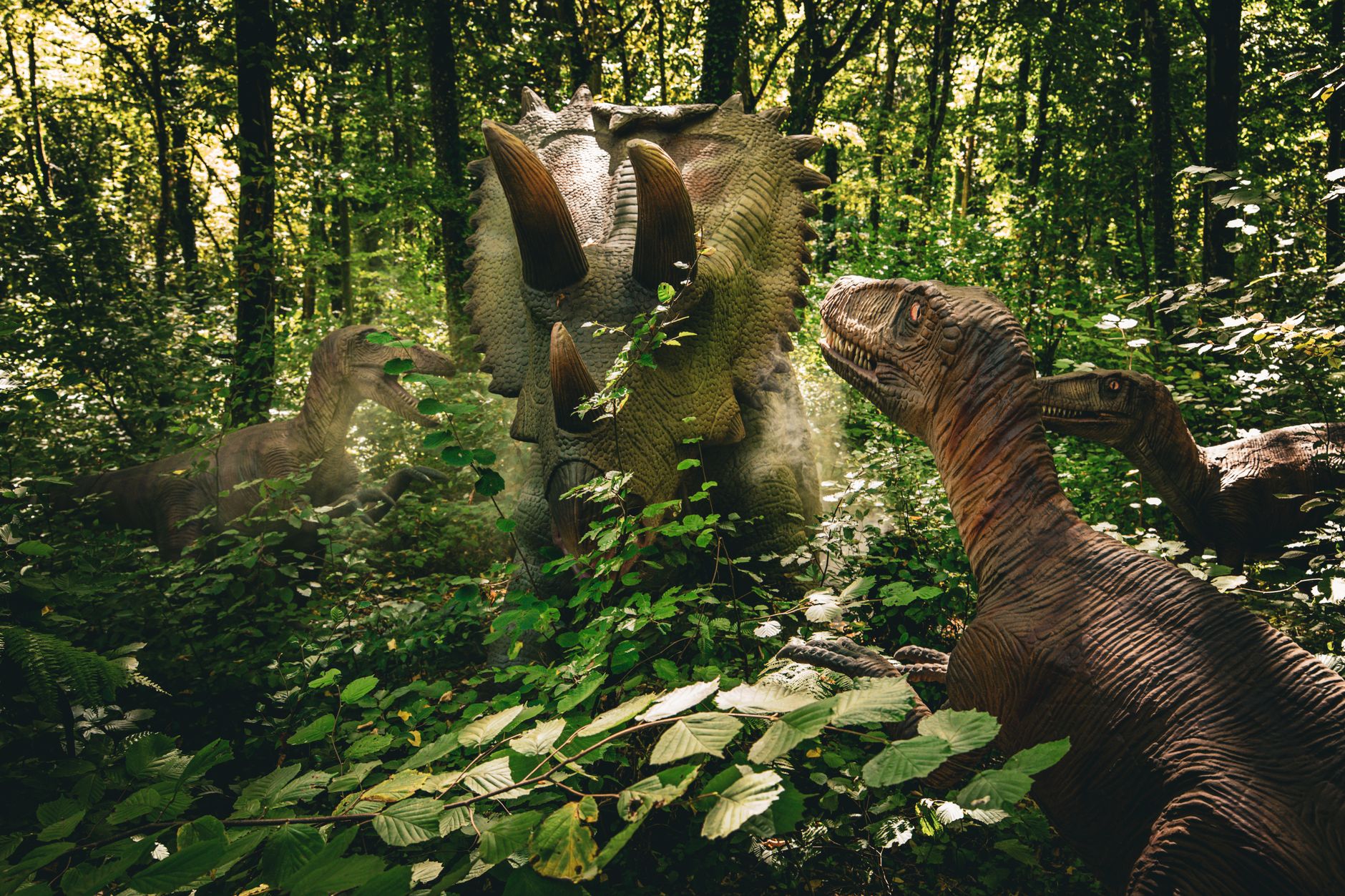
Space never ceases to surprise, and recent highlights remind us just how strange our cosmic neighborhood can be. Scientists have pointed out that fragments from the asteroid that ended the dinosaurs may have been hurled onto the Moon, that the entire lineup of planets could be squeezed into the narrow gap between Earth and its satellite, and that the Sun would sound like a roaring jet if its vibrations could travel through space. Each of these mind‑blowing ideas reshapes how we picture planetary history, scale, and the energetic power of our star.
What happened
When the 65‑million‑year‑old asteroid slammed into Earth, the impact was so violent that rocks were ejected into space. Some of those ejecta could have traveled far enough to strike the Moon, meaning that lunar regolith might contain fragments of fossil‑bearing Earth rock.
If you line up Mercury, Venus, Earth, Mars, Jupiter, Saturn, Uranus and Neptune end‑to‑end, their combined diameters would fit comfortably between the surface of Earth and the Moon at apogee, the point where the Moon is farthest from us. This simple scaling exercise highlights the immense emptiness of the Earth‑Moon system.
The Sun constantly vibrates, generating pressure waves that would correspond to a sound of roughly 100 decibels if a medium existed to carry them. In the vacuum of space those waves dissipate, but the calculation underscores how energetically noisy our star truly is.
Why it matters
These facts are more than party tricks. The possibility of lunar dinosaur fossils forces us to reconsider how impact ejecta can redistribute planetary material across the Solar System, with implications for future sample‑return missions. The planet‑packing illustration provides an intuitive grasp of astronomical distances, a concept that underpins navigation, mission planning and public outreach. Finally, quantifying the Sun’s acoustic power helps scientists probe solar interior processes through helioseismology, a technique that improves space‑weather forecasting.
- Highlights the interconnectedness of planetary bodies.
- Offers vivid analogies that aid public understanding of scale.
- Connects everyday concepts (sound, fossils) to astrophysical phenomena.
- Some claims remain speculative without direct lunar samples.
- Simplified planet‑packing ignores orbital dynamics and planetary rings.
- Sound‑based analogies can mislead because sound cannot travel in vacuum.
How to think about it
Treat each fact as a starting point for a deeper question. Ask what mechanisms could actually deliver Earth rocks to the Moon, calculate the exact distance budget for the planet‑stacking exercise, and explore how helioseismic data translate into the “loudness” of the Sun. By converting wonder into quantitative inquiry, you turn awe into scientific insight.
FAQ
Could we really find dinosaur fossils on the Moon?+
Does the planet‑stacking trick account for the size of planetary rings?+
How do scientists measure the Sun’s acoustic power?+
- explainers·3 min readInouye Telescope Captures Visible Image of Sun, Revealing Kelvin‑Helmholtz Instability
A new visible-light image from the Inouye Solar Telescope shows the Sun’s surface with city‑size detail, revealing Kelvin‑Helmholtz instability.
- explainers·10 min readUnveiling the Sun's Fiery Heart: Composition, Fusion, and the Engine of Our Solar System
Explore the Sun's incredible composition, primarily hydrogen and helium, and discover how nuclear fusion in its core powers our entire solar system. Understand the processes that make our star shine.
- news·2 min readSpaceX Falcon 9 Upper Stage Impacts Moon, Creating 20‑27 m Crater
A 4‑ton Falcon 9 upper stage struck the Moon on Aug 5, forming a 20‑27 m crater and releasing lithium‑rich dust, prompting new lunar impact studies.