Ancient Meteorite Unveils Evidence of a Lost Protoplanet from Early Solar System
A recent meteorite analysis has revealed compelling evidence of a moon-sized protoplanet that existed in the early solar system, offering new insights into planetary formation.
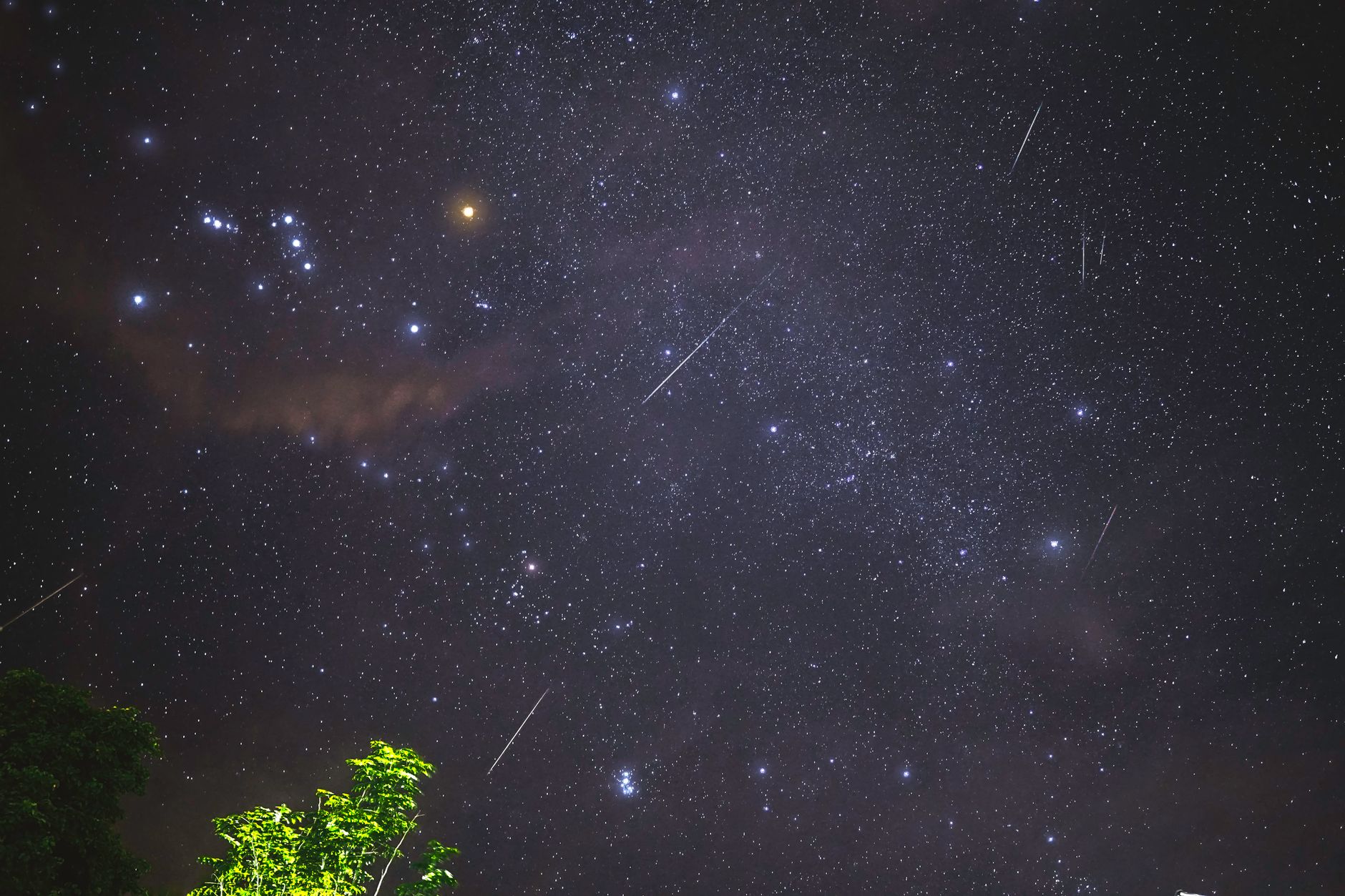
For eons, scientists have pieced together the chaotic tapestry of our solar system's infancy, a time when nascent planets smashed into each other in a cosmic ballet of creation and destruction. A groundbreaking discovery, stemming from the meticulous analysis of an ancient meteorite, has now provided tangible evidence of a lost world—a moon-sized protoplanet that once roamed the early solar system. This finding offers an unprecedented glimpse into the violent processes that forged the planets we know today, including Earth, fundamentally reshaping our understanding of planetary formation.
What happened
Scientists examined a rare type of meteorite, a relic from the solar system's earliest epoch, using advanced isotopic analysis techniques. They identified unique chemical signatures and mineral structures within the meteorite that could only have originated from a body that had undergone significant internal differentiation. This means the parent body was large enough to melt and separate into distinct layers, much like Earth, with a core, mantle, and crust, before being shattered into fragments.
The isotopic ratios found within the meteorite's composition pointed to a parent body that formed within the first few million years after the sun's birth. Based on the evidence, researchers estimate this ancient world was roughly the size of Earth's Moon, a significant celestial object that no longer exists as a coherent body. Its destruction likely occurred during the intense bombardment period of the early solar system, scattering its remnants across the nascent planetary disk.
Why it matters
This discovery is a pivotal moment for planetary science, moving beyond theoretical models to provide concrete evidence of the early solar system's turbulent environment. For decades, scientists have theorized about the existence of numerous protoplanets that collided, merged, and were destroyed, eventually accumulating to form the larger planets. This meteorite offers a direct physical sample from one such 'failed' world, validating those long-standing hypotheses.
The implications extend to our understanding of Earth's own origins. Our planet is believed to be a composite of many such differentiated bodies. By studying the remnants of this lost protoplanet, researchers can gain deeper insights into the raw materials and violent processes that contributed to Earth's formation, including the delivery of crucial elements and the planet's internal structure. It paints a more vivid picture of the cosmic demolition derby that ultimately led to our habitable world.
- Provides empirical evidence for theoretical models of early solar system evolution.
- Offers direct material samples from a previously hypothesized lost protoplanet.
- Refines our understanding of planetary accretion and differentiation processes.
- The exact original size and composition of the protoplanet remain inferences.
- Only a single instance of such direct evidence has been identified so far.
- Advanced analytical techniques are required, limiting broader verification efforts.
How to think about it
When contemplating this discovery, it's helpful to view the early solar system not as a neatly arranged collection of planets, but as a dynamic and violent construction site. Imagine a cosmic demolition derby where countless moon- to Mars-sized bodies were constantly colliding, merging, and shattering. What we see today—the stable planets and their orbits—are the survivors and the accumulated results of this intense period. This meteorite reminds us that our cosmic home has a much more turbulent and complex origin story than its current tranquility suggests, a story of destruction paving the way for creation.
FAQ
What exactly is a protoplanet?+
How can a meteorite reveal a 'lost' world?+
Does this discovery change our understanding of Earth's formation?+
- astronomy·7 min readHow Our Solar System Formed from a Collapsing Molecular Cloud
About 4.6 billion years ago, a cloud of gas and dust in the Milky Way collapsed under its own gravity, forming the Sun and a spinning disc of material that eventually became every planet, moon, and asteroid in the solar system.
- astrophysics·5 min readInterstellar Comet 3I/ATLAS Reveals Early Galaxy's Cold Chemistry Through Deuterium
JWST found exceptionally high deuterium in interstellar Comet 3I/ATLAS. This reveals frigid conditions of star formation in the early Milky Way, offering unique insights into cosmic origins.
- astronomy·5 min readSeismic Data Reveals Ancient Magma Oceans on Mars, Hinting at Broader Habitable Conditions
NASA's InSight mission data suggests Mars once harbored vast magma oceans beneath its crust. This discovery challenges assumptions about planetary habitability and tectonic activity.