Could We Build a Self-Sustaining City on Mars This Century?
Elon Musk has said a million people on Mars within a century is his goal. That is an audacious claim, but the underlying question — what it would actually take to build a city that cannot depend on Earth for survival — is one of the most fascinating engineering and social problems of our time.
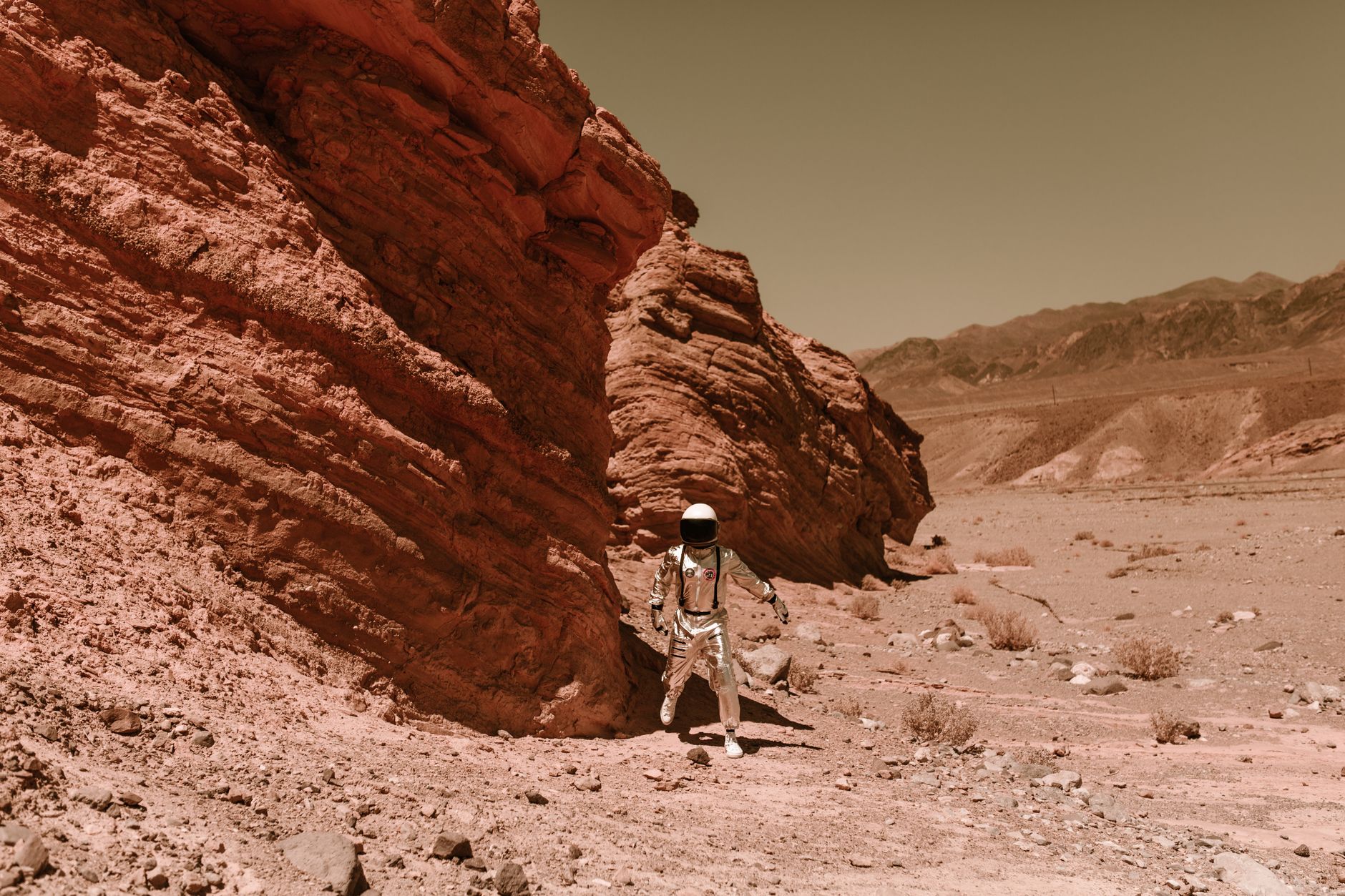
A Mars city is easy to picture and hard to define. A few habitats linked by tunnels would be a settlement; a research outpost with steady resupply would be a colony. A self-sustaining city is something tougher: a place that can survive supply interruptions from Earth without collapse. That means Mars urbanism is ultimately a test of whether we can export an entire industrial ecosystem, not just human beings.
What happened
To become self-sustaining, a Martian settlement would need reliable local production of air, water, food, power, construction materials, spare parts, and eventually complex electronics and medicines. In-situ resource utilization is central to every serious architecture. Water ice would feed life support and agriculture. Martian carbon dioxide could help make methane and oxygen propellant. Regolith could become bricks, radiation shielding, glass, and perhaps metals with enough energy and processing capacity.
Power is one of the hardest constraints. Solar works on Mars, but dust, latitude, and long nights make pure-solar designs fragile unless backed by massive storage. Nuclear fission offers steadier output, especially for industry. A city would also need a transportation system, hospitals, machine shops, recycling plants, biolabs, governance, schools, and a labor structure that can handle both routine maintenance and emergencies. In other words, the question is not whether humans can visit Mars. It is whether they can bring civilization's supporting layers with them.
The timeline challenge is severe. Building even a modest city would require launch systems with airline-like cadence, cheap cargo delivery, and years of robotic predeployment before large crews arrive. The first decades would almost certainly look like a dependency chain in which Mars makes more and more of what it needs but still relies on Earth for critical components. Self-sufficiency is not a single milestone; it is a long gradient of decreasing dependence.
Why it matters
This matters because a truly self-sustaining Mars city would mark a new category of civilization. It would mean humanity is no longer confined to a single planetary biosphere for survival. That has implications for species-level resilience, long-term scientific growth, and the moral imagination of future generations who would grow up treating other worlds as lived places rather than distant destinations.
It also matters because the technologies required are useful on Earth. Closed-loop recycling, resilient energy systems, efficient agriculture, telemedicine, autonomous construction, and low-waste manufacturing are all things Earth needs under climate and resource pressure. Mars is an extreme case, but extreme cases reveal what really matters.
- A self-sustaining Mars city would make humanity meaningfully multi-planetary.
- The effort would accelerate breakthroughs in closed-loop infrastructure and autonomous industry.
- Mars offers accessible water ice, useful CO2, and a day length close to Earth's.
- Life support, medicine, and industrial supply chains are far harder to localize than launch rhetoric implies.
- The cost, risk, and transport burden would remain immense for decades.
- A city can be populated long before it is truly self-sustaining, creating dangerous illusions of independence.
How to think about it
The best framework is to compare Mars not to a frontier town but to a remote island nation with almost no local biosphere and no easy imports. If one supply chain fails, you cannot drive to the next city. That means redundancy, storage, repairability, and social trust matter as much as shiny rockets. The city succeeds only if its dull systems are extraordinarily good.
So the right question is not Can we put people on Mars this century. It is Can we build a durable stack of energy, agriculture, manufacturing, medicine, and governance that still works after the launch excitement fades. If the answer becomes yes, the city will follow almost automatically.
FAQ
What makes a Mars city self-sustaining?+
Could one million people live on Mars this century?+
Would Mars be permanently dependent on Earth?+
- spaceflight·3 min readSpaceX’s Plan for One Million AI Satellites Could Accelerate Climate Risks
SpaceX plans a million AI satellite data centers, sparking worries about rocket emissions and re‑entry debris worsening climate change.
- spaceflight·13 min readStarship's Ambitious Journey: Pushing the Boundaries of Fully Reusable Spaceflight
SpaceX's Starship is rapidly advancing towards fully reusable orbital spaceflight, promising to revolutionize access to space. Learn about its development, challenges, and profound implications for…
- spaceflight·4 min readGeneration Ships and the Centuries-Long Voyage to Another Star
The nearest star system is so far away that any realistic spacecraft would take thousands of years to arrive. Generation ships — self-contained worlds carrying thousands of people across the void — are the most serious solution anyone has proposed.