How Kuiper Belt Icy Bodies Have Merged Since the Solar System Formed
New research shows that icy Kuiper Belt objects have been colliding and sticking together since the planets formed, reshaping the outer Solar System.
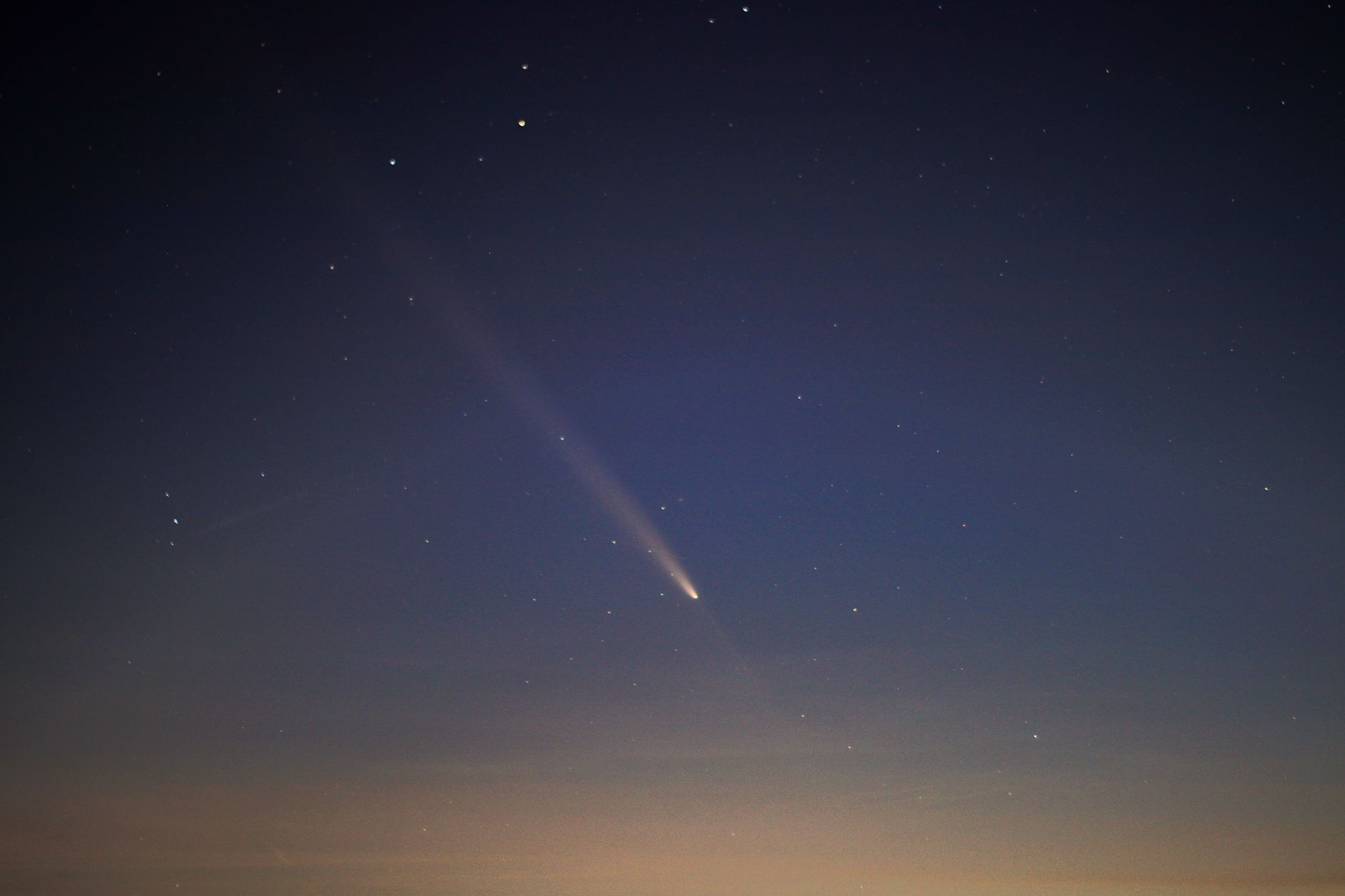
Scientists have long pictured the Kuiper Belt as a frozen graveyard of leftover planetesimals. New analysis of orbital data and surface compositions reveals that many of these icy bodies have been sticking together ever since the planets coalesced 4.5 billion years ago. The process of gentle collisions and accretion appears to have built several dwarf planets and larger aggregates. Understanding this hidden growth reshapes how we view the outer Solar System’s architecture and the source of short‑period comets.
What happened
The Kuiper Belt stretches from about 30 to 50 astronomical units beyond Neptune and hosts thousands of icy bodies composed of water, methane, ammonia, and other volatiles. Estimates suggest more than 100 000 objects larger than 100 km exist, including recognized dwarf planets such as Pluto, Haumea, and Makemake.
Recent dynamical simulations combined with observations of binary systems and surface geology indicate that many of these objects have experienced low‑velocity impacts that allow them to stick rather than shatter. Evidence includes the prevalence of contact binaries, the layered surfaces of dwarf planets, and the existence of collisional families that share similar orbital elements and spectral signatures.
Why it matters
If accretion has continued in the Kuiper Belt for billions of years, the outer Solar System is not a static relic but an evolving laboratory. The added mass in larger bodies changes the gravitational landscape, influencing the trajectories of short‑period comets that originate from the scattered disc. Moreover, models of planet formation must account for this prolonged growth phase, which can affect estimates of how much solid material was available during the era of giant‑planet migration.
- Explains the formation of dwarf planets without invoking early‑only accretion.
- Provides a mechanism for the observed diversity of Kuiper Belt object shapes.
- Improves predictions of comet delivery pathways to the inner Solar System.
- Direct observational evidence of past collisions is limited.
- Simulations rely on assumptions about impact velocities and material strength.
- Uncertainty remains about how much total mass has been redistributed.
How to think about it
Treat the Kuiper Belt as a slowly evolving swarm rather than a frozen snapshot. When evaluating the origin of a comet or the composition of a dwarf planet, consider whether its current state could be the product of billions of gentle mergers. This perspective helps prioritize targets for future missions that aim to sample pristine versus re‑processed material.
FAQ
What evidence shows that Kuiper Belt objects have merged?+
How does this affect our understanding of planet formation?+
Will future missions be able to observe these collisions directly?+
- astronomy·2 min readCambridge Study Finds Comet Delivery of Life‑Building Molecules to Early Earth Was Likely One‑Off
A new Cambridge model shows comets strike Earth too fast for fragile organics to survive, making comet‑seeded life a rare, likely one‑off event.
- astronomy·3 min readShoemaker-Levy 9 impact on Jupiter 32 years ago
Comet Shoemaker-Levy 9 struck Jupiter between July 16 and 22, 1994, leaving visible scars and supplying water to the planet's atmosphere.
- astronomy·10 min readSaturn's Enigmatic Rings: Unraveling Their Icy Composition and Mysterious Formation Story
Explore Saturn's iconic rings, primarily made of water ice, and the ongoing debate about their age. Discover their complex structure and how these magnificent cosmic marvels came to be.