JWST Celebrates Four Years with Unprecedented Infrared View of Galaxy Collision Site Centaurus A
The James Webb Space Telescope marks its fourth anniversary by unveiling a stunning infrared image of Centaurus A. This view reveals new details about the galaxy's supermassive black hole and star…
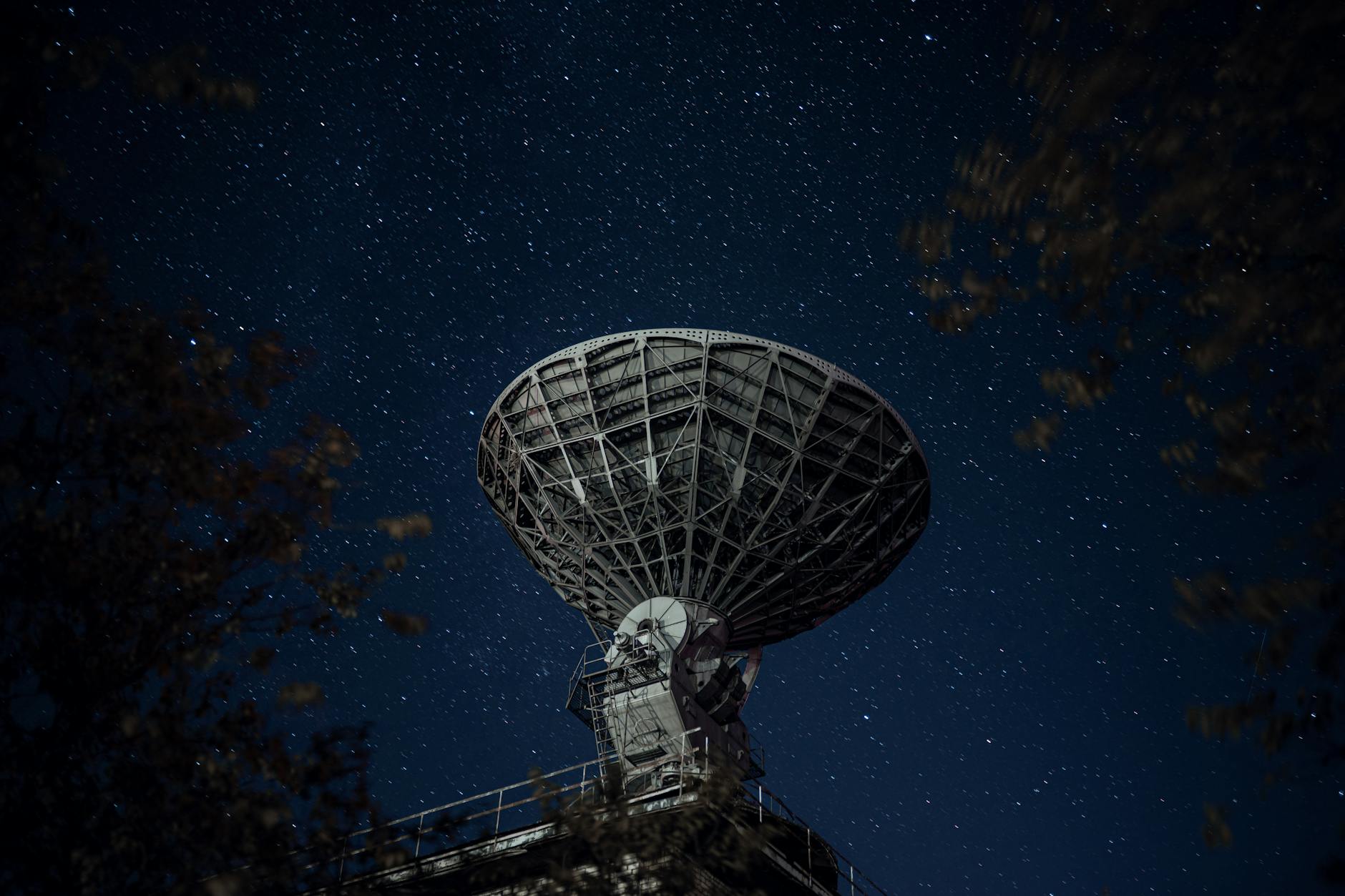
July 2026 marks four years since the public first saw images from NASA's James Webb Space Telescope (JWST), ushering in a new era for astronomical discovery. To commemorate this milestone, NASA has released a breathtaking image of Centaurus A, a uniquely shaped galaxy located approximately 11 million light-years away. This new perspective, utilizing JWST's powerful infrared vision, delves into the galaxy's tumultuous past and ongoing evolution, offering unparalleled insights into the interplay between galactic mergers, star formation, and supermassive black holes. The observations build upon decades of work by preceding observatories, pushing the boundaries of what we can discern about the universe's most dynamic regions.
What happened
To celebrate its fourth anniversary, the James Webb Space Telescope captured a stunning new image of Centaurus A, a galaxy whose unusual structure is the result of a collision between two galaxies about 2 billion years ago. This ancient merger provided Centaurus A with an abundance of gas and dust, fueling both intense star formation and the supermassive black hole at its core. While Centaurus A is much closer than the distant, early galaxies JWST often studies, its proximity allows for detailed examination of processes relevant to galaxy evolution across the cosmos.
JWST's ultra-sensitive infrared instruments, specifically the Mid-Infrared Instrument (MIRI) and Near-Infrared Camera (NIRCam), have enabled astronomers to penetrate the thick dust that obscures Centaurus A's central regions from visible light telescopes like Hubble. This infrared penetration has revealed intricate details, including fast-moving ionized gas expelled by the central black hole and warmer molecular hydrogen in a warped, rotating disk near the galaxy's heart. These observations provide crucial data on how a galaxy's central black hole can both trigger and suppress star formation, influencing the overall morphology and lifespan of its host galaxy.
Why it matters
The detailed insights from JWST's Centaurus A observations are crucial for building a more comprehensive cosmic history. By understanding the intricate processes within a relatively nearby, actively evolving galaxy, scientists can apply these findings to more distant and ancient galaxies, refining models of how the universe has evolved. The ability to see through dense dust clouds with infrared light is not just an incremental improvement; it's a fundamental shift in our observational capabilities, allowing us to witness phenomena previously hidden.
These discoveries have significant implications for astrophysics, particularly in understanding the co-evolution of galaxies and their supermassive black holes. The data illustrates the dual role of black holes—sometimes condensing gas and dust to spark star birth, other times expelling material to 'kill' star formation. This nuanced understanding helps resolve long-standing questions about how galaxies grow, change, and ultimately cease star production, shaping the large-scale structure of the universe.
- JWST's infrared vision penetrates dense dust, revealing previously hidden galactic structures.
- New data clarifies the complex role of supermassive black holes in both triggering and stunting star formation.
- Observations of Centaurus A provide a detailed case study applicable to understanding galaxy evolution across the universe.
- Some mysteries, like the origin of Centaurus A's S-shaped feature, still remain unsolved.
- Interpreting complex infrared data requires sophisticated analysis and modeling.
- While powerful, JWST is one instrument in a suite of observatories, requiring synthesis with other data.
How to think about it
When considering discoveries from missions like JWST, it's essential to view them as part of an ongoing, cumulative scientific endeavor. No single telescope provides the complete picture; rather, each observatory, with its unique capabilities, builds upon the foundations laid by its predecessors. JWST's infrared prowess complements visible light observations from Hubble and expands on the infrared work of Spitzer, creating a richer, multi-wavelength understanding of cosmic objects. This iterative process of observation, analysis, and synthesis is how our understanding of the universe deepens, revealing new layers of complexity and connection. Appreciate these images not just as beautiful pictures, but as windows into the fundamental physics governing the cosmos, continuously refined by new technological advancements.
FAQ
What is Centaurus A and why is it important for JWST to observe it?+
Centaurus A is a large, uniquely shaped galaxy located about 11 million light-years away, known for its active galactic nucleus and powerful jets. Its unusual structure is due to a past galactic collision. Observing Centaurus A is important because its relative proximity allows JWST to study the intricate details of galaxy mergers, star formation, and the influence of a supermassive black hole at a resolution not possible for more distant galaxies. This serves as a crucial case study for understanding similar processes throughout the universe.
How does JWST's infrared vision provide new insights into Centaurus A?+
JWST's powerful infrared instruments can peer through the thick clouds of gas and dust that obscure the central regions of Centaurus A from visible light. This capability allows astronomers to see phenomena previously hidden, such as glowing stellar nurseries, warm molecular hydrogen, and fast-moving ionized gas expelled by the central black hole. By penetrating this cosmic veil, JWST reveals the inner workings of the galaxy's core, offering a clearer picture of its dynamic processes.
What new discoveries has JWST made about Centaurus A's central black hole and star formation?+
JWST's observations of Centaurus A have provided detailed evidence of how the galaxy's central supermassive black hole influences star formation. The data shows how the black hole's activity can both trigger intense bouts of star birth by condensing gas and dust, and simultaneously stunt star formation by purging the raw materials needed for new stars. This dual role helps scientists understand the complex interplay between black holes and their host galaxies, contributing to a more comprehensive understanding of galaxy evolution.
- astronomy·10 min readUnveiling the Cosmos: How the James Webb Space Telescope Explores the Early Universe in Infrared
Discover how the James Webb Space Telescope uses infrared astronomy to peer back in time, observing the first stars and galaxies forming in the early universe. Learn about its advanced capabilities…
- astronomy·4 min readWebb Telescope Pierces Dust Veil of Centaurus A, Revealing Aftermath of Ancient Galactic Merger
Webb's new infrared images of Centaurus A cut through obscuring dust, revealing individual stars and complex structures from a 2-billion-year-old galactic collision. This offers unprecedented…
- news·3 min readHubble and JWST Spot First Stellar‑Mass Black Hole in Omega Centauri, Opening Door to Thousands More
Astronomers used Hubble and JWST data to confirm a 4.46‑solar‑mass black hole in Omega Centauri, hinting at thousands of hidden remnants.