The Interstellar Medium: The Gas and Dust Between the Stars
Space between the stars is not empty. It is filled with a tenuous mix of gas, dust, magnetic fields, and cosmic rays that astronomers call the interstellar medium — the raw material from which all stars and planets form.
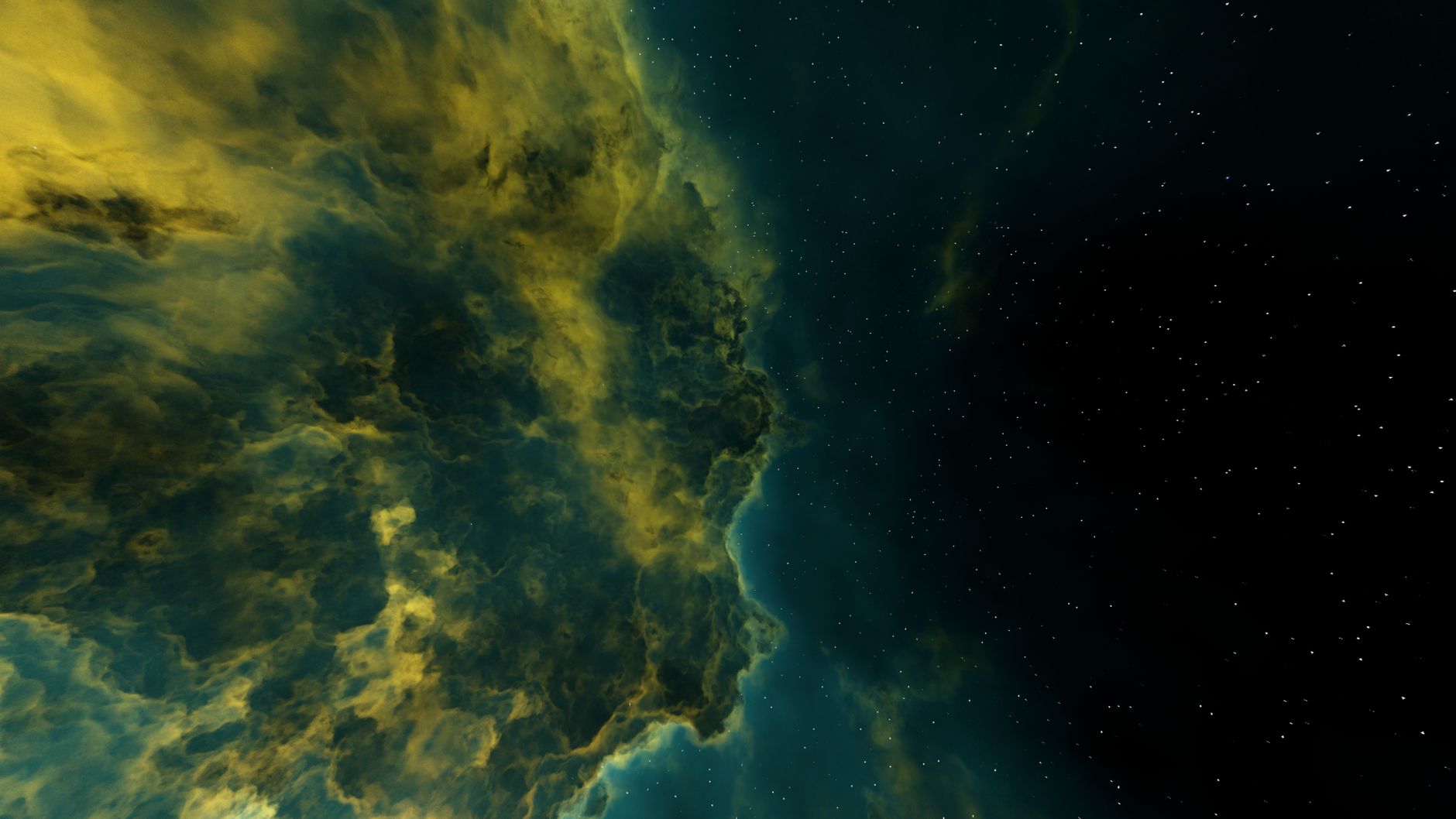
The vast spaces between the stars are not a perfect vacuum. They contain roughly one atom per cubic centimeter on average — far emptier than the best vacuum achievable in a laboratory on Earth, but not nothing. Over the enormous scales of a galaxy, this diffuse material adds up to enormous mass: the interstellar medium (ISM) of the Milky Way contains roughly 10-15% of the total mass of the galaxy's disk. It is not uniform — it ranges from hot, tenuous plasma blown by supernova explosions to cold, dense molecular clouds where temperatures drop close to absolute zero and complex organic molecules form. And it is not static — it cycles constantly between stars and the space between them, enriched each time massive stars end their lives and return heavy elements to the ISM, ready to be incorporated into the next generation of stars and planets.
What happened
The ISM was recognized as a physical entity in the early 20th century when astronomers noticed that light from distant stars was reddened and dimmed more than distance alone could explain — interstellar dust was absorbing and scattering the light. Radio astronomy in the 1950s revealed that neutral hydrogen — the most abundant atom in the universe — pervades the ISM and can be mapped through its 21-centimeter radio emission. Molecular radio astronomy in the 1970s discovered that cold, dense regions contain not just atoms but molecules — carbon monoxide, water, formaldehyde, ammonia, and eventually hundreds of organic molecules including complex prebiotic compounds.
The ISM has several distinct phases. The hot ionized medium (HIM), filling perhaps 20-50% of the galactic disk's volume, is plasma at millions of degrees blown out by supernova remnants — so hot that it emits X-rays. The warm neutral medium (WNM) and warm ionized medium (WIM) fill most of the rest of the volume: hydrogen at thousands of degrees, maintained by the radiation field from stars. The cold neutral medium (CNM) consists of denser, colder clouds at around 100 K. And the molecular clouds are the densest and coldest structures — temperatures as low as 10 K, densities of thousands to millions of atoms per cubic centimeter — where hydrogen molecules form and gravity can begin the collapse into new stars.
Dust is a minor component by mass (roughly 1% of the ISM) but plays an outsized role. Interstellar dust grains — typically fractions of a micrometer in size, made of silicates, carbon, and ice mantles — absorb and scatter visible and ultraviolet light (causing the reddening and extinction of starlight), act as surfaces for chemical reactions that form molecules in cold clouds, and carry the refractory heavy elements from stars into future planetary systems. The Milky Way's plane of dust, visible on dark nights as the dark rifts in the Milky Way band, is an ISM dust lane viewed from within.
Why it matters
The ISM is the mediator of galactic chemical evolution. Every atom heavier than helium was made in a star and returned to the ISM when the star died — through stellar winds, planetary nebulae, or supernovae. The ISM mixes these products, transports them across the galaxy, and eventually incorporates them into new stars and their planets. The atoms in your body cycled through the ISM multiple times before they became part of you. Tracing the chemistry and dynamics of the ISM across cosmic time is how astronomers reconstruct the history of element production in the universe.
For planet formation, the ISM is the ultimate source of the raw materials. The solar system formed from an ISM cloud; the specific chemical composition of that cloud, set by the history of stellar nucleosynthesis in the Milky Way up to 4.6 billion years ago, determined the initial abundances of every element in the planets, including the carbon, nitrogen, oxygen, and phosphorus that life requires. Understanding the ISM is therefore foundational to astrobiology.
The ISM also shapes the structure and evolution of galaxies. Supernova-driven feedback heats and disrupts molecular clouds, regulating the rate at which the galaxy turns gas into stars. Without this feedback, galaxies would convert all their gas to stars rapidly — but observations show that star formation in the Milky Way is surprisingly slow, consuming only a few percent of the available molecular gas per free-fall time. The ISM's turbulence, magnetic fields, and feedback loops are responsible.
- The ISM contains complex organic molecules — including precursors to amino acids and nucleotides — that may be delivered to planets, potentially seeding prebiotic chemistry.
- Radio observations of ISM molecules can probe the physical and chemical conditions inside molecular clouds in extraordinary detail, providing a snapshot of conditions during star and planet formation.
- Mapping the ISM across the galaxy with 21-cm hydrogen observations has provided the most complete picture of the Milky Way's structure available from within the disk.
- The extreme density range of the ISM (from 10^-4 to 10^8 atoms/cm³) means no single observational technique covers all phases — comprehensive ISM studies require combining radio, infrared, optical, ultraviolet, and X-ray observations.
- Interstellar dust blocks optical observations through the disk, preventing direct observation of much of the Milky Way in visible light — infrared and radio observations are required to penetrate it.
- The turbulent, multi-phase nature of the ISM makes modelling its dynamics computationally challenging; key processes like magnetic field reconnection and turbulent mixing are not fully understood.
How to think about it
The best frame for the ISM is a slow-motion recycling system operating on timescales of millions to billions of years. Stars form from the coldest, densest parts of the ISM, live their lives producing energy and heavy elements, and then return most of their mass to the ISM when they die. Each generation of stars is slightly more chemically enriched than the last, because each generation adds the products of its nuclear burning to the mix. The Sun is a third-generation star, formed from gas that had already been processed through at least two previous stellar generations. The oxygen you breathe was made in a dying star; the iron in your blood was forged in a supernova.
The ISM is also a remarkable natural chemistry laboratory. In the cold, dark interior of molecular clouds, shielded from ultraviolet radiation by the dust column above, molecules form on grain surfaces and in the gas phase through reactions that would be impossibly slow in a laboratory. More than 200 molecules have been detected in the ISM — including glycolaldehyde (a simple sugar), amino acid precursors, and complex aromatic hydrocarbons. Whether these molecules survive delivery to planetary surfaces, and whether they played a role in the origin of life, is one of the central questions of astrobiology.
FAQ
Why is the interstellar medium mostly hydrogen and helium?+
How does interstellar dust form?+
What are the famous colored nebulae, and are they part of the ISM?+
- astrophysics·3 min readNew Study Finds Dark Matter’s Hidden Attractive Force May Slow Cosmic Structure Growth
Researchers reveal a hidden dark‑matter force that paradoxically suppresses large‑scale structure growth, challenging standard cosmology.
- astrophysics·3 min readJWST uncovers supermassive black holes in the first 700 million years that outweigh their host galaxies
New JWST observations reveal supermassive black holes less than a billion years after the Big Bang that outmass their host galaxies, challenging growth models.
- astrophysics·3 min readObservations Reveal Details of Peculiar 91bg-like Supernova SN 2023vjh
Follow‑up observations of SN 2023vjh clarify its rise time, subluminous nature, and host environment, shedding light on 91bg‑like Type Ia explosions.