Unraveling the Cosmic Dance: How Earth's Journey Through Space Creates Dazzling Meteor Showers
Discover the science behind meteor showers, from cosmic debris to atmospheric entry. Learn how to best observe these celestial spectacles and why they captivate skygazers worldwide.
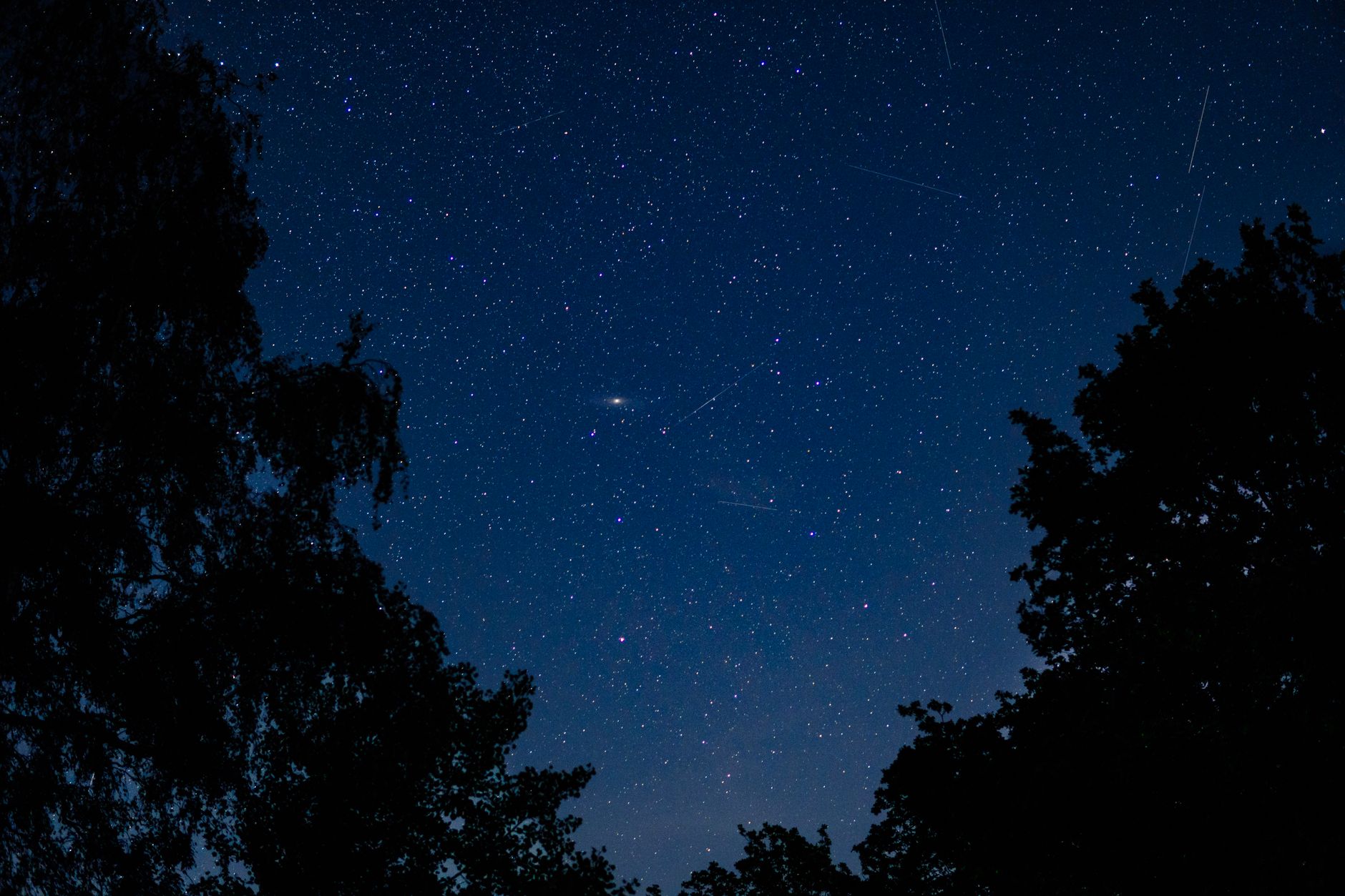
Meteor showers are among the most captivating celestial phenomena, transforming the night sky into a canvas of fleeting light. These spectacular events, often called "shooting stars," are not stars at all but rather tiny fragments of cosmic debris burning up as they plunge through Earth's atmosphere. Understanding their origins—from ancient comets shedding dust to the precise mechanics of their atmospheric entry—deepens our appreciation for the dynamic interplay between our planet and the vastness of space, offering a unique window into the solar system's ongoing evolution. Each shower connects us to both the distant past of cometary journeys and the immediate present of Earth's orbital path.
What happened
Meteor showers occur when Earth, in its orbit around the Sun, passes through a trail of cosmic debris left behind by a comet or, less commonly, an asteroid. These trails are composed of countless small particles, known as meteoroids, most of which are no larger than a grain of sand. As a comet, often described as a "dirty snowball," approaches the Sun, its icy components vaporize, releasing dust and rocky fragments into space along its orbital path. Over centuries, these particles accumulate, forming dense streams that Earth periodically intersects. When these meteoroids slam into Earth's atmosphere at incredibly high speeds—typically tens of kilometers per second—they undergo intense aerodynamic heating. This heating isn't primarily due to friction, but rather from the rapid compression of air in front of the meteoroid, a process known as ram pressure, which causes the air to heat adiabatically to extreme temperatures.
This extreme heat causes the meteoroid to glow brightly, creating the luminous streaks we observe as meteors or "shooting stars." Most meteoroids are so small that they completely disintegrate high in the atmosphere, never reaching the ground. However, larger, denser objects, sometimes referred to as bolides or fireballs, can survive longer and even explode in spectacular mid-air bursts, known as meteor air bursts. The 1908 Tunguska event, caused by a rocky meteoroid estimated to be 50-60 meters in diameter, is a prime example, flattening millions of trees over a vast area due to its atmospheric explosion. While such events are rare and distinct from typical meteor showers, they underscore the continuous bombardment of Earth by extraterrestrial material and the protective role of our atmosphere.
The understanding of meteor showers has evolved dramatically over centuries. Historically, these luminous displays were often considered atmospheric phenomena or even omens. Ancient civilizations, including those in China, Japan, Korea, and medieval Arab cultures, meticulously recorded meteor showers as early as 1200 BCE, with the Lyrids holding the distinction of being continuously recorded since 687 BCE. However, it wasn't until the late 18th and 19th centuries that their true extraterrestrial origin began to be scientifically understood. In 1794, German scientist Ernst Chladni challenged prevailing theories by proposing that meteorites originated in outer space, a concept initially met with skepticism as it contradicted Isaac Newton's ideas about empty space. The monumental Leonids meteor storm of 1833, which produced an estimated peak rate of over one hundred thousand meteors per hour across North America, provided crucial evidence. American Denison Olmsted observed that the meteors radiated from a specific point in the constellation Leo and speculated they originated from a cloud of particles in space. Later, in 1866, Italian astronomer Giovanni Schiaparelli definitively linked meteor showers to comets, demonstrating that the Leonid shower shared the same orbit as Comet Tempel, solidifying the modern understanding that these celestial fireworks are indeed debris from cometary passages. Today, over 900 suspected meteor showers are cataloged, with about 100 well-established, and organizations like NASA provide daily maps for viewing opportunities.
Why it matters
The study and observation of meteor showers hold significant importance, extending beyond their aesthetic appeal to encompass scientific discovery, cultural heritage, and public engagement with astronomy. Scientifically, meteor showers have been instrumental in shaping our understanding of the solar system's composition and dynamics. The shift from viewing meteors as atmospheric curiosities to recognizing them as extraterrestrial visitors was a pivotal moment in astronomy, fundamentally altering our perception of space. By tracing meteoroid streams back to their parent comets, astronomers gained invaluable insights into cometary composition and orbital mechanics, including how planetary gravity perturbs these delicate dust clouds. This knowledge helps us model the distribution of matter in the solar system and understand the processes that have shaped it over billions of years.
Beyond pure science, meteor showers serve as powerful gateways to public interest in space and astronomy. Their accessibility—requiring no special equipment other than dark skies and patience—makes them a perfect entry point for aspiring skygazers of all ages. They foster a sense of wonder and connection to the cosmos, inspiring countless individuals to look up and ponder their place in the universe. Educational initiatives often leverage meteor showers to teach about orbital mechanics, atmospheric science, and the history of astronomical discovery, translating complex scientific concepts into tangible, awe-inspiring experiences. The ability to predict these events, based on detailed orbital calculations of comets and their debris trails, allows communities and individuals to plan viewing parties, further democratizing access to astronomical phenomena.
Historically, the meticulous records of meteor showers by ancient civilizations, such as the Lyrids being observed since 687 BCE, provide invaluable long-term data points for astronomers. These historical accounts offer a unique perspective on the consistency and occasional variability of these events, helping modern scientists understand long-period comets and the evolution of their debris streams over millennia. They underscore the human connection to the night sky across cultures and epochs, reminding us that the impulse to observe and interpret celestial events is deeply ingrained in our collective history.
Furthermore, while most meteoroids burn harmlessly, the study of meteor showers and related phenomena like meteor air bursts contributes to planetary defense. Understanding the frequency, size distribution, and atmospheric behavior of incoming space rocks, from sand-grain meteors to multi-meter bolides, is crucial for assessing potential impact risks. Technologies developed for detecting larger airbursts, such as infrasound sensors used by the Comprehensive Nuclear-Test-Ban Treaty Organization and infrared satellites, have enhanced our ability to monitor Earth's environment for significant impact events. This continuous monitoring, though primarily focused on larger objects, indirectly benefits from the broader understanding of meteoroid interactions with our atmosphere, ensuring that humanity remains vigilant about potential threats from space while appreciating the beauty of its more benign visitors.
- Offer a breathtaking natural light show, visible without specialized equipment.
- Provide an accessible and inspiring entry point into astronomy for the general public.
- Contribute significantly to scientific understanding of comets, solar system dynamics, and atmospheric physics.
- Connect modern observers with ancient astronomical records and human history of skywatching.
- Promote awareness of light pollution and the importance of preserving dark skies.
- Relatively safe to observe, as most meteoroids are tiny and disintegrate high above Earth.
- Can be predicted with reasonable accuracy, allowing for planned viewing events.
- Occasional meteor outbursts or storms offer exceptionally rare and intense viewing experiences.
- Visibility is highly dependent on weather conditions and cloud cover.
- Significant light pollution in urban areas severely diminishes the viewing experience.
- Requires patience and time for eyes to adjust to darkness, and for meteors to appear.
- Peak intensity can be unpredictable, with some showers being less active than anticipated.
- Cold temperatures during night-time viewing can be uncomfortable without proper preparation.
- The brightest "fireballs" are rare, and most visible meteors are faint and fleeting.
- Requires finding a location away from city lights, which may not be feasible for everyone.
- Moon phase can significantly impact visibility, with a bright moon washing out fainter meteors.
How to think about it
When approaching meteor showers, it's helpful to adopt a mindset that balances scientific curiosity with a sense of cosmic wonder. First, view these events as a tangible demonstration of Earth's dynamic journey through space. Our planet is not isolated; it constantly interacts with the debris and radiation of the solar system. Each "shooting star" is a tiny, ancient fragment, often billions of years old, making its final, fiery journey through our atmosphere—a spectacular end to a long cosmic voyage. This perspective grounds the experience in real science, moving beyond mere spectacle to a deeper appreciation of orbital mechanics and the vastness of time.
To truly appreciate a meteor shower, preparation is key. Begin by checking reliable astronomical sources like NASA or the International Meteor Organization (IMO) for peak viewing times and radiant locations. The radiant is the point in the sky from which meteors appear to originate, though they can appear anywhere. For optimal viewing, seek out the darkest possible skies, far away from city lights. Rural areas, national parks, or designated dark-sky preserves are ideal. Allow at least 20-30 minutes for your eyes to fully adapt to the darkness; this significantly enhances the visibility of fainter meteors. Dress warmly, even on seemingly mild nights, as prolonged outdoor viewing can lead to chilling. Bring a comfortable chair or blanket, and lie back to take in as much of the sky as possible. Avoid looking at your phone or any bright lights, as this will reset your night vision.
Consider the historical context of these events. For millennia, humans have gazed upon these same streaks of light, weaving them into myths, omens, and early scientific observations. The Lyrids, for instance, have been recorded for over 2,700 years. Reflecting on this shared human experience across time and cultures can add a profound layer to your observation. You are participating in a tradition as old as civilization itself, connecting with ancestors who watched the same cosmic fireworks with far less scientific understanding but perhaps equal awe.
Finally, understand that meteor showers are generally safe and benign. While the term "meteor" can sometimes evoke images of destructive impacts, the vast majority of meteoroids that cause showers are minuscule and pose no threat. They burn up miles above the surface, leaving only a fleeting trail of light. This distinction is important: a meteor shower is a beautiful, predictable celestial event, not a cause for alarm. Embrace the opportunity to witness a natural phenomenon that reminds us of the constant, subtle interplay between Earth and the wider universe, a gentle reminder of our planet's place in the grand cosmic dance.
FAQ
What is the difference between a meteoroid, meteor, and meteorite?+
These terms describe the same celestial object at different stages of its journey. A meteoroid is a small rocky or metallic body in outer space, typically ranging from dust grains to about 1 meter in size. When a meteoroid enters Earth's atmosphere and burns up due to intense heating, it becomes a meteor, creating the luminous streak we call a "shooting star." If a meteoroid is large enough to survive its fiery passage through the atmosphere and impact the Earth's surface, the remaining piece of rock is then called a meteorite. So, it's a meteoroid in space, a meteor in the atmosphere, and a meteorite on the ground.
How can I best watch a meteor shower and maximize my chances of seeing meteors?+
To best watch a meteor shower, find a location far away from city lights to minimize light pollution, which can severely diminish visibility. Allow at least 20-30 minutes for your eyes to fully adjust to the darkness; avoid looking at any bright screens or lights during this time. Lie down on a blanket or in a reclining chair, looking up at the darkest part of the sky, ideally towards the radiant constellation for the specific shower, but meteors can appear anywhere. Dress warmly, even on mild nights, as you'll be stationary for extended periods. Check the moon phase, as a bright moon can wash out fainter meteors. Patience is key, as meteors appear sporadically.
Are meteor showers dangerous, or is there any risk of being hit by a meteor?+
No, meteor showers are not dangerous, and the risk of being hit by a meteor during a shower is virtually zero. The vast majority of meteoroids that create meteor showers are incredibly small, often no larger than a grain of sand or a pebble. They burn up completely high in Earth's atmosphere, typically 80 to 120 kilometers (50 to 75 miles) above the surface, long before they could ever reach the ground. Any fragments that might survive are usually microscopic dust. While larger objects (bolides) can occasionally cause atmospheric airbursts, these are extremely rare and distinct from the regular, predictable meteor showers. You are far more likely to be struck by lightning than by a meteor from a shower.
- astronomy·3 min readShoemaker-Levy 9 impact on Jupiter 32 years ago
Comet Shoemaker-Levy 9 struck Jupiter between July 16 and 22, 1994, leaving visible scars and supplying water to the planet's atmosphere.
- astronomy·3 min readAugust 12, 2026 Total Solar Eclipse Will Capture a Unique View of the Sun’s Corona
The August 12, 2026 total solar eclipse will reveal a one‑of‑a‑kind snapshot of the Sun’s corona, offering fresh insight into Solar Cycle 25.
- astronomy·3 min readWhat to Expect at Each of the Five Stages of the August 12, 2026 Total Solar Eclipse
Learn the five key phases of the August 12, 2026 total solar eclipse, from first contact to the end of totality, and why they matter.