Why gravity propagates at light speed, not instantaneously
Gravity’s influence travels at the speed of light, not instantly, reshaping our view of cosmic interactions.
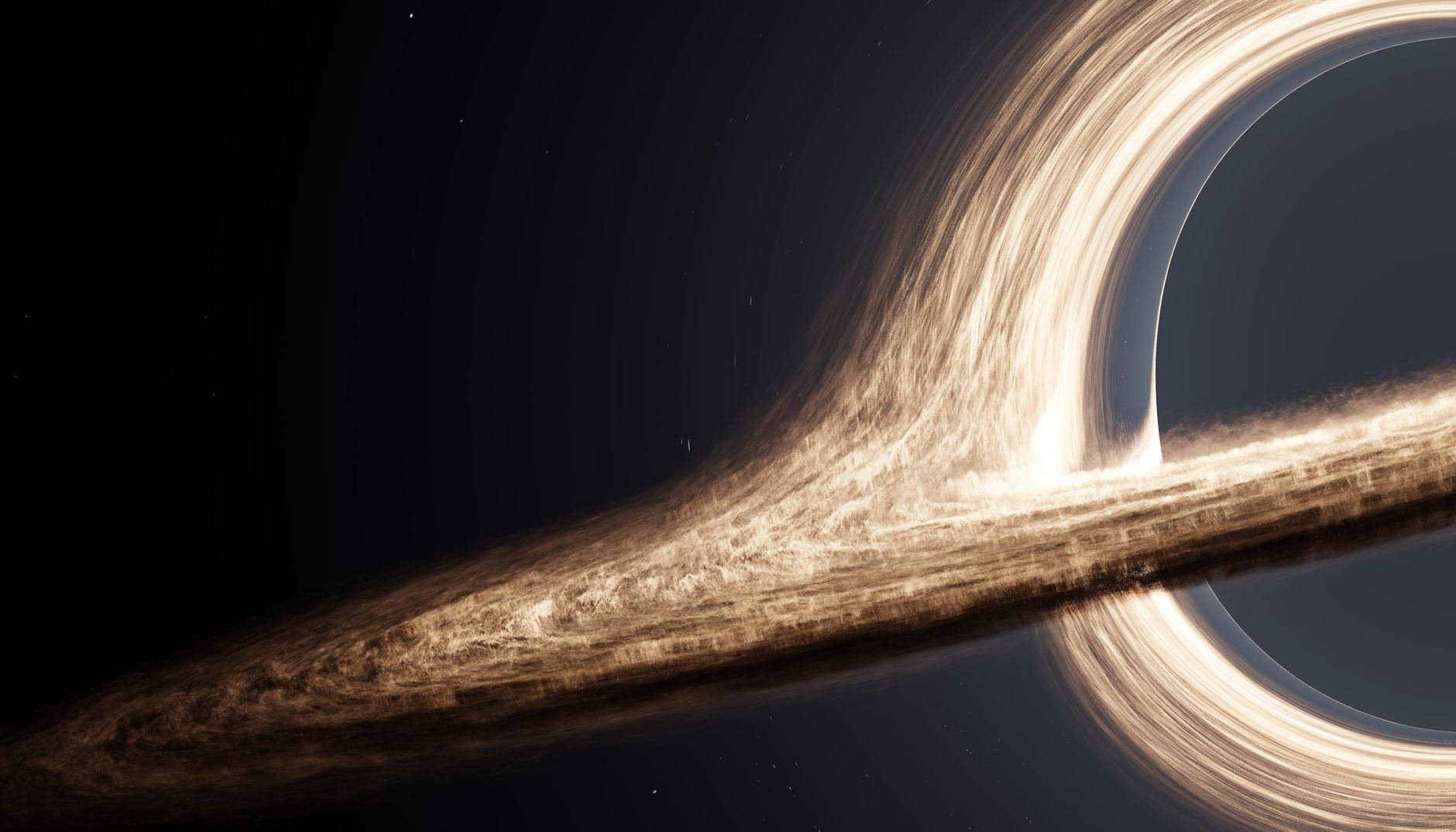
When you drop a pen, it seems to fall the instant you let go, but the underlying gravitational influence does not travel instantaneously. Recent observations of gravitational waves from the neutron‑star merger GW170817 have confirmed that changes in the gravitational field propagate at the speed of light. This realization reshapes how we think about the timing of cosmic events, from planetary orbits to the growth of large‑scale structure. Understanding that gravity respects the universal speed limit also aligns it with the other fundamental forces.
What happened
General relativity describes gravity as the curvature of spacetime caused by mass‑energy. When the distribution of mass changes, the curvature adjusts, sending out ripples—gravitational waves—that travel outward at the constant speed c, the speed of light.
The landmark detection of GW170817 in 2017, observed both as gravitational waves and as electromagnetic radiation, showed that the arrival times differed by less than two seconds over a distance of 130 million light‑years, confirming that gravity propagates at c within experimental uncertainty.
In contrast, Newton’s law of universal gravitation treats gravity as an instantaneous action‑at‑a‑distance force, an approximation that works well for many everyday calculations but breaks down when precise timing or strong fields are involved.
Why it matters
Because gravity’s changes travel at a finite speed, astronomers must account for light‑travel delays when modeling the dynamics of binary systems, galaxy mergers, and the timing of signals from distant pulsars. Relativistic corrections become essential for high‑precision navigation, such as GPS, and for interpreting the waveforms of detected gravitational‑wave events, ensuring that mass estimates and distance measurements are accurate.
- Provides consistency with special relativity
- Enables accurate modeling of gravitational wave signals
- Unifies gravity with other forces under a common speed limit
- Requires complex relativistic calculations
- Challenges intuition built on Newtonian instant action
- Limits certain speculative faster‑than‑light concepts
How to think about it
Treat gravity as a field that updates no faster than light. For everyday engineering, Newton’s instantaneous approximation remains useful, but whenever precise timing or strong gravitational fields are involved, apply general‑relativistic formulas and include the light‑travel delay between interacting masses.
FAQ
Does gravity act instantly on Earth?+
How was the speed of gravity measured?+
What does this mean for everyday phenomena like tides?+
- explainers·3 min readWhy Astronauts Feel Weightless Even Though Earth’s Gravity Still Pulls on Them
Astronauts float in orbit because they are in continuous free‑fall, not because gravity disappears.
- news·3 min readGlobal Airborne Clock Experiment Confirms Einstein’s Relativity
Airplane-borne atomic clocks circled the globe east‑west, showing time dilation that matches Einstein’s predictions.
- astrophysics·11 min readUnveiling the Universe's Hidden Mass: What is Dark Matter and Why Do We Believe It Exists?
Explore the mysteries of dark matter, the invisible substance making up 85% of the universe's mass. Learn about the compelling gravitational evidence for its existence and its crucial role in cosmic…