Astronomers Find GJ 523b, a 23‑Earth‑mass Rocky Mega‑Earth That Challenges Planet Formation Models
A newly discovered exoplanet, GJ 523b, is 2.5× Earth’s size but 23× its mass, forcing scientists to rethink rocky planet formation.
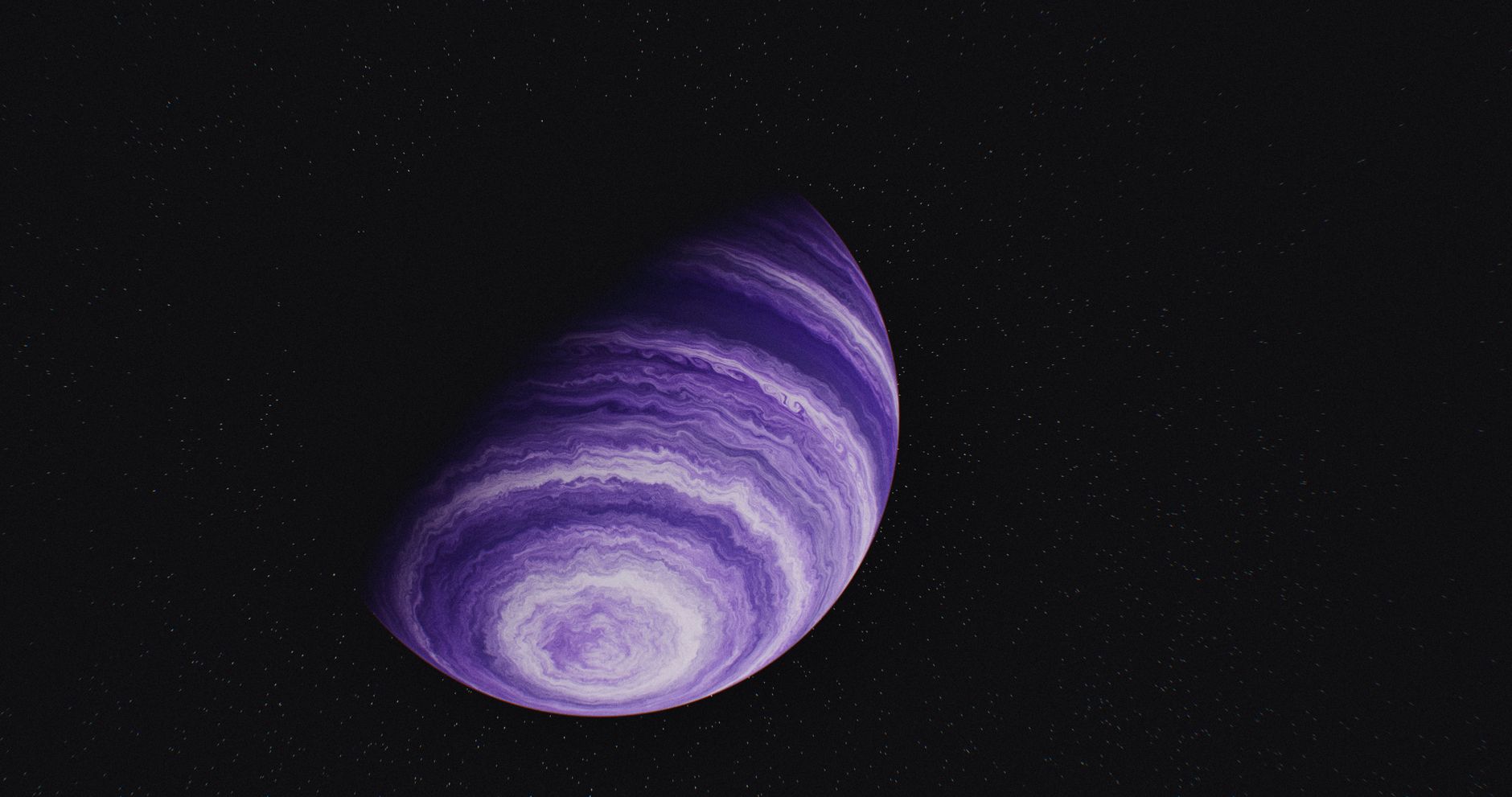
The exoplanet GJ 523b, orbiting a nearby red dwarf, has stunned astronomers with its sheer heft. At 2.55 times Earth’s radius but packing roughly 23.5 Earth masses, it is a dense, rocky world far larger than any terrestrial planet in our Solar System. Its discovery, made possible by TESS and follow‑up spectroscopy, forces a rethink of how massive rocky planets can form and retain little gas. The find also offers a rare glimpse into the early stages of planetary evolution, as the system is only about 170 million years old.
What happened
Astronomers first flagged GJ 523b as a transit candidate in data from NASA’s Transiting Exoplanet Survey Satellite (TESS), which recorded periodic dips in starlight every 17.75 days. Follow‑up observations with the WIYN 3.5‑meter telescope at Kitt Peak used precise radial‑velocity measurements to gauge the planet’s gravitational tug on its host star.
Combining the transit depth with the radial‑velocity signal yielded a radius of about 2.55 × Earth’s and a mass of roughly 23.5 × Earth’s, giving the world an extraordinary density of approximately 126.8 g in³. The host star is a young, roughly 170‑million‑year‑old red dwarf, placing the planet in a system still in its formative epoch.
These parameters place GJ 523b in the rare class of “mega‑Earths,” massive rocky planets that sit above the traditional core‑accretion threshold where rapid gas capture would normally produce a mini‑Neptune or gas giant.
Why it matters
The existence of a planet this massive yet apparently lacking a thick gaseous envelope challenges the core‑accretion model, which predicts that bodies exceeding ~20 × Earth’s mass should quickly accrete hydrogen and helium from the protoplanetary disk. GJ 523b suggests that either the disk dissipated unusually early, that the planet’s formation environment was gas‑poor, or that internal processes stripped away lighter elements. Understanding which scenario applies will reshape theories of planetary composition, migration, and the diversity of worlds that can form around low‑mass stars.
- Provides a concrete test case for revising core‑accretion thresholds.
- Offers a benchmark for interior structure models of massive rocky planets.
- Expands the known diversity of exoplanet types, informing future surveys.
- Mass and radius uncertainties could alter the inferred density.
- Lack of atmospheric characterization leaves composition ambiguous.
- Single‑object discovery limits broader statistical conclusions.
How to think about it
When evaluating massive rocky worlds, consider three axes: (1) core mass versus the timing of disk dispersal, (2) potential atmospheric loss mechanisms such as photoevaporation, and (3) the star’s metallicity and activity level, which influence both formation and retention of volatiles. Applying this framework to GJ 523b helps separate whether its high density is a birthright or the result of later stripping, guiding both observational strategies and theoretical work.
FAQ
How was GJ 523b’s mass measured?+
Why doesn’t a planet this massive have a thick atmosphere?+
What does this discovery mean for the search for Earth‑like worlds?+
- astrophysics·4 min readAstronomers Uncover 'Improbable' TOI-201 System, Challenging Planet Formation Theories
A recent study of the TOI-201 system reveals how a highly eccentric brown dwarf shaped the formation of its inner planets, defying traditional models. This discovery offers new insights into…
- astronomy·4 min readAstronomers Discover Two Jupiter-Sized 'Super-Puff' Exoplanets Lighter Than Cotton Candy
Astronomers have identified two new 'super-puff' exoplanets, each the size of Jupiter but with a density lighter than cotton candy. This rare discovery challenges planet formation theories.
- missions·4 min readTESS Uncovers First Microlensing Exoplanet, Expanding Its Planet-Hunting Horizon
NASA's TESS satellite has unexpectedly discovered its first exoplanet using gravitational microlensing, a method distinct from its usual transit technique. This breakthrough suggests more distant…