Dying Radio Galaxies Reveal How Supermassive Black Holes Shut Off Their Jets
Astronomers identified 12 remnant radio galaxies, showing that black hole jets can fade in as little as 8‑42 million years, reshaping our view of galaxy evolution.
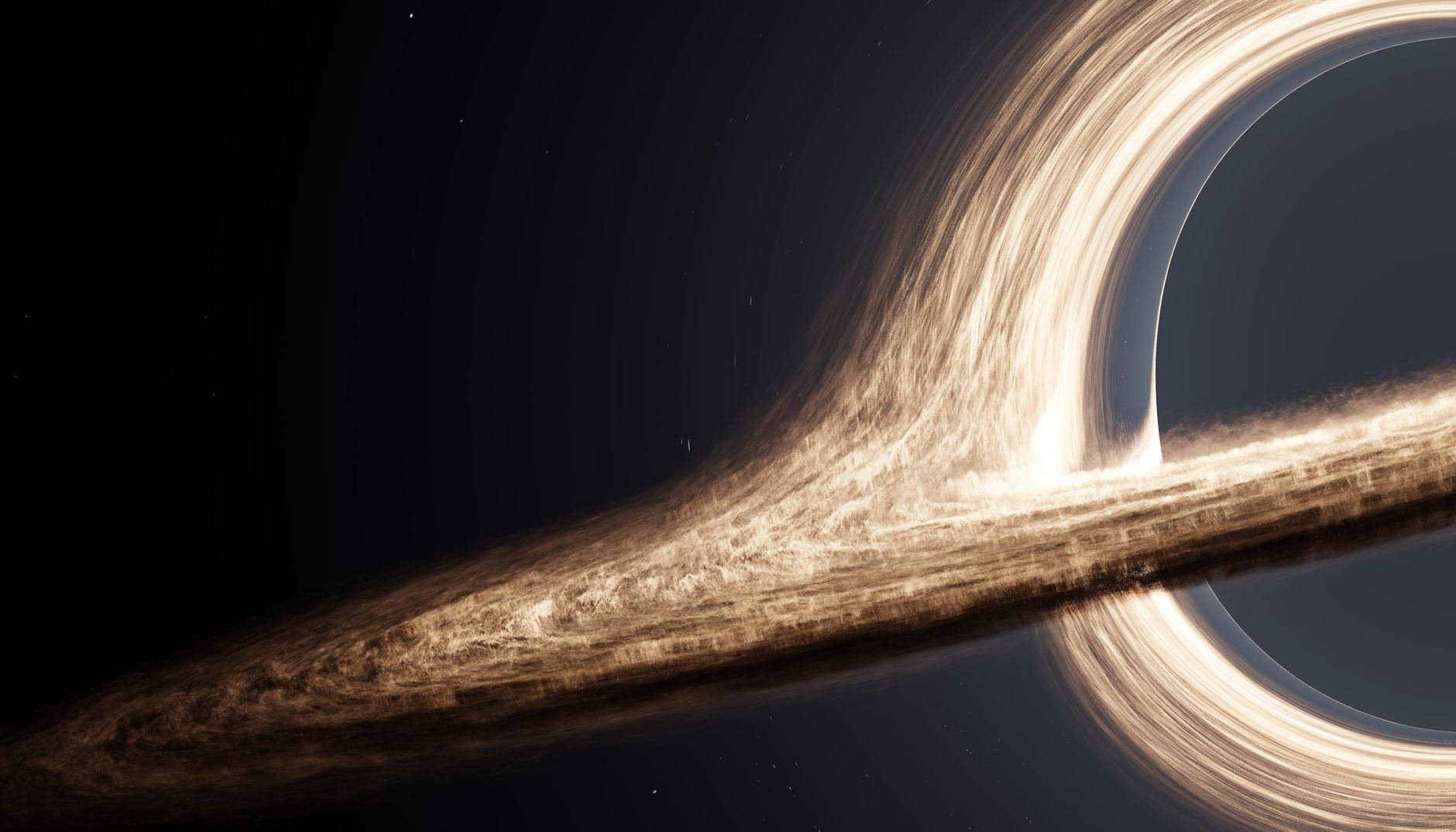
Radio galaxies blaze across the sky in giant lobes of plasma, powered by supermassive black holes that launch relativistic jets. A new study using MeerKAT, the VLA and LOFAR has identified 12 galaxies whose jets have switched off, leaving behind fading radio lobes. These “remnant” systems appear to have been dimming for only 8 to 42 million years, far shorter than previously thought. The discovery reshapes our picture of how active galactic nuclei influence their host galaxies over cosmic time.
What happened
Astronomers examined 14 candidate radio galaxies in the XMM‑LSS field, a region intensively surveyed by the XMM‑Newton X‑ray observatory. By combining deep observations from the MeerKAT array, the Jansky Very Large Array and the LOFAR network, they could trace the spectral ageing of plasma in the radio lobes. Twelve of the candidates showed no evidence of ongoing jet activity and were classified as remnant radio galaxies, while the remaining two still host active jets.
The confirmed remnants exhibit fade ages ranging from 8 million to 42 million years, with an average of about 12 million years. This age distribution is markedly younger than that of previously known remnants, suggesting that a population of short‑lived, fading sources has been missed by earlier surveys that favored older, brighter lobes.
Why it matters
The findings tighten constraints on the duty cycle of active galactic nuclei, indicating that the shutdown phase can be rapid and more common than assumed. Short‑lived remnants imply that feedback from black‑hole jets may be intermittent, influencing star formation and gas heating in bursts rather than a steady flow. Recognizing this hidden cohort also improves the accuracy of cosmological simulations that rely on AGN feedback prescriptions.
- Provides direct observational evidence of rapid jet shutdown timescales.
- Reveals a previously overlooked population of short‑lived remnants.
- Helps calibrate models of AGN feedback in galaxy evolution simulations.
- Sample is limited to a single sky field and only 12 confirmed remnants.
- Age estimates depend on spectral‑aging models that assume uniform magnetic fields.
- Detection bias favors sources bright enough for multi‑frequency follow‑up.
How to think about it
When evaluating AGN impact on a galaxy, consider a three‑phase cycle: active jet launching, rapid shutdown (tens of Myr), and a fading remnant stage. Incorporate multi‑frequency radio data to catch both bright and dim lobes, and treat age estimates as ranges rather than precise values. Simulations should allow for brief, recurrent jet episodes rather than a single, long‑lasting outburst.
FAQ
What defines a remnant radio galaxy?+
How are the ages of fading lobes measured?+
Why might short‑lived remnants have been missed before?+
- astrophysics·3 min readSimulations Reveal Linked Growth of Nuclear Star Clusters and Stellar Discs in Galactic Centers
New galaxy simulations show nuclear star clusters and stellar discs co‑evolve, reshaping ideas of galactic‑center formation.
- astronomy·3 min readAI uncovers seven quasar gravitational lenses, shedding light on supermassive black hole growth
Artificial intelligence finds seven quasar lenses in DESI data, offering a new way to study how supermassive black holes evolve.
- astronomy·3 min readNew Galactic Bar Shock Fronts Trigger Star Formation, Challenging Milky Way Spiral Arm Models
A Ph.D. student discovers shock‑driven star formation near the Milky Way’s bar, questioning the existence of the Norma spiral arm.