Curiosity’s 10‑Year Atmospheric Record Suggests Trace Surface Water on Mars
A decade of Curiosity’s CO₂ isotope data reveals seasonal water interactions, hinting at thin liquid films on the Martian surface.
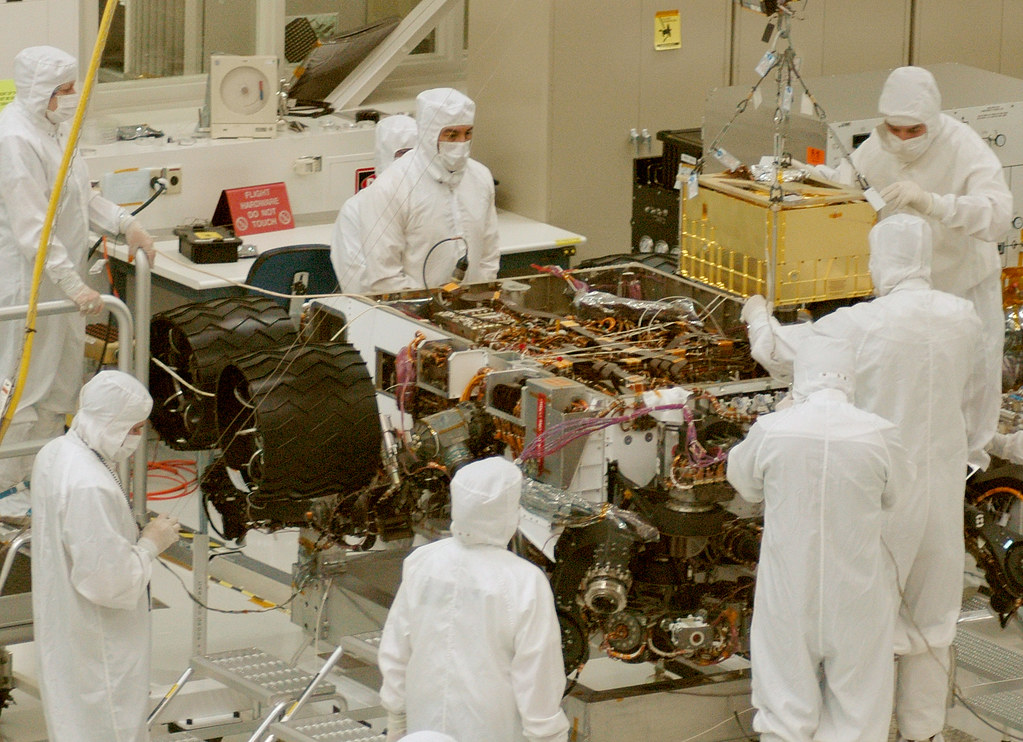
For more than ten years the Sample Analysis at Mars (SAM) suite on NASA’s Curiosity rover has been measuring the isotopic composition of carbon dioxide in Gale Crater. A new study in the Proceedings of the National Academy of Sciences has compiled this record, spanning 2012‑2025, to examine seasonal and daily variations. The analysis uncovers a subtle but consistent enrichment of heavy oxygen (¹⁸O) that cannot be explained by carbon‑dioxide freeze‑thaw cycles alone, pointing instead to interactions with trace amounts of water bound to soil grains or existing as ultra‑thin liquid‑like films. If confirmed, these findings reshape our view of the modern Martian water cycle and its relevance to habitability.
What happened
The research team assembled the first continuous, in‑situ dataset of CO₂ isotopes on Mars, using SAM’s tunable laser spectrometer to track variations in ¹³C/¹²C and ¹⁸O/¹⁶O ratios across multiple Martian years. Seasonal patterns showed the expected enrichment of heavy carbon during winter, when CO₂ condenses at the poles, but the oxygen isotope signal displayed an additional, seasonally correlated rise during the warmest months. By comparing these measurements with atmospheric circulation models and laboratory simulations of water–CO₂ exchange, the authors identified a best‑fit scenario in which minute quantities of water—either adsorbed onto regolith particles or present as nanometer‑scale films—exchange isotopes with the surrounding CO₂.
Why it matters
Even a few parts per million of surface water can influence the chemistry of the Martian regolith, affect dust lifting, and modify the planet’s climate feedbacks. Detecting active water‑CO₂ exchange suggests that Mars is not a completely dry world today, which has implications for the preservation of potential biosignatures and for future human exploration that may rely on in‑situ resources. Moreover, the study demonstrates the power of long‑term, on‑the‑ground measurements to reveal subtle planetary processes that remote sensing alone might miss.
- Provides direct, on‑site isotopic evidence spanning more than a decade.
- Links atmospheric chemistry to surface water interactions.
- Offers a new constraint for climate and habitability models.
- Data are limited to a single location in Gale Crater.
- Interpretation relies on model assumptions about water film stability.
- Water quantities inferred are extremely low and may be transient.
How to think about it
When evaluating Martian surface processes, treat water as a dynamic, albeit scarce, component that can exchange isotopes with the atmosphere. Incorporate Curiosity’s isotope trends into regional climate simulations to test how thin water films might affect dust lifting and surface chemistry. For mission planners, consider targeting sites where similar isotopic signatures could be measured, using instruments capable of detecting nanometer‑scale water layers.
FAQ
Which isotopes did Curiosity measure to infer water interactions?+
How does trace surface water affect the Martian CO₂ cycle?+
What future missions could confirm these results?+
- news·2 min readCuriosity Captures Detailed Dawn Panorama and Yardangs on Mars
NASA’s Curiosity rover captured a high‑resolution dawn panorama on Mars, revealing wind‑shaped yardangs and detailed cliff faces.
- news·3 min readCuriosity Marks 14 Years on Mars with APXS Measurements on Sol 4976
On Sol 4976, Curiosity celebrated its 14th landing anniversary by deploying its arm for APXS analysis of Tunas Khasa, while climbing Mount Sharp.
- missions·3 min readCuriosity Rover Takes Power‑Positive Sols to Recharge Before Resuming Nazca Drilling
Curiosity spent sols 5060‑5062 recharging its batteries while conducting remote science and testing parallel activity execution to save power.