Chandra X-ray Observatory Reveals Milky Way's Outer Spiral Arms Extend Farther Than Thought
New data from NASA's Chandra X-ray Observatory and ESA's XMM-Newton suggests the Milky Way's outer spiral arms are more distant, potentially revising our understanding of our home galaxy's structure…
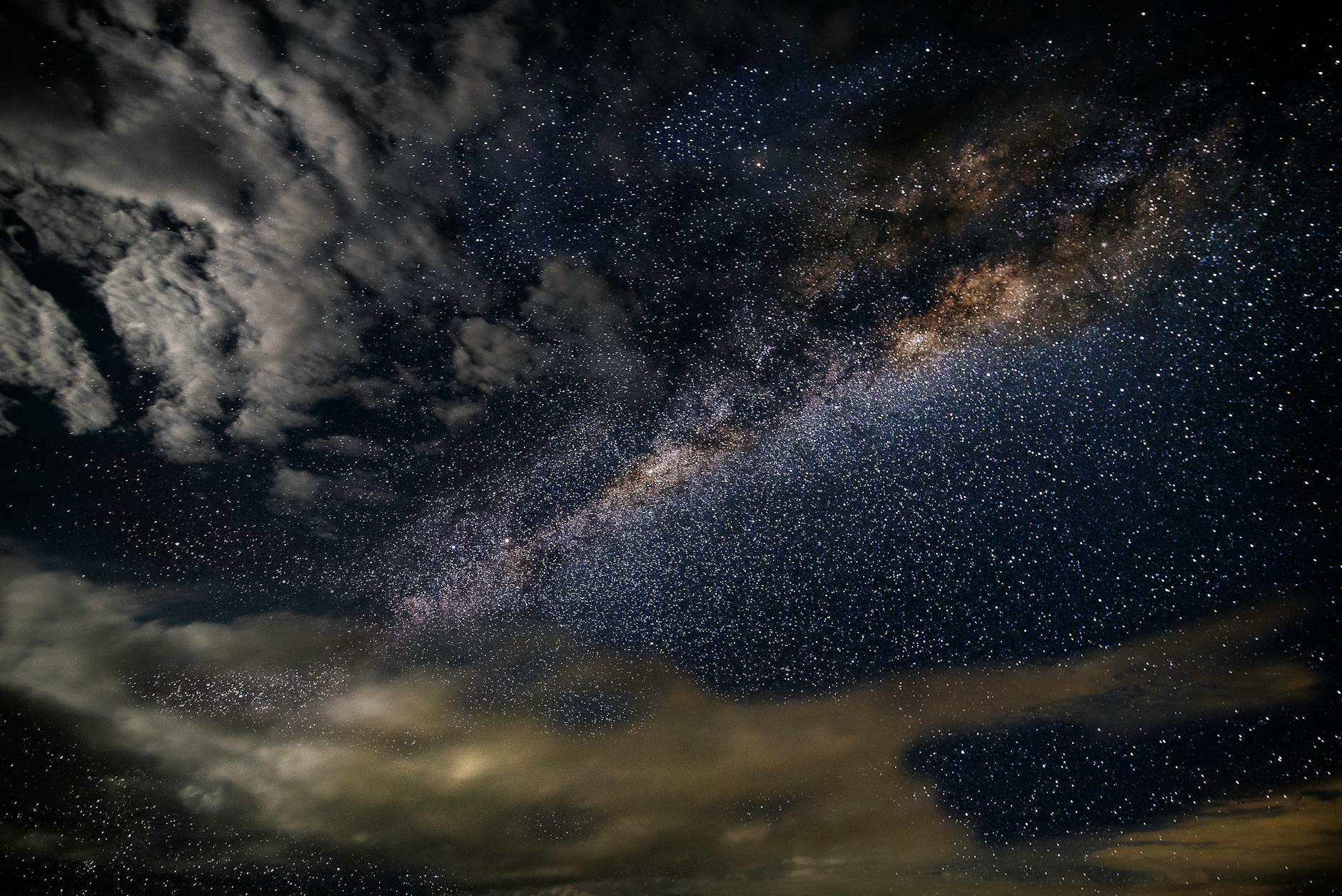
Our understanding of the Milky Way, our cosmic home, is a continually evolving tapestry, with new observations frequently refining our galactic map. A recent study utilizing data from NASA's Chandra X-ray Observatory, in conjunction with ESA's XMM-Newton, has provided compelling evidence that the outer spiral arms of our galaxy may stretch wider than previously estimated. This discovery, rooted in a precise geometric measurement technique, promises to adjust fundamental models of the Milky Way's structure and its overall mass distribution.
What happened
Astronomers made this groundbreaking discovery by precisely measuring distances to dust clouds located within the Milky Way's spiral arms. Their technique capitalized on the phenomenon of light echoes from gamma-ray bursts (GRBs), which are among the most luminous events in the universe, originating from the collapse of massive stars or the merger of neutron stars far beyond our galaxy. As the intense X-rays from these distant GRBs encounter dust clouds in our galaxy's spiral arms, they scatter, creating expanding rings visible in X-ray observations. The diameter of these X-ray rings, as observed by Chandra and XMM-Newton, directly correlates with the distance to the dust cloud: larger rings signify dust clouds closer to Earth.
This geometric method offers a significant advantage over traditional techniques, which often rely on assumptions about the Milky Way's rotation that become increasingly uncertain in the galaxy's outer regions. The research team applied this approach to three distinct gamma-ray bursts, each illuminating a different spiral arm: the Perseus, the Outer, and the Outer Scutum-Centaurus arms. Along the line of sight to one of these bursts, they determined that both the Outer and Outer Scutum-Centaurus arms are approximately 10% more distant from the Galactic Center than prior astronomical consensus.
Furthermore, the study provided an estimate for the width of the dust cloud in the most distant arm, measuring it at about 3,500 light-years. This finding is crucial because it suggests that the distance measurements apply to the full thickness of the spiral arm, rather than just an isolated, unrepresentative dust patch. While highly accurate, the researchers noted that the technique's reliance on rare, bright gamma-ray bursts visible through the galactic plane means its widespread application for further measurements may be limited.
Why it matters
These subtle yet significant revisions to the distances of the Milky Way's outer spiral arms carry profound implications for our understanding of galactic structure and dynamics. Precise distance measurements are foundational for constructing accurate models of our galaxy's overall shape, size, and mass distribution. If the outer arms are indeed more distant, it could necessitate a recalculation of the galaxy's total mass, as the extent of its gravitational influence directly affects how widely its spiral arms stretch. Such adjustments are critical for refining simulations of galactic evolution and understanding how our galaxy interacts with its neighbors in the Local Group.
Moreover, a more accurate map of the Milky Way's spiral arms provides a clearer framework for studying star formation, the distribution of gas and dust, and the dynamics of stellar populations within these regions. Astronomers can use these updated distances to better contextualize observations of nebulae, star clusters, and other galactic features, leading to a more coherent picture of the processes shaping our home galaxy. This research underscores that even for our own galaxy, fundamental parameters are still being refined, highlighting the ongoing nature of scientific discovery.
- Utilizes a direct geometric measurement method, avoiding assumptions about galactic rotation.
- Provides improved accuracy for distances to the Milky Way's outer spiral arms.
- Offers the potential for more precise models of the galaxy's mass and overall structure.
- Relies on rare gamma-ray burst events, limiting the frequency of its application.
- Dust and gas within the galactic plane continue to obscure views to other arms, making full mapping challenging.
- While fundamental, the initial revisions are small, requiring careful re-evaluation of existing galactic models.
How to think about it
When considering these findings, it's important to view them not as a correction of past "errors," but as a natural progression in scientific precision. Mapping the Milky Way from within is akin to trying to understand the layout of a large city while standing in its bustling center, with skyscrapers and fog obscuring the view. Each new technique, like using light echoes from gamma-ray bursts, offers a clearer vantage point or a more accurate measuring tape. These refinements, even if they seem like small percentage changes, are crucial because they propagate through larger models of galactic formation, evolution, and dark matter distribution. It reinforces the idea that our cosmic address is still being precisely charted, and that multi-wavelength astronomy, combining X-ray observations with other data, is key to unlocking deeper secrets of our universe.
FAQ
What are gamma-ray bursts and how do they help measure distances?+
Why is it so difficult to map the Milky Way's spiral arms from Earth?+
How might revising the distances to the spiral arms affect our understanding of the galaxy?+
- astronomy·3 min readSpiral Arms and Bars Fuel Star Formation in Galaxies
New research reveals spiral arms and bars in galaxies efficiently move cold gas, driving high star formation rates during cosmic noon.
- astronomy·5 min readAstronomers Discover Unexpected Calm Pockets for Star Formation in Milky Way's Turbulent Galactic Center
Astronomers using ALMA have discovered unexpected pockets of calm, sub-sonic gas within the Milky Way's turbulent Central Molecular Zone, revealing how new stars can form in the galaxy's violent core.
- astronomy·5 min readAstronomers Discover Serene Star-Forming Pockets Amidst the Milky Way's Turbulent Galactic Center
Astronomers have found unexpected pockets of calm gas in the Milky Way's chaotic galactic center, where stars are now forming. This discovery challenges previous assumptions about star formation in…