Astronomers Discover a Serene Star-Forming Nursery Amidst the Milky Way's Violent Galactic Core
A new ALMA survey reveals an unexpected pocket of calm gas within the turbulent Central Molecular Zone, suggesting a universal recipe for star birth even in extreme galactic environments.
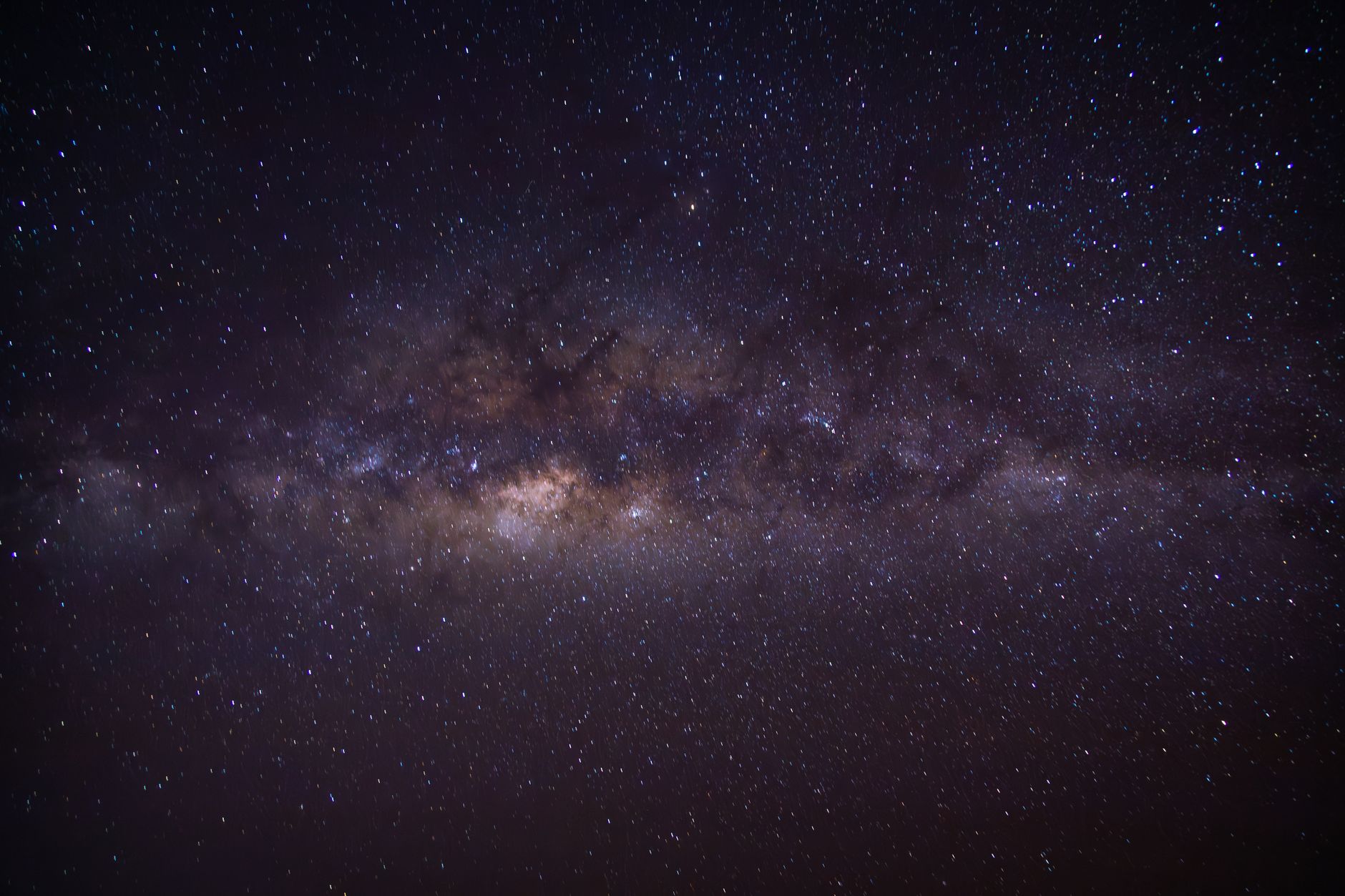
The heart of our Milky Way galaxy, known as the Central Molecular Zone (CMZ), is a region of extreme turbulence where gas churns at supersonic speeds, making it an unlikely place for new stars to form. Yet, a groundbreaking survey using the ALMA array has uncovered an unexpected 'island of calm' within this chaotic environment. This discovery challenges long-held assumptions about the conditions necessary for star birth, suggesting that a universal recipe for stellar nurseries might exist even in the galaxy's most violent neighborhoods. It offers a fascinating glimpse into how stars, including our own Sun, might have begun their lives.
What happened
Astronomers have long understood the Central Molecular Zone (CMZ) as a maelstrom of gas, where material moves faster than the speed of sound. This intense turbulence typically prevents gas from settling and collapsing under its own gravity, a crucial first step for star formation. Imagine a river of white-water rapids; nothing can stay still long enough to coalesce into a stable structure.
However, a team led by Rojita Buddhacharya, utilizing the Atacama Large Millimeter/submillimeter Array (ALMA) in Chile, conducted the largest image survey ever produced by the telescope of the galactic center. This detailed mapping of dozens of different molecules unexpectedly revealed a small, quiet pocket within the CMZ. In this serene zone, the gas had dramatically slowed to subsonic speeds, drifting gently and smoothly, akin to a still pool amidst the rapids.
Crucially, threaded through this calm pocket was a long, slender filament of gas. Such filaments are prime locations for material to clump together, and within this specific structure, gravity was sufficiently strong to hold the gas in place. The combination of gentle motion and firm gravitational pull provides the precise conditions required for a cloud of gas to begin the process of building new stars. The abrupt transition from turbulent chaos to serene calm over remarkably small distances particularly surprised the astronomers.
Why it matters
This finding carries significant implications for our understanding of star formation across the cosmos. Previously, such tranquil stellar nurseries were thought to exist only in the quieter, more stable outskirts of galaxies. The presence of identical calm conditions within the Milky Way's turbulent core suggests that the fundamental process of star formation may be far more universal than once believed, following a consistent recipe regardless of the surrounding environment.
Understanding these 'islands of calm' could offer invaluable insights into the early conditions that led to the formation of stars like our own Sun, billions of years ago. It provides a tangible example of how even the most extreme cosmic environments can harbor the seeds of creation. Looking forward, astronomers are now employing machine learning techniques to comb through ALMA's vast datasets, hoping to identify many more of these hidden pockets of stillness scattered throughout the galactic chaos, further refining our models of stellar genesis.
- Reveals a potentially universal mechanism for star formation, applicable across diverse galactic environments.
- Offers new insights into the initial conditions that could have led to the formation of our own solar system.
- Opens new avenues for research, leveraging machine learning to identify more star-forming regions.
- Such calm regions appear to be rare and are challenging to detect amidst the overwhelming turbulence.
- The precise physical mechanisms causing the abrupt transition from chaos to calm are not yet fully understood.
- Current observations are limited to a single identified region, requiring more data for broad generalization.
How to think about it
This discovery encourages us to reconsider the perceived limitations of extreme cosmic environments. It highlights that even in regions of seemingly insurmountable chaos, the universe possesses intricate mechanisms to create pockets of order where fundamental processes like star formation can occur. It's a reminder that our understanding of the cosmos is continually evolving, with new observational capabilities revealing previously hidden complexities. When contemplating the formation of stars, consider the delicate balance of forces at play, where gravity can subtly overcome turbulence in localized areas, leading to the birth of new celestial bodies.
FAQ
What is the Central Molecular Zone (CMZ) of the Milky Way?+
How does this discovery change our understanding of star formation?+
What role did the ALMA array play in this discovery?+
- astronomy·5 min readAstronomers Discover Unexpected Calm Pockets for Star Formation in Milky Way's Turbulent Galactic Center
Astronomers using ALMA have discovered unexpected pockets of calm, sub-sonic gas within the Milky Way's turbulent Central Molecular Zone, revealing how new stars can form in the galaxy's violent core.
- astronomy·5 min readAstronomers Discover Serene Star-Forming Pockets Amidst the Milky Way's Turbulent Galactic Center
Astronomers have found unexpected pockets of calm gas in the Milky Way's chaotic galactic center, where stars are now forming. This discovery challenges previous assumptions about star formation in…
- astronomy·3 min readALMA Detects Trillion-Mile Gas Streamer Shaping Tilted Outer Ring of GW Orionis
ALMA observations reveal a 0.2‑light‑year gas streamer influencing the outer disk tilt of the triple‑star GW Orionis.