Astronomers Discover Unexpected Calm Pockets for Star Formation in Milky Way's Turbulent Galactic Center
Astronomers using ALMA have discovered unexpected pockets of calm, sub-sonic gas within the Milky Way's turbulent Central Molecular Zone, revealing how new stars can form in the galaxy's violent core.
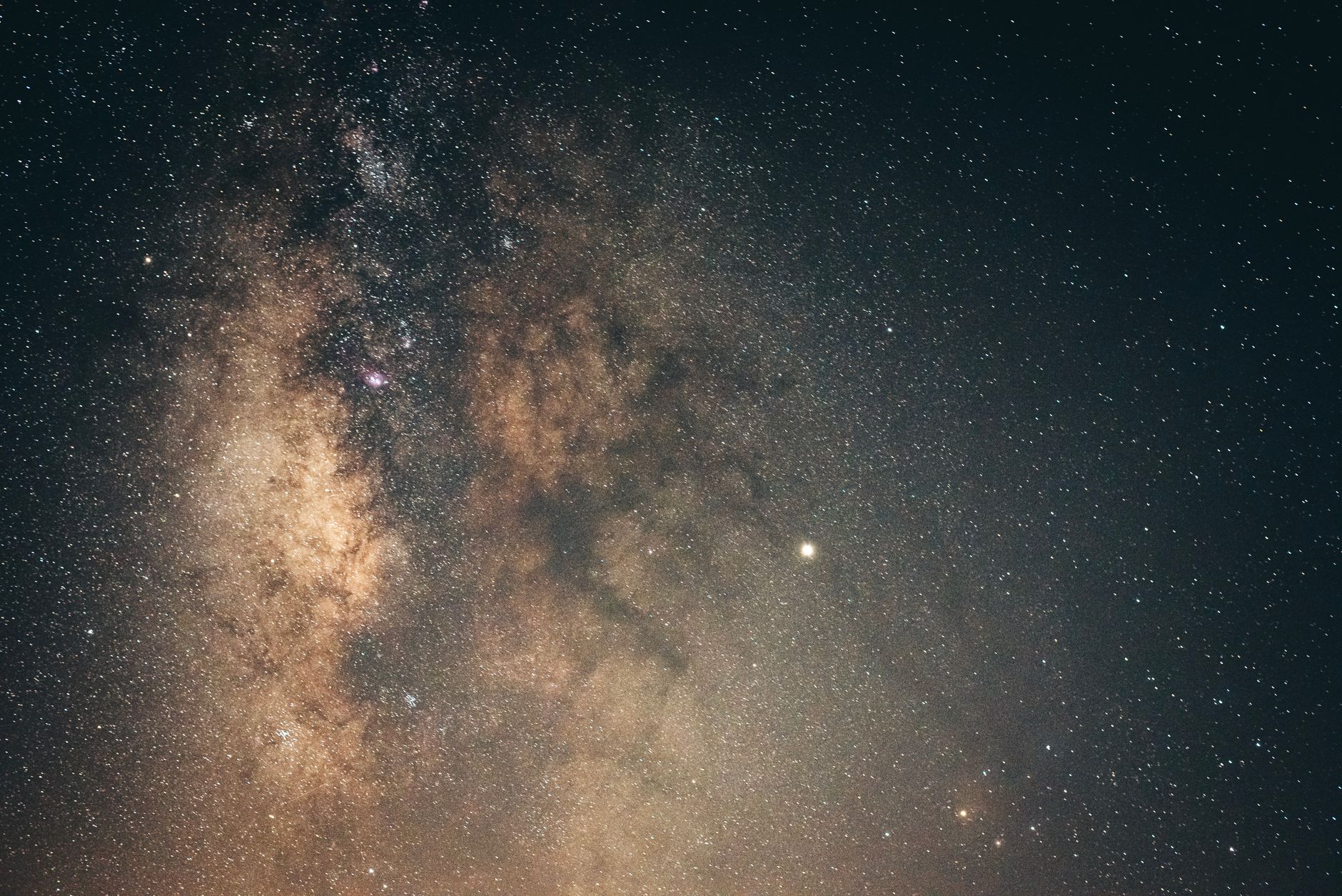
The heart of our Milky Way galaxy, known as the Central Molecular Zone, is a notoriously violent and turbulent region where gas churns at supersonic speeds, making it seem an unlikely birthplace for stars. Yet, stars do form there. In a groundbreaking discovery, astronomers using the ALMA array have identified unexpected pockets of serene, sub-sonic gas within this chaotic environment. This finding challenges previous assumptions about star formation locations and suggests a universal mechanism for stellar birth, even in the most extreme galactic neighborhoods.
What happened
The Central Molecular Zone (CMZ) at the Milky Way's core is characterized by extreme turbulence, where vast clouds of gas move at speeds exceeding the speed of sound. This chaotic motion typically prevents gas from settling and collapsing under gravity, which is a prerequisite for star formation. Until now, astronomers believed such conditions made the galactic center an improbable site for new stellar nurseries, pushing the expectation of star birth to quieter, less turbulent regions of the galaxy.
However, a recent extensive survey of the CMZ using the Atacama Large Millimeter/submillimeter Array (ALMA) in Chile, led by Rojita Buddhacharya, revealed an unexpected phenomenon. This monumental imaging effort, the largest ever produced by ALMA for this region, mapped dozens of different molecules across the turbulent expanse. Within this maelstrom, researchers identified small, distinct pockets where the gas motion abruptly slowed to sub-sonic speeds, creating serene "still pools" amidst the cosmic rapids.
Crucially, these calm pockets contained long, slender filaments of gas—structures known to facilitate material clumping. Here, gravity was sufficiently strong to overcome the gentle motion and draw matter together, providing the ideal conditions for stellar birth. The abrupt transition from supersonic chaos to sub-sonic calm over remarkably small distances was particularly surprising, indicating a localized mechanism for creating these stellar nurseries in an otherwise hostile environment.
Why it matters
This discovery fundamentally reshapes our understanding of star formation, particularly in extreme galactic environments. Previously, tranquil nurseries were thought to exist only in the quieter outskirts of galaxies. Finding these same calm conditions at the turbulent galactic core suggests that the fundamental recipe for star birth might be universal, regardless of the surrounding cosmic violence. This implies that the physical processes governing gravitational collapse are robust enough to create localized havens even amidst widespread chaos.
The implications extend to how we model galaxy evolution and the distribution of stellar populations. If stars can form efficiently in the galactic center, it contributes significantly to the stellar census of these dense regions and helps explain observed populations of young stars. Furthermore, this localized calm offers a tangible glimpse into the very beginnings of stars like our own Sun, which likely underwent a similar quiet phase billions of years ago. It provides a deeper connection to our cosmic origins, showing that even in the wildest corners of the universe, the conditions for life-giving stars can emerge.
- Provides a groundbreaking new mechanism for star formation in highly turbulent galactic cores.
- Supports the hypothesis that stellar birth follows a universal recipe, even in diverse cosmic environments.
- Helps explain the observed presence of young stars in the Milky Way's violent Central Molecular Zone.
- Opens new avenues for targeted searches for stellar nurseries using advanced observational techniques.
- The precise physical mechanisms causing the abrupt transition from chaos to calm are not yet fully understood.
- Detecting these relatively small, calm pockets requires extremely high-resolution observations and extensive data processing.
- Further research is needed to determine the prevalence and longevity of these tranquil regions across the galactic center.
How to think about it
When considering this discovery, it's helpful to view the galactic center not as a uniformly chaotic region, but as a dynamic environment where localized pockets of order can emerge from global turbulence. This finding underscores the universe's remarkable ability to self-organize and create the necessary conditions for complex processes, like star formation, even in seemingly hostile settings. It also serves as a powerful testament to the capabilities of modern astronomical instruments like ALMA, which can resolve such intricate details across vast cosmic distances. This isn't just about where stars are born, but about the nuanced interplay between gas dynamics, gravity, and the extreme conditions that define galactic cores.
FAQ
What is the Central Molecular Zone (CMZ)?+
The Central Molecular Zone is a dense region of gas and dust located within the innermost few hundred light-years of the Milky Way galaxy. It's characterized by extreme physical conditions, including high temperatures, pressures, and intense turbulence, making it one of the most energetic environments in our galaxy.
How did ALMA detect these 'calm pockets' amidst the turbulence?+
ALMA (Atacama Large Millimeter/submillimeter Array) is an interferometer that observes at millimeter and submillimeter wavelengths, allowing astronomers to peer through the dust and gas in the galactic center. By mapping the Doppler shifts of molecular emissions, ALMA can measure the velocity and turbulence of the gas with extraordinary precision, revealing areas where gas motion slows significantly below the speed of sound.
Does this discovery mean star formation is easier or more common than previously thought?+
Not necessarily easier, but it suggests star formation is more resilient and can occur in environments previously thought too hostile. It implies that the fundamental processes of gravitational collapse can create localized havens even in extreme conditions. The overall rate of star formation in the galactic center is still a complex topic, but this discovery provides a clearer pathway for how it can occur.
- astronomy·5 min readAstronomers Discover Serene Star-Forming Pockets Amidst the Milky Way's Turbulent Galactic Center
Astronomers have found unexpected pockets of calm gas in the Milky Way's chaotic galactic center, where stars are now forming. This discovery challenges previous assumptions about star formation in…
- astronomy·4 min readAstronomers Discover a Serene Star-Forming Nursery Amidst the Milky Way's Violent Galactic Core
A new ALMA survey reveals an unexpected pocket of calm gas within the turbulent Central Molecular Zone, suggesting a universal recipe for star birth even in extreme galactic environments.
- astronomy·3 min readALMA Detects Trillion-Mile Gas Streamer Shaping Tilted Outer Ring of GW Orionis
ALMA observations reveal a 0.2‑light‑year gas streamer influencing the outer disk tilt of the triple‑star GW Orionis.