How Apollo Moon Rocks Reveal a Sulfur‑Rich Archean Atmosphere on Early Earth
Astrobiologist Jared Landry uses Apollo lunar samples to show Earth's Archean atmosphere was richer in sulfur, shedding light on early life.
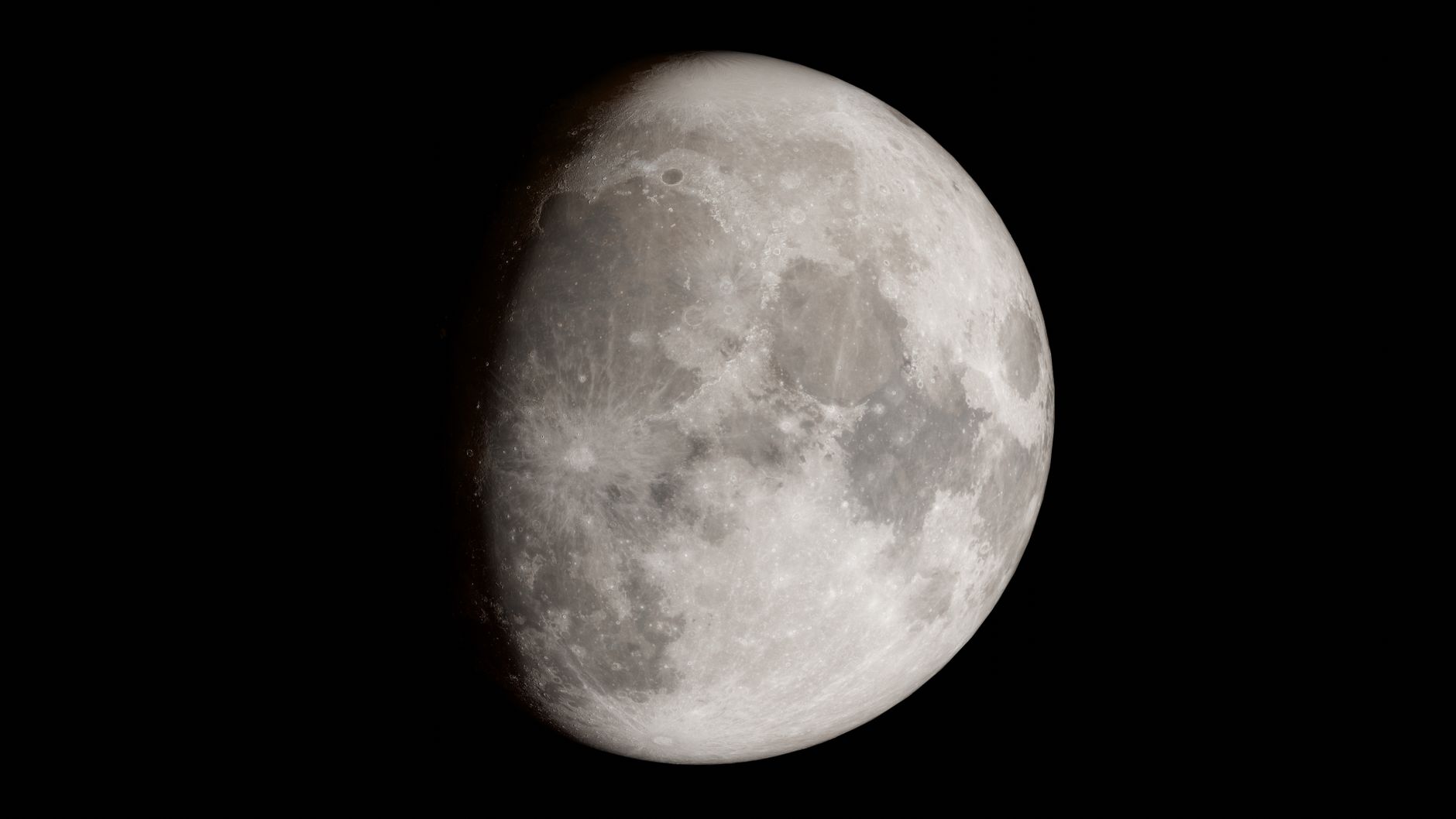
When the Apollo missions brought back rocks from the Moon's near side, scientists imagined they would teach us about the Moon itself. Now Jared Landry, a Ph.D. student in astrobiology at the Earth Life Science Institute in Tokyo, is turning those same samples into a proxy for Earth's distant past. By measuring trace gases trapped in the lunar regolith that originated from Earth's upper atmosphere around 3.5 billion years ago, he argues the Archean sky contained far more sulfur than today. If correct, the finding reshapes our picture of the chemical environment that nurtured the planet’s earliest life.
What happened
Landry focused on nearside Apollo samples because Earth's upper atmosphere continuously leaks gases that are captured by the Moon during a brief segment of its orbit when it passes through an outflow channel. Those gases become ionized and are swept up by the solar wind, embedding trace chemical signatures in the lunar surface for billions of years. He presented his methodology and initial results at the Origins 2026 conference in Paris.
His analysis of the sulfur isotopic composition in the regolith indicates concentrations higher than those found in modern Earth’s atmosphere, supporting the hypothesis that the Archean atmosphere was more sulfur‑rich. The data align with independent models that predict elevated volcanic outgassing and reduced oxygen levels during the 2.5‑4 billion‑year Archean window.
Why it matters
A sulfur‑rich early atmosphere would have altered the planet’s climate, acidity of surface waters, and the availability of bio‑available nitrogen, all of which are critical factors for the emergence of life. By providing an extraterrestrial archive that bypasses Earth’s active geology and weathering, the lunar record offers a rare, complementary line of evidence for reconstructing ancient atmospheric composition. This insight can refine models of pre‑biotic chemistry and guide the search for biosignatures on exoplanets with similar volcanic activity.
- Direct chemical imprint of Earth’s ancient atmosphere preserved beyond terrestrial alteration.
- Extends the temporal reach of atmospheric studies into the deep Archean.
- Offers a novel cross‑planetary method that can be applied to future lunar or Martian samples.
- Samples are limited to a few Apollo landing sites and may not represent global deposition.
- Space weathering and micrometeorite impacts can modify the original chemical signatures.
- Interpretation relies on models of atmospheric escape that still carry uncertainties.
How to think about it
Researchers should treat lunar‑derived atmospheric proxies as complementary data points, integrating them with terrestrial isotope records and geochemical models. When building early‑Earth climate simulations, incorporate a range of sulfur concentrations that reflect both the lunar evidence and the uncertainties highlighted by space weathering. For educators, use the Moon‑Earth connection as a concrete example of how planetary bodies exchange material, illustrating the interdisciplinary nature of astrobiology.
FAQ
How do gases from Earth reach the Moon?+
Why is sulfur important for understanding early Earth?+
What are the main limitations of using lunar samples to infer Earth’s past?+
- explainers·3 min readTracing Earth’s First Complex Life: The Search for Ancient Eukaryotes
Scientists examine ancient rock chemistry to locate the earliest eukaryotes, shedding light on the rise of complex multicellular life.
- astronomy·2 min readZhurong data reveal standing liquid water on Mars much more recently than thought
Zhurong rover data reveal selenite crystals that point to standing liquid water on Mars much later than the 3‑billion‑year freeze.
- astrobiology·3 min readThe Universe's Missing 'Noosignatures': A New Approach to Astrobiology
Astrobiologists propose a new term, noosemiotics, to search for signs of intelligent life beyond Earth.