APOD August 8, 2026: Comet Tempel 2 Near Globular Cluster M30
NASA’s APOD captures comet 10P/Tempel 2 passing near globular cluster M30, illustrating how comet dust trails can appear to pierce distant clusters.
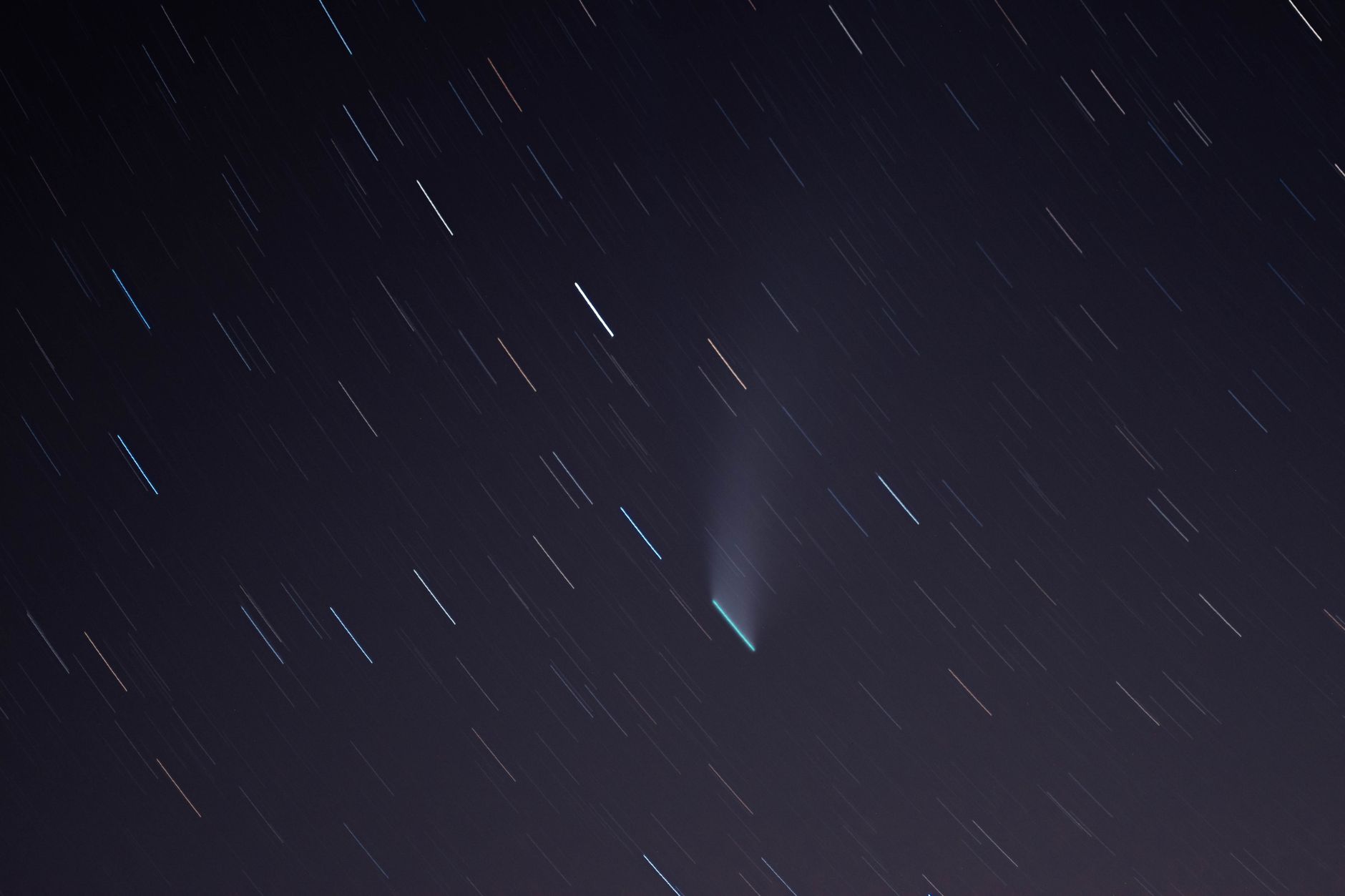
The August 8, 2026 APOD image captures a striking visual coincidence: the periodic comet 10P/Tempel 2 appears to thread through the dense star field of globular cluster Messier 30. The photograph, taken on July 29, shows Tempel 2 only three and a half light‑minutes from the cluster in the sky, while M30 itself lies about 28,000 light‑years away. This juxtaposition offers a vivid reminder of how line‑of‑sight alignments can masquerade as physical interactions, a concept that often confuses both amateur and professional observers.
What happened
NASA’s APOD notes that the image was recorded on July 29 with a modern telescope, framing the comet on the left and the globular cluster on the right. The comet’s faint, narrow dust trail extends across the field, giving the impression that it cuts through the cluster.
Tempel 2, a short‑period comet with an orbital period of about 5.4 years, was at a distance of roughly 3.5 light‑minutes from the line of sight to M30 at the time of observation. M30 resides approximately 28,000 light‑years from Earth, making the apparent overlap a pure perspective effect.
Why it matters
The image serves as a powerful educational tool, illustrating that objects that appear adjacent in the sky can be separated by vast distances. For comet researchers, it underscores the importance of precise astrometry when tracking dust trails near background stars or clusters. For the public, the striking visual encourages curiosity about the scale of the Milky Way and the dynamics of cometary orbits.
- Highlights the visual impact of comet tails against deep‑sky objects.
- Provides a clear teaching example of line‑of‑sight projection.
- Demonstrates modern imaging capabilities of amateur and professional telescopes.
- Can mislead viewers into thinking the comet physically interacts with the cluster.
- Offers limited scientific data beyond the visual impression.
- May distract from the comet’s own orbital and compositional studies.
How to think about it
When encountering striking sky alignments, first check the known distances of the objects involved. Use catalog data—such as comet ephemerides and globular‑cluster distances—to assess whether an apparent overlap is real or merely a projection. This habit prevents misinterpretation and deepens appreciation for the three‑dimensional structure of our galaxy.
FAQ
Why does Tempel 2 appear so close to M30 in the image?+
Can the comet’s dust trail affect the cluster’s stars?+
What can observers learn from such alignments?+
- explainers·3 min readVaporizing Meteor Streaks Across Great Lacerta Nebula in APOD Image of August 3 2026
A bright meteor vaporized during a long exposure over the Great Lacerta Nebula, revealing colorful gas trails and clues to its composition.
- explainers·3 min readHow to Optimally Watch the Perseid Meteor Shower on Aug 12-13
Learn the best times, locations, and viewing tips to see the Perseid meteor shower at its peak on Aug 12‑13, when dark skies and optimal conditions align.
- explainers·4 min readWhat Did the Night Sky Look Like on America's First Independence Day 250 Years Ago?
As the U.S. turns 250, discover what Benjamin Franklin and colonists saw in the night sky on July 4, 1776. Learn about visible planets, a lunar eclipse, and 18th-century stargazing.