NASA Confirms Ancient Dwarf Galaxy Merger Shaped Early Milky Way 12 Billion Years Ago
NASA's Hubble data reveals a dwarf galaxy colliding with the young Milky Way 12 billion years ago, pushing our galaxy’s history back 1.8 billion years.
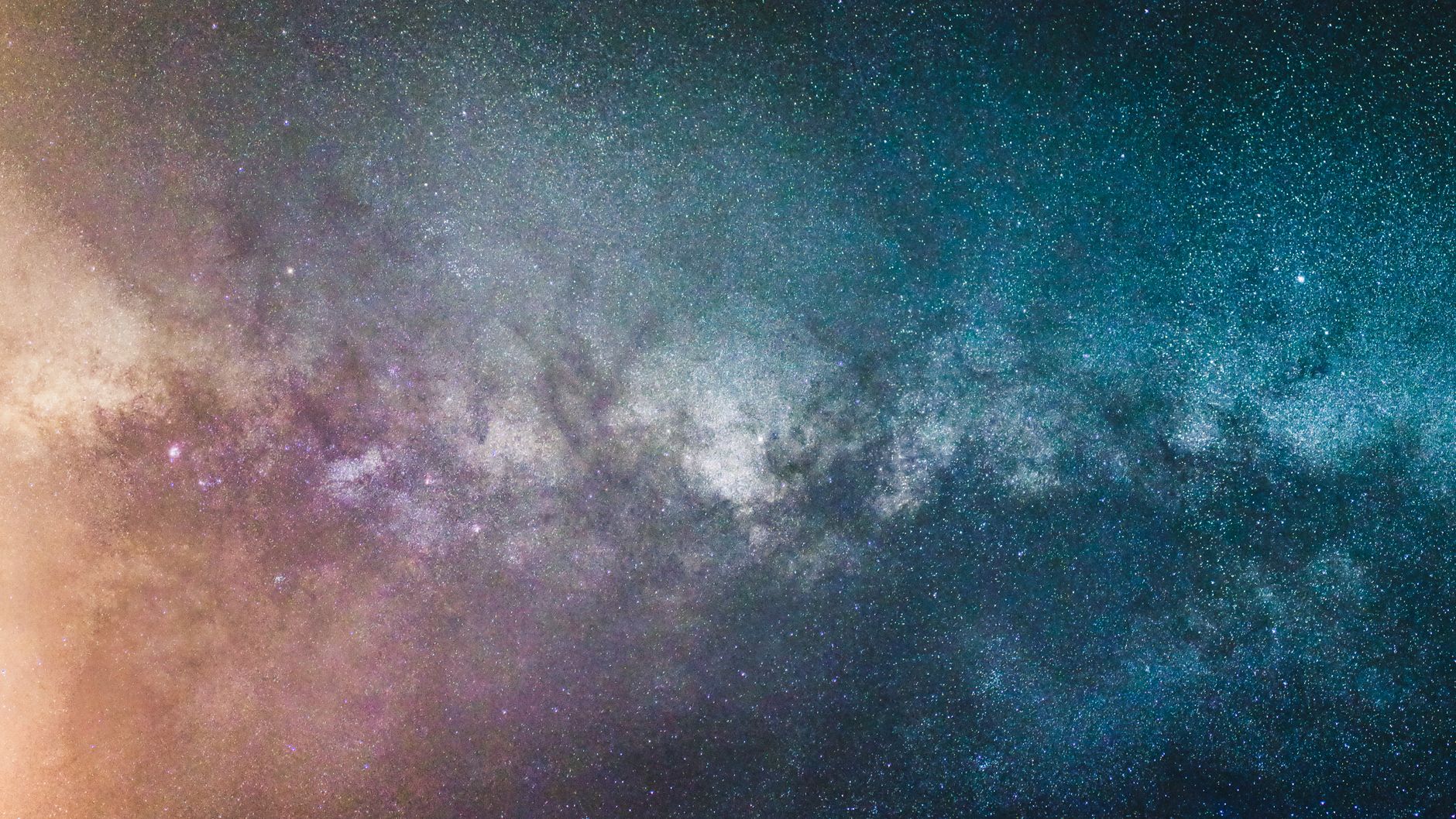
The Milky Way’s early history just got a major update. NASA’s Hubble Space Telescope has captured definitive evidence that a dwarf galaxy, designated LKH, slammed into our young galaxy about 12 billion years ago. The finding appears in Nature Astronomy and pushes the earliest confirmed merger back by roughly 1.8 billion years. Understanding this collision helps astronomers map how the Milky Way grew from a fledgling disk into the massive spiral we see today. It also offers a rare glimpse of galaxy assembly in the universe’s first few billion years.
What happened
Analysis of deep‑field Hubble imaging and spectroscopy identified a distinct stellar stream and chemical fingerprint that match the predicted remnants of the dwarf galaxy LKH. The data show a coherent motion and age distribution consistent with a collision occurring when the Milky Way was roughly 2 billion years old. Researchers used the stellar ages and metallicities to date the event to about 12 billion years ago, establishing it as the earliest confirmed merger in our galaxy’s record.
Why it matters
Pinpointing such an early merger forces a revision of models that previously placed the Milky Way’s first major accretion later in cosmic time. It suggests that the young galaxy grew rapidly by assimilating smaller companions, influencing the formation of its disk, halo, and globular clusters. The result also provides a benchmark for simulations of galaxy formation, helping to align theoretical predictions with observable evidence.
- Provides direct observational evidence of an early Milky Way merger.
- Refines timelines used in galaxy‑formation models.
- Offers a concrete case to test cosmological simulations.
- Based on a single line‑of‑sight and limited spatial coverage.
- Stellar‑population ages carry inherent uncertainties.
- May not represent typical early‑Milky Way behavior.
How to think about it
When evaluating the Milky Way’s past, treat this merger as a key data point rather than the sole driver of early evolution. Compare the LKH event with other known accretion signatures, such as the Gaia‑Sausage and the Sagittarius dwarf, to build a layered picture of growth. For hobbyist observers, consider how such ancient collisions manifest today as stellar streams and halo substructures that can be explored with publicly available sky surveys.
FAQ
How did astronomers determine the age of the merger?+
What is the dwarf galaxy LKH?+
Will this discovery change how we view the Milky Way’s formation?+
- astronomy·3 min readNew Galactic Bar Shock Fronts Trigger Star Formation, Challenging Milky Way Spiral Arm Models
A Ph.D. student discovers shock‑driven star formation near the Milky Way’s bar, questioning the existence of the Norma spiral arm.
- astronomy·3 min readDESI delivers the most precise Milky Way mass estimate yet, pinning it at 1.19 trillion solar masses with 11%…
DESI’s latest survey refines the Milky Way’s mass to 1.19 trillion solar masses, cutting uncertainty to about 11%.
- astronomy·3 min readNASA’s APOD Shows the Milky Way Arching Over Yellowstone’s Silex Spring
NASA’s APOD captures the Milky Way spanning a 2014 panorama of Yellowstone’s colorful Silex Spring, highlighting volcanic activity and supervolcano risks.